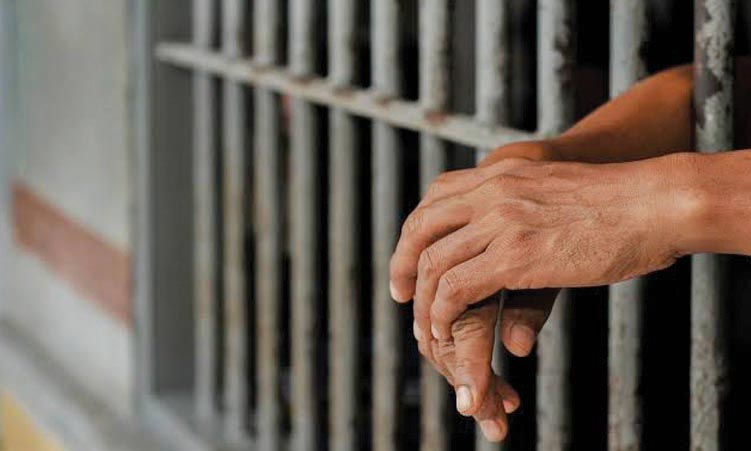
A High Court judge has ordered the medical officer of Windhoek Correctional Facility to make a recommendation for the release of an inmate who has become paralysed while serving a 20-year prison term on a charge of murder.
In a judgement delivered in the Windhoek High Court on Friday, judge Boas Usiku reviewed and set aside a decision of the medical officer of Windhoek Correctional Facility in March this year not to recommend the release of prison inmate Khamastar Ndukireepo (49) on medical grounds.
Usiku declared that the medical officer’s refusal to recommend Ndukireepo’s release on medical grounds was in conflict with the Constitution’s protection of fundamental rights and freedoms, respect for human dignity and administrative justice.
Usiku also ordered the medical officer to recommend the release of Ndukireepo on medical grounds in terms of the Correctional Service Act of 2012 within 10 court days from Friday.
The court was informed that Ndukireepo was sentenced in the Gobabis Regional Court to 20 years’ imprisonment in December 2020, after he had been found guilty on a charge of murder.
He was serving his sentence at Hardap Correctional Facility when, in February 2024, he had a major health setback that resulted in him becoming paralysed.
According to Ndukireepo, he woke up on the morning of 3 February 2024 with lower back pain, was unable to walk, and had become incontinent, after he had been manhandled by a prison officer the previous day.
According to the Namibian Correctional Service, though, Ndukireepo’s allegation that he had been manhandled was investigated, including an investigation of closed-circuit television camera footage, and no evidence to substantiate his claim of physical assault was found.
In a sworn statement filed at the court, Ndukireepo says specialist physician Dr Ismael Katjitae and a team of medical doctors, including a neurologist, examined him at Windhoek Central Hospital in April this year, and afterwards recommended that he be released on medical grounds or transferred to a facility where he would receive more appropriate medical care.
Dr Katjitae had also examined Ndukireepo in May last year. Following his examination in April this year, Katjitae recorded that Ndukireepo’s condition had deteriorated since the previous year, with the most notable deterioration in his speech and communication ability, “in keeping with progressive neurological compromise”, Usiku recounted in his judgement.
The doctors who examined Ndukireepo also recorded that he was bed-bound and had developed pressure ulcers, “which are objective markers of prolonged immobility and inadequate capacity for repositioning and nursing care”, Usiku said.
Following the completion of reports by Katjitae and another doctor, Ndukireepo in April again requested the Windhoek Correctional Facility’s medical officer to recommend his release on medical grounds.
When he did not receive a response to that request, Ndukireepo filed an urgent application in the Windhoek High Court against the medical officer, the commissioner general of the Namibian Correctional Service and the officer in charge of Windhoek Correctional Facility.
In response to the application, the prison authorities informed the court that the doctors who recommended Ndukireepo’s release have not visited Windhoek Correctional Facility to assess if it has suitable facilities for him.
The prison authorities also stated that Ndukireepo is not suffering from a dangerous, infectious or contagious disease that would warrant his release on medical grounds, and that the medical evidence did not show that his continued incarceration would be detrimental to his health.
Usiku said he had no hesitation to agree with the views of the doctors who stated that Ndukireepo should be urgently considered for release from prison on medical grounds.
A “grim picture of neglect” was painted in the doctors’ reports, Usiku remarked. He concluded that the medical officer’s refusal to recommend Ndukireepo’s release on medical grounds is irrational and unreasonable, and had to be set aside.
Ndukireepo was represented by lawyer Profysen Muluti.
Government lawyer Lindrowski Tibinyane represented the prison authorities.