





Compulsory training for all instructors
THE Ministry of Works and Transport has unveiled 13 proposed requirements to tighten the regulation of driving schools, including compulsory formal training, testing and certification for instructors before they can teach learner drivers.
The proposed regulations are expected to come into effect on 1 April 2027.
The proposals are contained in a stakeholder consultation document provided to The Namibian on Friday by the ministry’s deputy director of transportat regulations Damien Mabengano.
“The proposed road traffic and transport regulations on regulating driving schools stipulate that any person or body of persons wanting to operate a driving school to train learner drivers must be registered and certified by the Minister of Works and Transport,” he says.
According to Mabengano, driving schools will be required to meet a range of administrative, financial, safety and operational requirements, including business registration, income tax good standing, Social Security good standing, and an Affirmative Action Compliance Certificate.
The list also requires a certificate of fitness from the local authority, training vehicle ownership or registration, third-party and passenger liability insurance, registered driving instructors, compliant theoretical and practical premises, dual controls, specialised mirrors, an annual roadworthiness certificate and clear training vehicle labelling, where applicable.
“I would have activated the regulations of driving schools and driving instructors as of tomorrow.
However, I have to follow due process in terms of the public service law making process where we need to consult stakeholders before implementation of the regulations,” he says.
Mabengano says works and transport minister Veikko Nekundi says the regulations are intended to address weaknesses in the driving-school sector, including inconsistent training standards, concerns over instructor competency and the condition of some training vehicles.
The proposed framework also sets competency requirements for driving instructors.
The ministry says individuals who refer to themselves as driving instructors must undergo training at an approved training centre approved by the minister of works and transport.
“A driving instructor is recognised as a certified professional and is registered by the minister to teach learners how to operate motor vehicles and adhere to road safety laws,” the ministry says.
The ministry also refers to Regulation 138 of the Road Traffic and Transport Regulations of 2001, which deals with competence and grading qualifications for driving instructors.
Anyone seeking an instructor’s certificate must first obtain a certificate from an approved training centre.
Applicants must then complete both a theoretical test and a practical road test, conducted in accordance with the manual approved by the minister for the specific class of motor vehicle they intend to instruct.
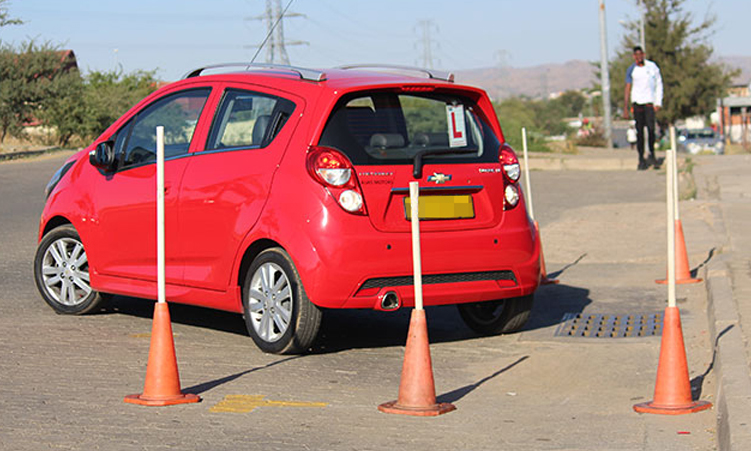
Under the proposed requirements, training vehicles must be registered in the name of the driving school or licensed school operator.
They must have appropriate third-party and passenger liability insurance and a valid annual roadworthiness certificate.
Vehicles must also feature an auxiliary braking system accessible to the instructor from the front passenger seat and may require an additional adjustable internal rear-view mirror.
The driving school’s name or logo and learner-driver indicators must be prominently displayed on the exterior.
Driving school premises for theoretical and practical instruction must also meet specific regulatory and infrastructural standards.
Mabengano says the ministry is currently conducting stakeholder consultations to assess the industry’s readiness, clarify existing driver-training regulations and present the proposed amendments to the Road Traffic and Transport Regulations of 2001.
Workshops have already been held at Swakopmund, Otjiwarongo and Oshakati.
Further consultations are planned for Keetmanshoop, Mariental, Gobabis, Grootfontein, Rundu, Katima Mulilo and Windhoek within the next two to three months.
Mabengano said the ministry is confident that the regulations will be implemented on 1 April 2027.
“I’m confident that the regulations on driving school and driving instructor will come into effect 1st of April 2027, I know there is still a lot to be done but we have to finish this and save lives on the roads in Namibia,” he says.
The driving school regulations form part of wider legal reforms being developed by the ministry to improve road safety.
These include regulating vehicle manufacturers, builders and importers, regulating number-plate manufacturers, introducing new number-plate standards and developing regulations for public passenger transport.
The ministry also plans to digitalise road-transport processes and systems, including speed and surveillance cameras, and introduce a demerit-point system.
Other proposed measures include amendments to the driving alcohol limit and driving licence categories, mandatory dashcams and speed governors for certain vehicle categories, and automatic fire-suppression equipment in all cars.
The ministry is further proposing the summary suspension of driving licences for certain violations and live surveillance of certain roads to monitor driver compliance.
According to a report by the parliamentary transport committee, the Namibia Bus and Taxi Association (Nabta) previously raised concerns about shortcomings in driving school training, saying differences in practical requirements between licence categories could result in drivers obtaining licences without demonstrating sufficient basic vehicle control skills.
Nabta has called for improved driver licensing and training requirements, continuous driver training, stricter driving hour controls and regular vehicle inspections.
Pedro Haifiku, owner of Mr P One Time Driving School at Walvis Bay, who supports the proposed changes by Nekundi to regulate driving schools, also raised concerns about driving schools allegedly being owned by Natis examiners.
“Anyone today can just set up a driving school and start teaching you how to drive,” he says.
Mwenyo Iyaloo, owner of Focus Driving School, says the proposed stricter regulations could professionalise the industry, but the new certification requirements could also threaten the livelihoods of existing driving school operators.
Iyaloo says the industry is largely unregulated currently, allowing virtually anyone with a vehicle to start offering driving lessons.