





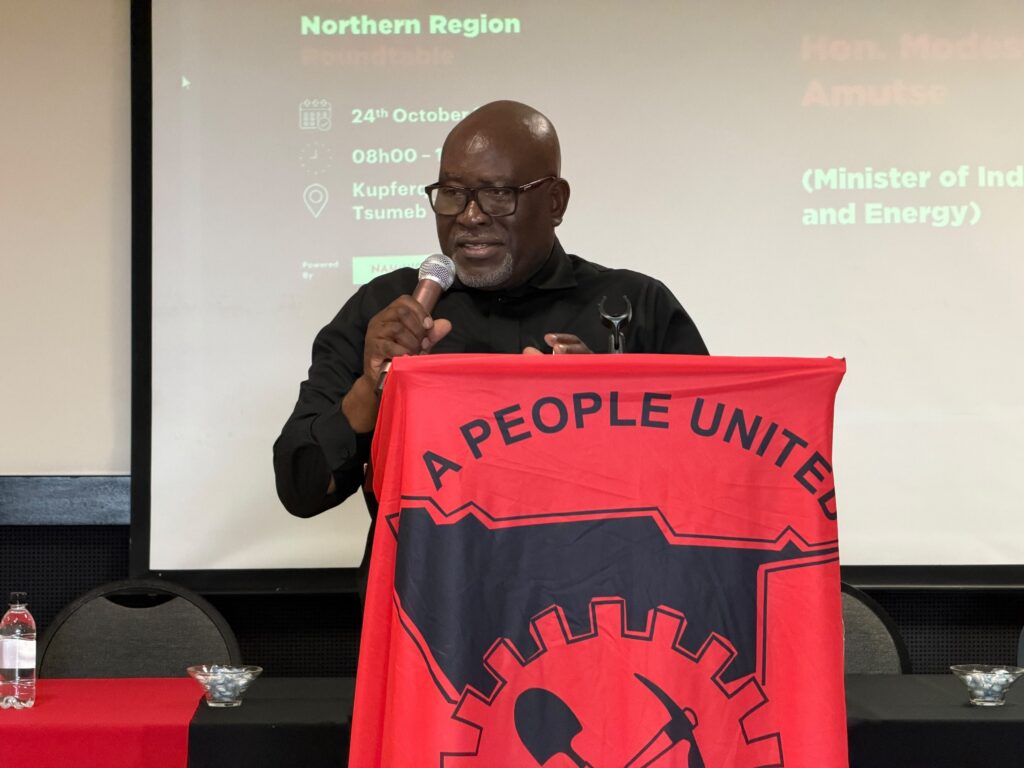
Minister of industries, mines and energy Modestus Amutse has raised concerns over the repeated use of short-term employment contracts in mining operations conducted under long-term licences.
He says the practice warrants scrutiny where credible evidence exists.
Speaking at the Mineworkers Union of Namibia (MUN) Northern Regional roundtable at Tsumeb on Saturday, Amutse said workers deserve clarity about their employment conditions, particularly where jobs are continuous and foreseeable.
“Where duties remain continuous and foreseeable, the repeated use of brief contracts raises questions that the responsible authorities should assess where credible evidence warrants it,” he said.
The roundtable was held under the theme ‘Promoting Decent Work, Employment Security and Accountability in Namibia’s Mining and Industrial Sectors’.
Amutse said cooperation between mining and labour authorities was essential to ensure employment concerns were properly investigated and addressed.
He also called for investment in the mining sector to translate into tangible benefits for Namibians through skills development, career progression and opportunities for local businesses.
“Investment is essential to developing operations, introducing technology and creating economic opportunities,” he said, adding that its long-term contribution is strengthened when it develops local skills and supports businesses.
The minister said subcontracting arrangements must not obscure employers’ responsibilities towards workers, stressing that employees should understand their contractual arrangements and have channels to raise concerns.
He said workplace safety must remain a priority, noting that workers’ knowledge of conditions on the ground could help prevent serious incidents when concerns receive timely attention.
Amutse urged employers, unions and government institutions to strengthen consultation, monitoring and accountability.
He said the proposals emerging from the regional engagements should have clear implementation processes and designated institutions responsible for follow-up, rather than leaving workers in prolonged uncertainty.