Oil majors stay silent
Chevron and Rhino Resources have both confirmed further drilling projects for this year, however, none of the oil majors at the Namibia International Energy Conference hinted at a final investment decision.
This is despite the country targeting 2030 for its first oil production.
A final investment decision (FID) in oil and gas is the critical, formal point where project owners approve funding and sanction the construction of a project, transitioning it from design to execution.
It signifies confidence in profitability, the securing of financing, and the commencement of heavy capital spending.
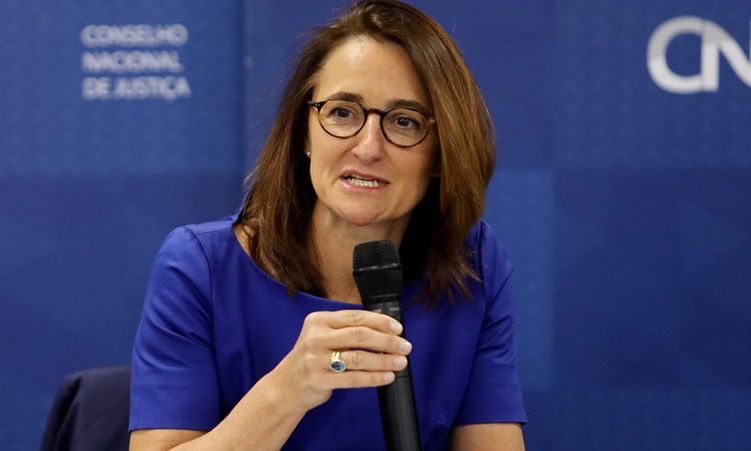
Speaking at the conference yesterday, petroleum commissioner Maggy Shino said the government’s priorities have now changed from “first oil” to building a more sustainable environment for the sector.
“We have only explored a small percentage of what Namibia is a little bit brave to offer. And I call upon your indulgence to bear with us while we are still changing and shaping a few things internally to open up the new blocks that are available,” Shino said.
She said the country remains the best investment destination and the government is still hoping that the oil companies will make a FID in 2026.
However, Shino and the other speakers did not mention whether the country is still targeting oil production by 2030.
Rhino Resource chief executive Travis Smithhard yesterday said the company will move to drilling its first appraisal well soon.
“I can confirm that we will be drilling our first Capricornus well in the coming months,” Smithard said. There was no mention of a FID.
Meanwhile, Namibia’s country manager of Chevron, Beatrice Bienvenu, said Chevron will be drilling a new well by mid 2026.
“I would like to confirm that Chevron will be drilling another well later this year in the Nabba-X well in our PEL90,” she said.
Chevron is actively operating in two primary offshore areas in Namibia: petroleum exploration licence (PEL) 82 (blocks 2112B and 2212A) in the Walvis Basin and PEL90 (block 2813B) in the Orange Basin.
The company holds an 80% operating interest in PEL82.
Total Energies senior vice president for Africa Mike Sangster did not make announcements around a FID either.
This is despite chief executive Patrick Pouyanne announcing last year that a FID will be made this year.
However, Sangster says the company is crossing its fingers as it waits for the Namibian Competition Commission to give a decision on the 40% acquisition of a stake in one of the oil blocks from Galp.
“We are hoping for the approval of the 40% acquisition in Galp’s PEL83,” Sangster said.
ReconAfrica vice president Robert Mwancachilenga says for any company to take the risk of investing billions in any country, there has to be certainty in policy.
“There is certainity of oil, however, there are things oil companies cannot control, one of them is policy in the country. That uncertanity comes from political enviroment because every regime comes with change,” Mwancachilenga says.
He says uncertainty is what delays FIDs in different countries.
Geologist Yuri Perez says one of the challenges in Namibia might be the policy around flaring, considering the high oil-to-gas ratio found in Namibia’s oil fields.
The government is yet to provide clarity on whether oil majors will be allowed to flare or reinject the gas to be used in other ways and sectors.
“The lack of uncertainty around flaring policies creates uncertainty. Because not flaring increases costs for oil companies and, therefore, makes the country less attractive to invest in,” Perez says.
He adds that to deal with that obstacle, Namibia will need to come up with innovative ideas on how that gas can be used for the benefit of both the country and the exploration companies.
Meanwhile, president Netumbo Nandi-Ndaitwah has assured companies that all investments made into Namibia are safe and not under threat.
She, however, says oil production should only happen for the mutual benefit of companies and the country.
“Hence, a need for strategic reforms to give confidence to the investors and the citizens,” Nandi-Ndaitwah says.
She adds that this is one of the reasons that the upstream sector was moved to the Presidency.