Namibia’s coastline is home to diverse fauna from Cape fur seals and seabirds to desert-adapted lions and scavengers such as the black-backed jackal and the brown hyena, often called the ‘strandloper’ (beach walker).
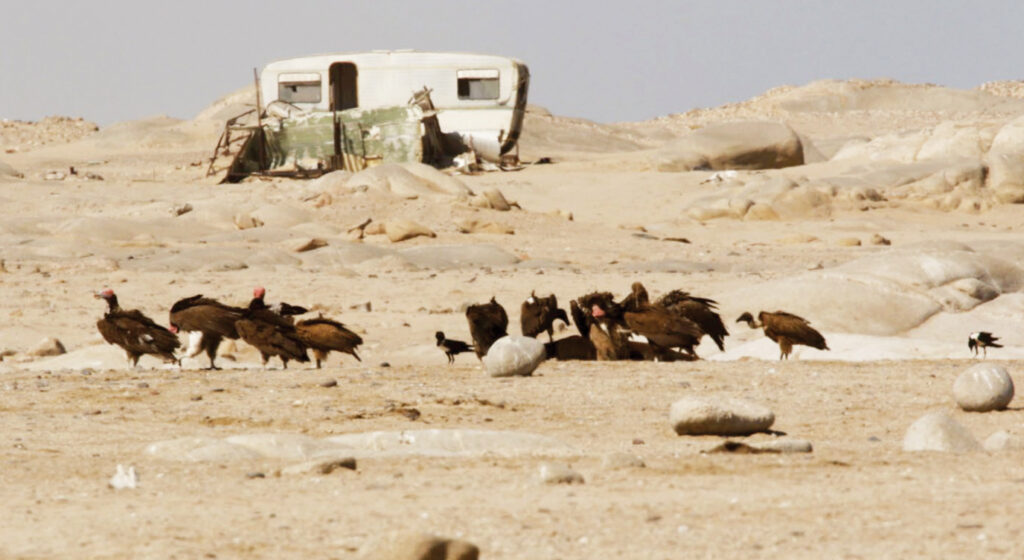
Even vultures feed on carcasses along our shores.
Of Africa’s nine vulture species, only two have so far been recorded in coastal environments, including one in Namibia’s Skeleton Coast Park.
Now, a new study has identified another airborne scavenger joining this unique coastal ecosystem.
While jackals are common, the secretive brown hyena is a rarer sight.
These ‘beach cleaners’ play a vital role in the ecosystem, perfectly adapted to the desert’s harsh conditions.
Their unique reliance on ocean resources makes them fascinating survivors.
Often overlooked by visitors, these resilient salvagers are essential to the coast’s natural balance.
HABITS AND HABITATS
Namibia is home to roughly 800 to 1 200 brown hyenas of which about half live along the coast.
This habitat is vital as they largely depend on washed-up seabirds and seal carcasses.
Remarkably, some have become active hunters. Hyenas killing seal pups has been recorded frequently, but only since July 2025 have researchers documented a hyena successfully hunting adult seals.
This is a staggering feat of strength: a 45-kg hyena taking down a seal weighing between 100 and 350 kg.
With a high density of hyenas on the coast, mainland Cape Fur Seal colonies have become essential strongholds for the survival of the species.
The brown hyena’s main competitor is the black-backed jackal, which is fairly abundant along Namibia’s coast.
Populations vary from roughly 0.1 to 13 jackals per kilometre, though numbers have skyrocketed near seal colonies – peaking at 76 right after pupping season.
While these jackals are known to be vectors for rabies, they recently faced renewed scrutiny as scientists believe they triggered a rabies outbreak among Cape fur seals.
It is suspected a jackal bite in Namibia introduced the virus, which then spread to South African colonies in 2024 and returned to Namibia in 2025 via seal-to-seal transmission.
This cross-species leap highlights the complex, and sometimes fragile, biological links within this unique coastal ecosystem.
Endangered lappet-faced vultures have been known to feed on seal carcasses since 2004.
A new species, the white-backed vulture, was first seen feeding on a seal carcass in June 2025.
Although it is the most widespread vulture species in Africa, it is now considered critically endangered, declining by about 80% over the past four decades.
As a result, vulture experts are increasingly concerned about heavy metals from marine mammals accumulating in these birds.
Often overlooked, these ‘beach cleaners’ are essential to the coastal ecosystem.
By scavenging carcasses, they help prevent the spread of disease and facilitate a vital exchange of nutrients between the ocean and land.
With the permanent establishment of a desert lion guild in the Skeleton Coast National Park, seal carcasses are now not only available seasonally but all year.
This provides a stable food source as well as a new perspective on how marine nutrients are transferred into desert ecosystems.
INDISPENSABLE
While the ‘beach walker’ – the brown hyena – is being studied by the Brown Hyena Research Project in the south and by Emsie Verwey in the north, the black-backed jackal remains less understood.
Given its role as a rabies vector, further research is crucial.
Vultures Namibia monitors our vulture populations.
As the two species mentioned are endangered, further monitoring and research is essential.
Together, these scavenging species maintain the desert’s natural balance, indicating that even the most secretive of scavengers are indispensable to Namibia’s wild heritage.
- Damian Schreiber, is a marine conservation communications, field and research officer at Ocean Conservation Namibia; he is involved in seal rescues, education outreach, and beach clean-ups.
- He has a master’s in ecology and society from Costa Rica’s University for Peace.