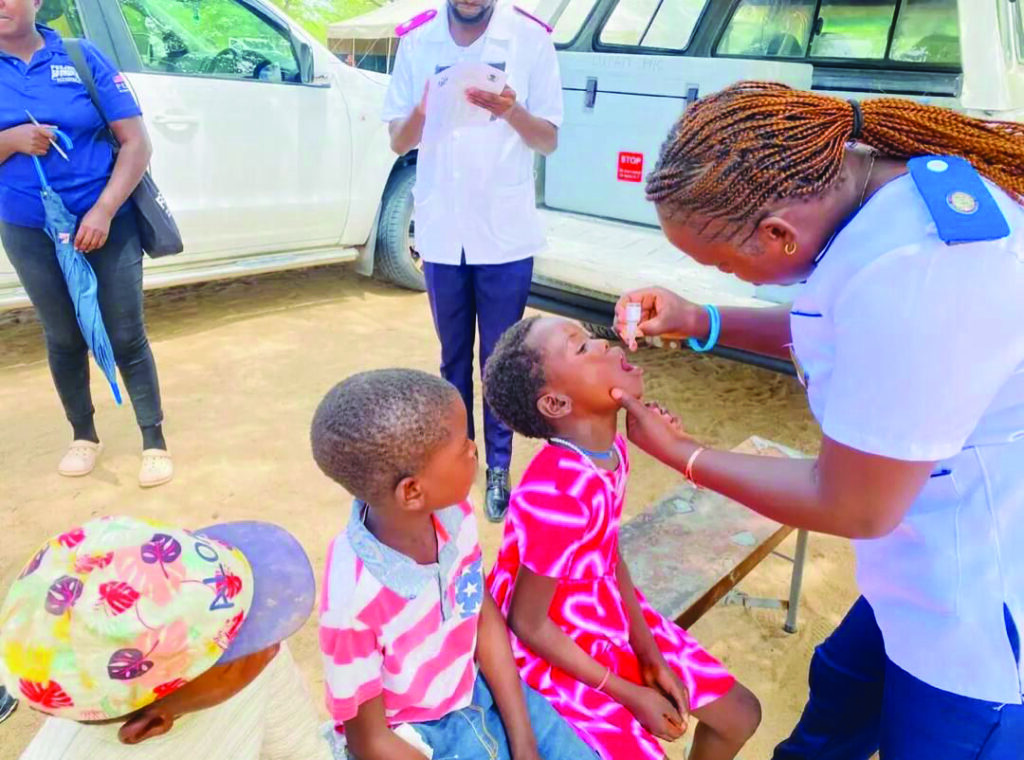
The Ministry of Health and Social Services has acknowledged that some children were missed during recent polio outbreak response vaccination campaigns, even as Namibia% coverage of more than 90 percent in its nationwide rollout.
Deputy health minister Suzan Ndjaleka on Monday said the campaigns achieved significant progress in reaching children under the age of 10 years during the response to a vaccine-derived poliovirus type 2 (cVDPV2) outbreak, but gaps remained in ensuring that every eligible child was vaccinated.
Ndjaleka said each missed child represented a gap in protection against poliovirus transmission and underscored the need for closer scrutiny of the vaccination campaign performance.
“We must carefully assess every aspect of the campaign, including vaccination coverage, the quality of microplanning, the effectiveness of team deployment, vaccine logistics and cold chain management, surveillance performance, community engagement, data quality, and accountability mechanisms,” Ndjaleka said during a polio outbreak response vaccination campaign evaluation meeting in Windhoek.
The meeting reviewed Namibia’s response to the outbreak that was first confirmed on 13 November 2025 through environmental surveillance at Rundu in the Kavango East region. Genetic sequencing linked the virus to an outbreak in the Menongue district in neighbouring Angola.
Following the confirmation, the virus was later detected in environmental samples at Gobabis and in Windhoek, prompting a rapid national response targeting children under the age of 10.
Ndjaleka said the health ministry activated the national incident management system and implemented multiple vaccination rounds with support from partners including the World Health Organisation (WHO), the United Nations Children’s Fund (Unicef), Rotary Namibia, and other development partners.
These included a campaign in Kavango East and Kavango West, three nationwide vaccination campaigns, and sub-national immunisation days in the Khomas and Omaheke regions.
While the campaigns reached high coverage levels, Ndjaleka said the evaluation must focus on understanding where implementation gaps occurred.
WHO country representative Richard Banda said while the country’s response to the cVDPV2 outbreak showed progress, it was important to acknowledge that not every eligible child was reached.
“I recognise the tremendous effort behind these campaigns, the results speak for themselves: more than 90% coverage achieved, with progressive improvement in lot quality assurance survey pass rates across the rounds,” Banda said.
He said Namibia responded with urgency after confirming the outbreak in November 2025, working “tirelessly round after round” to reach every child, despite challenges linked to institutional memory gaps since the last polio campaign in 2013.
Since then, he said, health workers had implemented multiple vaccination rounds, including house-to-house campaigns, risk communication, microplanning and community engagement to stop transmission.
“You worked tirelessly round after round trying to reach every child. It was not always easy, but I know you did your best and that is good enough,” he said.