The German government has committed about N$1.9 million towards a project aimed at promoting sexual and reproductive health and rights among young people in Namibia’s Kavango, Kunene and Omusati regions.
The German embassy and the Namibia Planned Parenthood Association (Nappa) announced this in a joint statement yesterday.
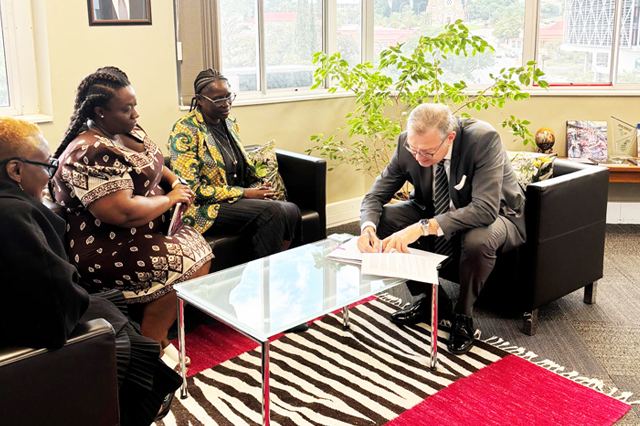
German ambassador to Namibia Thorsten Hutter and representatives of Nappa signed the funding agreement for the project, called ‘Pamwe’, yesterday.
The project is funded with 98 465 euros and will run until 31 December. The statement says the project aims to address teenage pregnancies, improve access to youth-friendly health services, and challenge cultural attitudes that undermine sexual and reproductive health and rights (SRHR).
The initiative will target teenagers and young people, including those with disabilities, in the three regions.
Hutter yesterday said teenage pregnancy remains one of the biggest barriers to equality and opportunities for young women and girls in Namibia.
“With a national rate twice the global average, and even higher figures in rural regions, this is a challenge that demands a thoughtful, community-rooted response,” he said.
Nappa executive director Natalia Ihemba said the project is intended to address broader social challenges linked to teenage pregnancy.
“Teenage pregnancy is often the visible outcome of deeper structural challenges, including poverty, limited access to accurate information, unequal gender relations, disability exclusion, and cultural barriers that prevent young people from seeking help,” she said.
Ihemba said Nappa will work with schools, communities, healthcare workers, leaders and parents to create supportive environments in which young people can access healthcare services without stigma or discrimination. She said collaboration between communities, the government, civil society organisations and development partners is needed to address teenage pregnancy and improve SRHR services.
According to the statement, Namibia recorded 82 pregnancies per 1 000 teenagers aged between 15 and 19 in a 2013 Namibia demographic and health survey.
The statement says teenage pregnancy contributes to school dropout, gender inequality, unsafe abortions, and sometimes infanticide, particularly in rural areas.
The project will include training for community leaders, educators and healthcare workers, comprehensive SRHR education in schools and communities, and mobile clinic outreach services.