As they seek breathing room
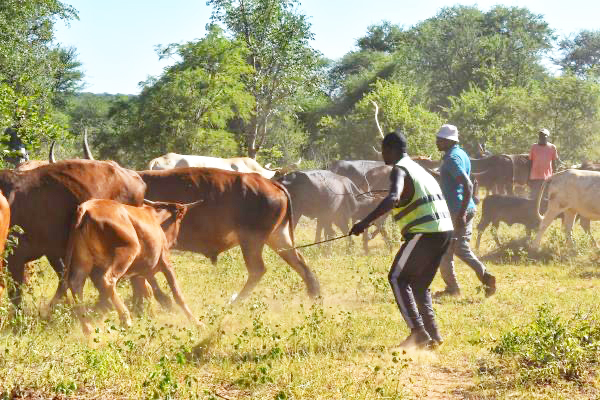
Farmers are still required to pay their workers the national minimum wage despite the impact of the foot-and-mouth disease (FMD) outbreak on the livestock sector.
The revised minimum wage rates for agricultural workers came into effect on 1 January as part of a three-year phase-in of the national minimum wage.
From 1 January agricultural workers are paid N$14 per hour.
Next year, agricultural workers are expected to be paid a minimum wage of N$18 per hour.
“There are currently no discussions to exempt employers in the agricultural sector from complying with the national minimum wage due to the FMD outbreak,” Ministry of Justice and Labour Relations spokesperson Maria Hedimbi tells The Namibian.
She says all employers must continue paying the national minimum wage unless the government officially announces otherwise.
Namibia confirmed a FMD outbreak last week after the disease was detected at a commercial farm in the Karasburg Veterinary District.
||Kharas governor Dawid Gertze says the impact of the FMD outbreak on farm workers and their wages is among the issues that need to be discussed as authorities work on a response plan for the region.
Gertze tells The Namibian that no agreement has been reached on how farmers struggling with income because of the restrictions should deal with workers’ wages.
“These are all things that we are going to discuss and look into because that is also a worry from my side. I cannot pre-empt the content of the meeting as to what we are going to agree on,” he says.
Gertze says he spoke to the chief veterinary officer on Monday about the response to the outbreak and was informed that a plan was still being developed.
FARMERS SEEK RELIEF
Commercial farmer Vikus Steenkamp says it is still too early for him to struggle with paying farm workers because of FMD restrictions but warns that being unable to sell livestock could put farmers under financial pressure if the situation continues.
Steenkamp, who farms about 40km outside Koës in the ||Kharas region, says he currently uses part of his salary to support his farming operation.
Another farmer who asked to remain anonymous says farmers need livestock sales to pay workers and cover other expenses.
“It is not only paying the workers but also all the other expenses associated with farming. You also need to sustain yourself and your family and pay your bills,” he says.
Farmer Floris Fleermuys says farmers need clear and regular information from the government on how long restrictions are expected to remain in place so they can plan their finances.
Fleermuys says temporarily relaxing minimum wage requirements could provide some relief, but financial support for affected farmers would be more helpful.
“That can help in a way, but the bigger relief could be some sort of financial support,” he says.
RETRENCHMENT LAST RESORT
Meanwhile, an economic assessment by Simonis Storm shows that about 12 000 jobs could be lost across Namibia in 2026 and 2027 due to FMD.
The Namibia Livestock Union and Namibia Agricultural Union on Tuesday said beef exports to the European market support more than 40 000 jobs.
Labour expert Herbert Jauch says the FMD outbreak should not be used as a reason to exempt farmers from paying the minimum wage or to retrench farm workers.
He says low-income workers spend a large portion of their earnings on food and other basic needs.
“To allow employers to pay less than the minimum wage, you would basically drive those workers into hunger. So I’m not at all in favour of that idea,” Jauch says.
Independent Patriots for Change shadow minister of labour relations Elvis Lizazi says farm workers should not have to lose part of their income because farmers are temporarily unable to sell livestock.
He says support should instead be directed towards farmers to help them cope with the financial impact of the restrictions while protecting workers’ incomes.
“As we speak now, FMD is really going to have a negative impact on employment,” he says.