





It’s strangely fitting that ‘Flashback’ – a photography exhibition by the late Tony Figueira – is one of the first local exhibitions to be showcased online in the wake of the coronavirus.
Before his passing, Figueira delighted in the lofty capacity of his drone. He produced striking abstract photography, incredible images of people, landscapes and wildlife and seemed to embrace the potential of new technologies despite having begun his career in analogue.
Initially slated to be on show at The Project Room in collaboration with StArt Art Gallery and currently hosted at startartgallery.com, ‘Flashback’ catapults the viewer to the days when young Figueira chased the liberation.
“He was really inspired by the struggle for independence and wanted to contribute in his way,” says Figueira’s daughter and exhibition curator Gina Figueira. “After independence he continued documenting and that developed into a photographic career that lasted all the way until he passed away in 2017.”
Featuring images captured towards the end of the struggle for independence, familiar presidential faces softened by the photographic rolling back of time as well as jubilant returns to a free nation, ‘Flashback’ contrasts the storied past and the beginning of Figueira’s practice with more recent images of society and celebration.
Exhibited to mark the 30th anniversary of Namibia’s independence, the collection prompts solemnity and deep reflection.
“As with any historic photography collection these images are fascinating because they create a time capsule,” says StART Art Gallery curator Helen Harris.
“Images of protest as well as play create an interesting juxtaposition that combine to reject the notion that it is only through images of abjection and poverty, that we can come to understand adversity and pain. A 30th birthday is surely a time for celebration, just as much as it is a time to reinvigorate and rekindle the spirit of protest.”
Present on Independence Avenue at the time that a spontaneous celebration began to intensify in 1990, Figueira was clearly keen-eyed and focused. Images from this day are powerful.
‘Defiance’, which depicts an armoured police vehicle crowded by Namibians, one holding an image of founding father and former president Sam Nujoma, offers insight into the tension between locals and the South African administration. A photograph titled ‘SA Out Now’ captures a Swapo rally in Katutura and jubilant black people contrasted with the worried white in ‘Celebration and Concern’, which speak to the same tension as well as the various ways independence was greeted by different members of society.
Also encouraging thought about the progress made since independence as well as the enduring faces of privilege, ‘Flashback’ offers a glimpse into an archive with a significant focus on the youth.
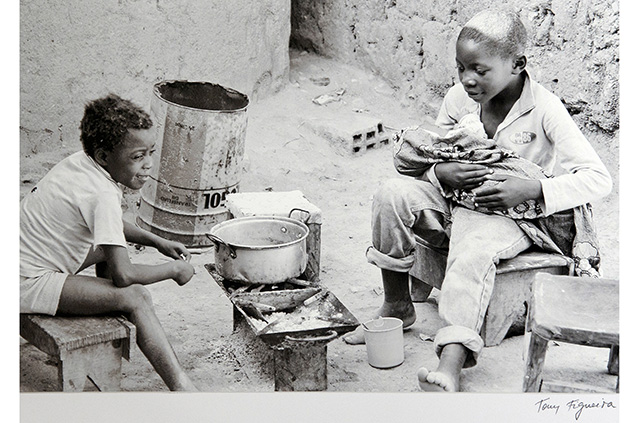
The young Namibians celebrating independence in the past. A small child caring for an infant beside an outdoor stove post-independence. An older image of German girls peering from a Wika float and white youth drenched in paint at a colour party.
Decades later, racial lines of privilege and power endure parallel to present-day lines of class and tribe which aren’t alluded to in the selection but in one image in particular there is optimism. A baby – eyes deep and innocent – stretching their hands out towards the camera, reaching, perhaps, for the future.

