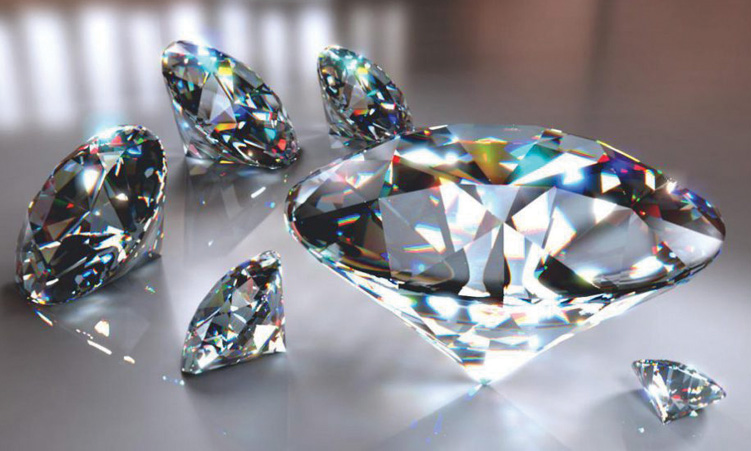
Southern African Nations recently held a round-table discussion to address the declining popularity of natural diamonds amid the rise of lab-grown alternatives.
The meeting resulted in the signing of the Luanda Accord, where these diamond-producing countries, alongside the Gem and Jewellery Export Promotion Council, Antwerp World Diamond Centre, Dubai Multi Commodities Centre, and De Beers, pledged to contribute 1% of annual rough diamond revenue to a global marketing campaign led by the Natural Diamond Council.
But experts warn these efforts may be too late, as global demand for natural diamonds continues to fall.
The former diamond commissioner at Namibia’s Mines ministry Kennedy Hamutenya, says the surge in synthetic diamonds is bad news for future investment in exploration and mining.
“If investors perceive increased risk due to falling demand, they’ll hesitate to fund upstream operations like exploration, production and sorting.
Debmarine’s decision to retire two of its mining vessels three years ahead of schedule is a clear sign of this trend,” he says.
At the round-table session, Namibia’s deputy minister of industries, mines and energy Gaudentia KrÖhne, revealed that diamonds contributed 6.3% to Namibia’s gross domestic product (GDP) in 2023 – a figure now under threat due to slowing global demand.
KrÖhne also cited United States (US) president Donald Trump’s 21% tariff on Namibian mineral imports as a contributing factor to weakening demand.
“A particularly pressing concern is the newly announced US executive order of 2 April 2025, which imposes broad tariffs aimed at rebalancing trade flows.
Namibia now faces a 21% tariff on mineral exports, including diamonds, to the US – a key market for our gems,” she said.
“Such tariffs are likely to reduce Namibian exports, distort markets and create new volatility in global trade, especially in the natural diamond sector,” KrÖhne said.
Namibia recorded a 32.9% drop in diamond revenue – from US$984 million (about N$17.2 billion) in 2023 to US$672 million (about N$11.7 billion) in 2024 – according to the Bank of Namibia’s latest annual report.
Experts warn that this drop will not only undermine the country’s ability to service external debt, but will also deplete foreign currency reserves and reduce capacity to pay for imports, damaging investor confidence.
Namibia’s external debt, which includes both public and private sector debt held by non-residents, currently stands at about US$9.5 billion (about N$166 billion). The country’s external debt-to-GDP ratio was 76.7% in 2023.
Meanwhile, Anglo-American is planning to restructure and possibly divest its stake in De Beers, potentially resulting in the diamond company operating independently.
Anglo-American owns 85% of De Beers, while the remaining 15% is held by the government of Botswana.
Unlike countries such as Norway and Abu Dhabi, which used commodity booms to build sovereign wealth funds, Namibia failed to leverage peak diamond demand for long-term stability.
Instead, much of the windfall benefited a small elite, leaving the economy vulnerable to commodity shocks.
“If lab-grown diamonds keep gaining market share, we’ll likely see a sharp decline in mining-related investment, with knock-on effects across our economies,” Hamutenya says.
“What’s interesting is that major cutting and polishing centres like Surat and Mumbai are now processing both natural and lab-grown stones. When demand for natural diamonds dips, they simply switch to synthetics using the same staff and equipment.
Their operations stay stable.”
This could be a wake-up call for Southern African nations. Lab-grown diamonds are not going away.
As natural diamonds fade, it may be time to start investing in the lab-grown diamond value chain – because clearly, natural diamonds are not forever.
– Vitalio Angula