



Sometimes stories come to us in dreams. In half forgotten memories of vaguely recalled whispers that mingle with rumour, reality, history and imagination before springing so vividly to life, they wake us up, take our hand and birth a clamour of characters that are simultaneously real and imagined, fictional and faintly familiar.
Walvis Bay’s Charmaine Stewart was on holiday in Ireland when she first dreamt of the skeletons in the wall.
Long gone and silent, yet urging her to speak, Charmaine was so haunted by the vision of herself opening a wall and finding the bones of children, built over and forgotten, that she thought the best way to put it out of her mind was to put it down on paper.
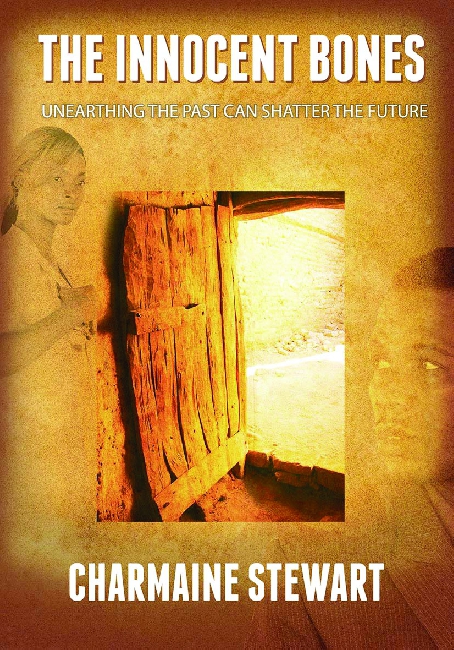
Their story is called ‘The Innocent Bones’.
Deftly weaving between the apartheid past and the relatively liberal present, Stewart presents a striking story that straddles the genres of historical human drama, crime, love story and fiction in her debut novel published by Wordweaver Publishing and set for release in June.
Alive in her pages and brought to life in simple, stirring sentences are two girls, one black and one white, who grew up as friends in post-apartheid Standerton – Stewart’s real-life home town in South Africa.
Existing on opposite ends of the spectrum in terms of race, wealth and academic ability, the girls forge an unlikely friendship that endures into adulthood where odd occurrences from their past become more sinister in their present.
At the centre of the intrigue is a confession by old Anna Nyembe who has known the truth about the disappearance of a black teacher and her pupils for many years but has carried her knowledge below her breast still fearing the Black Maria that drove into an idyllic afternoon and shattered her world forever.
There is also the dogged detective Jack Malepo, who follows the threads of Anna’s confession into the past where they meet a young Afrikaans boy named Hennie who grows up to become a policeman during the apartheid regime and a grandfather to Katie who befriends Thuli in the new South Africa.
Recalling elements of apartheid such as the Ossewabrandewag, the Stormjaers, Black Marias and the swift, stealthy and secret assassinations of black people who opposed the police, ‘The Innocent Bones’ personalises a past that many would like to forget.
“I grew up in the 1950s and 1960s with those events happening around me, and still have a hard time telling my children about it,” says Stewart.
“A lot of the book is based on things I heard and saw in my early youth with the older parts based on stories my parents, in-laws and their friends told me while a lot of it comes from actual research. The internet has a lot of information and also a lot of misinformation.”
Though much of the ‘The Innocent Bones’ takes place in the present, Stewart’s biggest challenge with regard to writing the past was finding accounts of the time that correlated with what she had heard growing up.
“It is not easy to find the truth,” says Stewart. “The parts I found most difficult to research were the parts about the Ossewa Brandwag and the Stormjaers. I believe that the history of that period was largely rewritten during the Nationalist era, and it did not fit with the stories I heard from my parents and their contemporaries. So I decided to go with what I had heard rather than what I read.”
This means that though ‘The Innocent Bones’ is historical in as much as it is set in the past, not everything is factual but rather a blend of research, rumour and oral history passed down through family and friends as an alternative narrative that flies in the face of apartheid era propaganda. For, Stewart her book is a stab at presenting a more likely truth.
“The people who lived at that time are long gone, and all that remains is the written word and stories passed down. Even those stories can be very subjective, so you have to take a stand on what you believe,” says Stewart.
What Stewart believes is that even though apartheid is long gone and both South Africa and Namibia are certainly free, stories like ‘The Innocent Bones’ remain relevant as epic cautionary tales that illustrate how the past continues to affect the present.
“I believe that people who have been born and grown up since the end of apartheid should know what it was really like to live in those times, if only to ensure that things like that never happen again,” says Stewart.
“I like to think the book is positive and also, to a certain extent, inspiring because it shows how much things have changed. It was also important for me to let my children know how lucky they are not to be living in such dark times.”
That said, Stewart is not convinced that the past is the past and that we are suddenly colourblind and afloat on a bed of roses.
“Human nature does not change, unfortunately, and I think there are still pockets of racism, and police corruption, not just in Africa, but everywhere, and I doubt it will ever be completely eradicated.”
Maybe not in reality but there is certainly a chance in fiction through the exploits of ‘The Innocent Bones’ detective Jack Malepo, who Stewart is currently writing into her second novel while her first lies in wait until its much anticipated launch in June.
With regard to Stewarts hopes for her debut novel, they are heartfelt and humble.
“Just getting my first book published is a major achievement for me. I would be very happy if it could find a wide audience, and that people who would not normally read, would find it worth settling down with and possibly handing on to a friend.”
– ‘The Innocent Bones’ will be launched by Wordweaver Publishing early next month. Watch the press, mail angi@wordweaverpublishing.com, or join Wordweaver Publishing’s Facebook page for launch details.
In an age of information overload, Sunrise is The Namibian’s morning briefing, delivered at 6h00 from Monday to Friday. It offers a curated rundown of the most important stories from the past 24 hours – occasionally with a light, witty touch. It’s an essential way to stay informed. Subscribe and join our newsletter community.

The Namibian uses AI tools to assist with improved quality, accuracy and efficiency, while maintaining editorial oversight and journalistic integrity.
Stay informed with The Namibian – your source for credible journalism. Get in-depth reporting and opinions for
only N$85 a month. Invest in journalism, invest in democracy –
Subscribe Now!