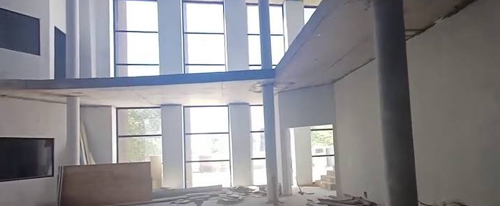
Delayed funding has halted the construction of the new N$119-million Eenhana Town Council office building, severely impacting local service delivery and staff working conditions.
Eenhana chief executive Wodibo Haulofu revealed this yesterday.
He said a total of N$9 million, excluding fees, is urgently required to complete the building’s finance wing, so that staff and customers can use it.
N$119 million is still needed to complete the entire project, he said.
This follows the parliamentary standing committee on labour and industrial relations’ oversight visit last week, which chairperson Uahekua Herunga led.
During the visit, Herunga asked why it was taking so long to complete the new building.
The construction of the project, which started in 2018, is on hold because the contractor has allegedly not been paid.
“We’ve been operating from an eight-office building since 1999, when the population of Eenhana was 2 600 compared to 16 000 now,” Haulofu said.
He said the project was funded by the Ministry of Urban and Rural Development’s annual savings, but was added to the medium-term re-expenditure framework for the 2026/27 financial year.
Haulofu said the new 36-office building consists of a finance wing, a management wing and council chambers.
The project is being implemented in three phases with three stages under phase one, he added.
He said the project’s total expenditure to date amounts to over N$45 million.
The ministry did not comment on the lack of funds last week.
Independent Patriots for Change Ohangwena secretary Fanuel Ndemwiiba says service delivery has been affected by the delays.
“I recently visited the site and found officials overcrowded in a single office, with the old and new buildings standing side by side, and only a corrugated iron separating them.
The area looks untidy and is not conducive to effective service delivery,” he says.
Ndemwiiba says parts of the new building have already started deteriorating despite being unused.
He believes the council may have competing financial commitments, despite funds having been allocated, leaving insufficient resources to complete the project.
Ndemwiiba says he has been informed that the unpaid contractor has abandoned the site and moved on to another project, a situation the council should avoid in future.
“You cannot start a project when you know there is inadequate funding to pay the most important stakeholder – the contractor,” he says.
He expresses concern over several government-funded structures at the town that remain incomplete years after construction began.
Such projects waste public resources that should be used to drive development and improve residents’ lives, he says.
The secretary calls on the relevant ministries to investigate the matter and explain why funds have not been made available to pay contractors.