





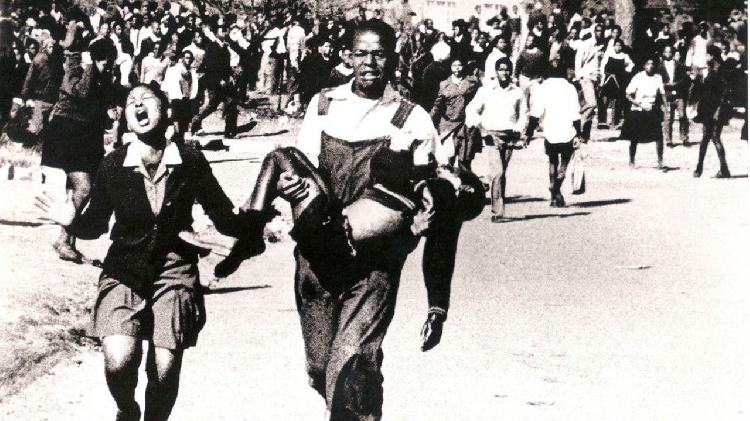
•Brij Maharaj The catalyst for the democratic freedoms South Africa now enjoys was the sacrifices of the youth of June 1976 (influenced by Black Consciousness), and those who followed, who were in the vanguard of the freedom struggle.
With the banning of the ANC and PAC in 1960, and the arrest of leaders (many escaped into exile), there was a quiescence in anti-apartheid protests until the 16 June 1976 Soweto uprising. In 1978, John Kane-Berman contended that “June 1976, like Sharpeville 16 years before, was another turning point where South Africa did not turn”.
Reflecting on the events of that tragic day, one of the leaders of the Soweto uprising, Sibongile Mkhabela, said: “There was something beautiful and dignified about the gathering of the students that morning at the Naledi High School … As we left the school gates we chanted the sorrowful ‘Senzeni Na? Isono sethu bubumnyama lamabhunu ayizinja’ (What have we done? Our crime is our blackness. These white rulers are dogs) … The events of the cold morning of June 16 1976 are written in blood, ash and tears.”
Sadly, the present generation know very little about such struggles and those who paid the ultimate price. The June 1976 death toll was 176. The thousands who survived – in exile, prison, or being banished to rural areas – effectively became part of the ‘lost generation’. Moot points would be ‘necklaces’, and ‘liberation before education’. Seth Mazibuko, one of the ’76 leaders stated that the role of women in June 1976 was not recognised: “The first people to disguise us that day when the police began looking for us … to sacrifice their dresses, were women. The first people to bring us water as we were fighting the teargas were mothers. The people who shot us were fathers.”
A study done in the early 1970s identified political rights, influx control, inadequate income, and inferior educational facilities as the main grievances of high school students. After more than two decades of democracy, how much has changed?
The #FeesMustFall movement exposed the compounded challenges facing the youth, including “economic exclusion, access to quality education and continued inequality”, which have been attributed to government failures.
Seth Mazibuko questioned whether the sacrifices 40 years ago bore fruit, especially since the issues raised in June 1976 were still manifest in 2016, and he offered the following apology to the #FeesMustFall movement: “After 1994, the leaders, many of my own comrades, left you young people leaderless. We rushed to parliament to be called MPs, we rushed to the BEEs … (hence) … the lives lost in 1976 have just been reduced to fun in a stadium – where people can come to get tenders, drink liquor and listen to Chomee.”
The quality of education remains dismally low in most black schools in terms of poor facilities, textbook shortages, poorly qualified and motivated teachers who are frequently absent, and the latest scandal is that ANC ally, SADTU, has been accused of selling education posts. Senior journalist Barney Mthombothi said: “As things stand, the ANC is wreaking untold damage on our children and, consequently, on the country’s future, just as apartheid education did in the past.”
Of course, the surging combinations of oestrogen and testosterone associated with youth often influence risk-taking behaviour (aided by the toxic combination of drugs and alcohol), with unintended consequences. A 2009 study conducted by Lovelife revealed that 9% of the youth between the ages of 15 and 24 were HIV positive, of which 77 % were female. One of the reasons for the higher levels of infection of young females was the sugar daddy or ‘blesser’ syndrome, which is being celebrated in the social media by victims and predators. This refers to young women who receive financial support from several older men in return for sexual favours, a sophisticated form of prostitution, and a shocking reflection of South Africa’s plummeting moral decadence.
The youth (15-24 years, as defined by the International Labour Organisation) make up about one-fifth of global population (and a bit, if the ANC’s extended definition to 35 years is considered). South Africa’s youth segment comprises 41,2% (20,5m) of the total population. About half of the population under 39 years old, while 72% of unemployed South Africans are under the age of 34. About 51% of the South African labour force do not have matric.
There is also a huge dropout rate in schools. Young people who are not employed and not in education and training have been referred to as NEETs. According to the department of higher education and training the number of NEETs escalated from about two million in 1996 to approximately 3,5 million in 2016 – the post-apartheid ‘lost generation’. A ticking time bomb.
A 2009 post-school youth study estimated that 2,8 million people aged between 18 and 24 were NEETs. The implications of the NEETs became apparent when the 2009 crime statistics “showed that the average age of a house robber in South Africa is between 19 and 25 years, and that, of the robbers arrested, 90% did not have a school-leaving certificate and were unemployed”. Given the present economic doldrums, political shenanigans and downgradings, the unemployment rate is likely to increase.
Behind the facade of the ‘rainbow nation’, there is a forgotten cohort of children “about to enter society as active citizens”, frantically seeking employment. Many are AIDS orphans and have “grown up without proper education, without a moral compass and with little hope for the future”, trapped in a vicious cycle of poverty.
Nelson Mandela said that “the youth are the leaders of tomorrow”, and in many respects represent the hopes and aspirations of future generations. Of course, the youth need, and look for, positive role models to emulate and follow. How many role models are there in the public domain for the youth to follow in terms of morality, ethics, integrity and righteousness in South Africa?
On the 30th anniversary of the Soweto uprising, the Sunday Times raised a critical question: “So how best do we thank those girls and boys who, armed only with stones, took on a mighty state? Do we put up monuments in their honour? Do we compose heroic poems about their valour? Name public institutions after them and their deeds…? Or is the way to honour them to realise their dream of creating a just and decent society?”
These questions are equally relevant, if not more so, on the occasion of the 41st anniversary of the 16 June uprising. If the goal is to create a fair and just society based on “human dignity, the achievement of equality and the advancement of human rights and freedoms” (as per the constitution), then South Africa as a collective, and especially the ANC government, which dictates policy and distributes resources, has failed.
As the spewing #GuptaLeaks reveal, the ruling elites and their cohorts are betraying the martyrs of June 1976 on the altar of greed.