



In 2018, the words ‘k*ffir’ and ‘hotnot’ might have been replaced by ‘hulle’ in subtly racist attempts to hide the prejudices of so many who still remember Suid-Wes Afrika.
But there was a time when racism wasn’t so subtle, when the social and political divide between black, coloured and white was clearly marked with a white line. From the 50s to the 90s, apartheid was rife, and while many people suffered, there were roses that grew from the concrete when the boundaries between white and black were blurred by basic human instinct and love.
This is what ‘The White Line’ is all about.
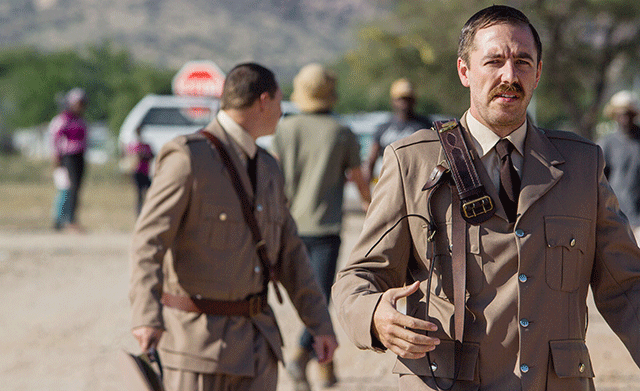
The film, set in 1960s Katutura, was shot mostly in smaller Namibian towns like Karibib and Usakos as these locations still have their quaint, vintage houses, as opposed to Windhoek which is growing at a rapid pace. The Weekender caught up with some cast and crew to talk about the journey of the film and the goings-on behind the scenes.
The storyline was born from singer and playwright Micheal Pulse’s desire to express a different narrative of the past without distorting what that specific era meant to people as a nation. Pulse mentioned the social and political importance of the story lies in love being able to conquer anything despite era, colour, race and religious beliefs.
“As the story was in the development phase, I already had the main characters – Sylvia and Pieter, who seem to be in a bubble. And with their story developing, other characters seemed to be morphing on their own. It was really more of letting the characters become themselves through the movement of the lead characters,” he said regarding the development and inspiration behind the characters.
But this also presented its own challenges.
Pulse said that so many different characters each have their own personalities, circumstances and influences, and often need motivation in different ways throughout the story.
“Some of them are really tormented by their past. Some are weak and you just want them to be courageous. Some of the characters are torn apart and in need of love, and you just want to stop typing and give them a hug.”
He said the storyline resonates today. “Not to the extent in which it was back then, but more in terms of being able to follow your heart, standing up for what you believe and being strong in the love that you see in the person you hold dear to you.”
While Pulse was the scriptwriter, he also served as a producer for the film. He mentioned that funding was crucial and sleepless nights inevitable, as was putting out fires.
Regarding the Namibian film industry, he said: “It’s growing and there is still more to do. As long as we collaborate and work together, we can get it to where we need it to be by our own standards – our own young Nambiwood”.
However, funding still remains a concern. “It is close to impossible but the Namibian Film Commission is really pushing to get Namibian content out there, but as Namibian filmmakers, we need to take it a step further and look outside for funding,” he said.
The other producers of ‘The White Line’ are lead actress Girley Jazama and director Desiree Kahikopo. The latter gave us some insight into what it was like directing this script.
“Micheal wrote a really great script and it was easy to dive into the story and understand each character and their journey. Because I also consulted on the script in the development stages, I already understood the vision behind the story we wanted to tell.”
Kahikopo mentioned that shooting a 91-scene film in a fortnight is no easy feat. “But we had an amazing crew and cast who understood the vision and brought to the table their creativity, passion and hard work. As humans, being in the same space obviously had its challenges as passionate creative individuals – but we left all that at the door and came in and did what each person had to do.”
As her directorial debut, Kahikopo said she hopes the film launches her career globally as a Namibian female director, as well as being able to tell local stories that speak to the hearts of a worldwide audience.
The director said she hopes the film goes on “to break barriers, ignite hope and inspire an upcoming generation of Namibian and African filmmakers”.
“Nothing is impossible, if you can dream it, you can do it,” she said, mentioning that an Academy Award is also on her wish list.
While the cast and crew played an important role in directing the film efficiently, the art department played a role in bringing the apartheid era to life. Dawn Diergaardt of the wardrobe department said in film, costumes should be able to carry their own story without the actors having to say a word.
“It was a dream for me to work on a time period story,” he said. “So many of the costumes worn were made for the period and I must say, we did a great job,” he added. He mentioned that limited time and budget were, however, a challenge.
Lead actress Jazama, who played the role of Sylvia, said working with several different cast and crew members who would be talking during her scenes required her to drown out the white noise and focus on her lines and stay in character.
“Sylvia is a representation of everyone who came before me, what they went through, the hardships they had to endure as well as the strength they mastered in times of difficulty,” she said, referring to the importance this role plays in her life as well as her larger community.
“It was an amazing experience to work with an amazing cast and crew. I am proud of the fact that everyone involved was fully committed as this story is bigger than all of us.”
“As producers, we hope this film will show the world that we do have talent in Namibia – be it crew members or cast members. This film will also show that as Namibians we are competent enough to tell our own stories,” Jazama concluded.