



• Masiyaleti MbeweFor many girls, menstruation comes with the looming prospect of days spent at home huddled in isolation because they cannot afford the proper sanitary products needed to accommodate and alleviate the discomfort.
Having acknowledged this problem, many NGOs and private organisations like Power Pad Girls in affiliation with Sister Namibia’s SisterPAD have formed initiatives to help aid the hundreds of girls all over our country in need by organising pad drives and quiz nights to not only spread awareness but also raise funds and collect pad donations.
SisterPAD aims to provide a sense of security within the community of girls in need, proper hygiene as well as the opportunity to continue studying during menstruation each month. “We want to see girls reach their full potential. Start saying to yourself my period doesn’t control me,” Vida de Voss-Links, director at Sister Namibia, said during one of the excursions to Groot Aub, about 30km from Windhoek. YouthPaper explores pad drives, re-usable pads and how you can help.
Re-Usable Sanitary Products
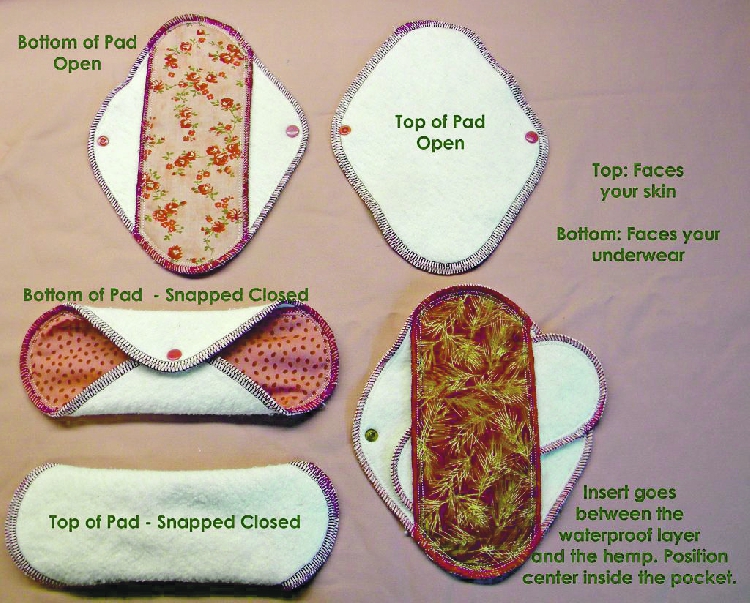
Re-usable cloth pads are worn just like conventional disposable pads with wings.
Instead of adhesive strips, these pad wings have snaps that fasten around the base of your underwear. As long as the pad is mostly dry, it won’t really affect or stain any other laundry. Re-usable pads can be washed periodically during your cycle or all at once at the end during menstruation, whichever is more convenient for you. When not in use, cloth pads are to be stored in a dry, breathable place.
Most of the patterns offered are chosen with stain camouflaging in mind so many will show little or no staining. The most effective cleaning method is to machine wash the pads as one would any other piece of clothing – no rinsing, soaking or scrubbing required! When hand-washing the cloth pads, one must do so gently by rinsing and squeezing. With proper care, the pads will likely last far longer than the typical estimated five to seven years.
These reusable pads are environmentally friendly, and cost-cutting materials are used absorb fluid easily so that one does not have stains on clothes, underwear or chairs. The re-usable products also come in different shapes and sizes to cater for girls with different body types.
Throughout Communities
Just last month, it was reported that around 760 girls in rural Namibia have positively benefitted from pad drives around the country, and most of these girls come from impoverished backgrounds. Beforehand, it was common for young girls to stuff materials in their underwear as makeshift pads for the sake of attending school. Others would simply miss school because of their menstruation every month for fear of embarrassment and backlash.
But Sister Namibia’s Innocentia Gaos previously said that the reusable pads are sustainable.
“It contributes to an increase in school attendance of 15% to 25%, and enables greater academic performance, increases confidence levels and the agency to become self-determined, and is also environmentally friendly.”
What You Can Do To Help
Supporting local quiz nights organized by Power Pad Girls is fun way to start. Proceeds from the quiz nights are usually collected and sanitary products purchased and donated to girls in need, co-organiser of Power Pad Girl quiz nights, Hildegard Titus, says. “We are affiliated with Sister Namibia and SisterPAD in that they are the current benefactors. All the money we make, we give to them towards the project.”
By purchasing a SisterPADS kit for US$15 (N$200), your money will go to Sister Namibia who will assemble the kit and directly distribute it to girls in need. You can make a big difference by helping a girl access her right to education.
You can also make direct donations to SisterPADS. Simply go to staytoday.com.na/give/sisterpads to become part of this exciting and important initiative.