






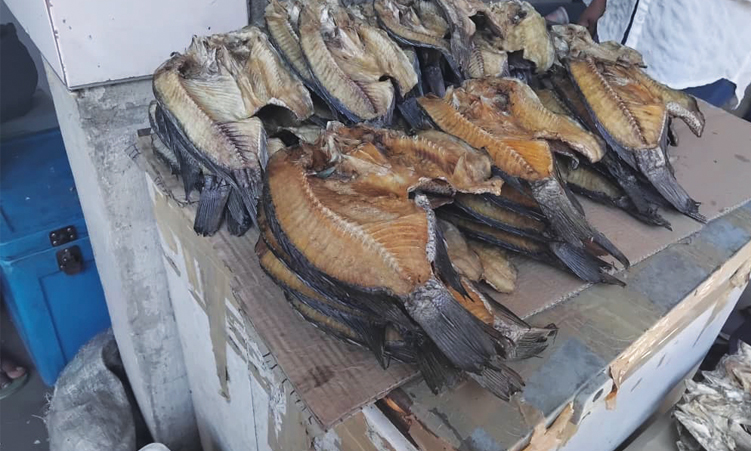
COMMERCIALLY motivated illegal fishing activities in the Zambezi River have placed the highly sought-after tilapia fish (Zambezi bream) species under threat, the government has said.
Zambezi bream, a local staple, has over the years grown to become a lucrative business in other parts of the country and neighbouring countries.
Ministry of Agriculture, Fisheries, Water, and Land Reform spokesperson Tjirongo Kauaria yesterday said illegal fishing activities in the Zambezi region affect the entire river system – including Chobe, Kwando, Kavango, and Cuvelai.
He said residents use banned nets, such as the monofilament gill nets, and other unregulated methods to overfish.
“This practice detrimentally affects not only the Zambezi River but also its adjoining tributaries. Additionally, individuals engaging in illegal fishing have entered national parks, where fishing is strictly prohibited by law.
“This ongoing situation poses a serious threat to fish populations, particularly the highly sought-after Zambezi bream, which has become increasingly scarce in local markets,” he said.
Kauaria says during the previous financial year, fisheries inspectors in the Zambezi region confiscated 1 143 illegal fishing gear items following 429 daily patrols.
He added that between January and May this year, the fisheries inspectors seized 358 illegal fishing nets.
“The increase in illegal fishing net usage and subsequent confiscations in April and May are attributed to the flood season, which facilitated greater deployment of such equipment. During the same period, authorities confiscated 448.7kg of mixed dried fish and salted fish,” he said.
Kauaria said due to the limited number of fisheries inspectors, they are unable to control illegal fishing activities in the region.
He added that illegal fishers frequently operate both day and night, primarily targeting locations that are not readily accessible by patrol crafts.
“The growing commercial value of these resources has heightened their vulnerability to illegal exploitation. Therefore, an integrated approach is necessary to address this issue effectively,” he said.
Nineteen community-managed fisheries reserves covering more than 2 500 hectares were created between 2016 and 2022 to rehabilitate fish stocks in the rivers.
“Furthermore, seven additional community-managed fisheries reserves will be established this year, increasing the total area under community management from 19 to 26 reserves and expanding managed lands from 2 500 hectares to 32 500 hectares,” he said
He said while the measures work well when adhered to, challenges arise when community members circumvent regulations or collaborate with offenders.
Impalila Island community activist Papiro Sikanda this week said fishermen resort to using the banned nets because they are unable to find the prescribed fishing nets in shops locally.
He added that if the agriculture ministry wants the fishermen to use legally acceptable nets, then they must supply such nets to them.
“Fishing is the livelihood for these fishermen, therefore, they cannot sit idle because they do not have the recommended fishing nets. The fisheries ministry must bring the required fishing nets to the market because currently the market is flooded with the illegal fishing nets. The ministry must close that gap,” he said.