Some workers struggling to repay loans are allegedly changing their working hours and reporting for duty as early as 03h00 to avoid being confronted by lenders at their workplaces.
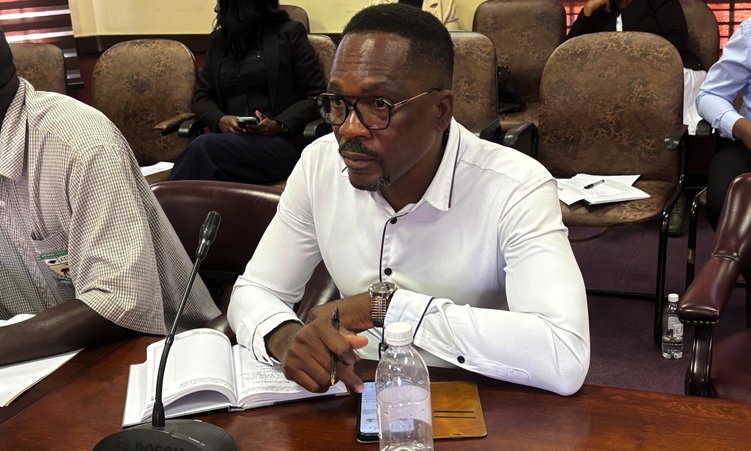
The claim was made by public servant Michael Amakali, who told a parliamentary standing committee on economics at Oshakati yesterday that he had dealt with several cases involving workers allegedly pursued at their workplaces by unregistered lenders.
“Sometimes they are scared to be at their duty stations at a certain time because they are scared to be found at work by whoever is looking for them,” Amakali said.
“Sometimes they come at work at 03h00 or 04h00 so they finish early and go home because they owe someone.”
Amakali was speaking as the committee investigates whether existing laws adequately protect Namibians from exploitative microlending practices.
He said the pressure associated with indebtedness can become so severe that it affects workers’ ability to function normally at their workplaces.
According to public service management circulars, cleaner positions in the public service are advertised at annual salaries ranging from N$52 450 to N$63 651, equivalent to roughly N$4 370 to N$5 300 per month before deductions.
Amakali, who said he earns a Grade 12 public service salary, proposed that people seeking loans should undergo financial counselling before their applications are approved.
He said counselling could help prospective borrowers determine whether they genuinely need the money or are simply taking advantage of easy access to credit.
“I think there should be a counselling session. The borrowers should be spoken to.
What forces them to take a loan? Do I really need that loan at that time, or do I just need to have money in my hand at that time?” he asked.
He questioned whether unsolicited messages from microlenders offering people access to credit could encourage unnecessary borrowing.
He said a counselling process could force potential borrowers to consider their financial circumstances and the consequences of taking on additional debt before committing themselves.
Amakali also told the committee that he had supervised a colleague who eventually resigned after allegedly being repeatedly pursued by unregistered lenders demanding repayment.
He said he had encountered numerous cases in which workers were allegedly followed to their workplaces by lenders seeking repayment.
Another participant, Sam Nangolo, says financial pressure also drives some people to seek help from churches and traditional healers.
“Some people are not patient and start going to churches and traditional healers,” Nangolo says.
He also raises concerns about spending habits, saying some people spend entire nights at shebeens and large amounts of money there.
Nangolo says others take on expensive lifestyles by building large houses or acquiring vehicles and other properties beyond what their incomes can reasonably support.
“Some build big houses or acquire vehicles and other properties in abnormal ways and this ends up depleting their money,” he says.
Committee chairperson Iipumbu Shiimi says concerns about high levels of indebtedness among Namibians were growing.
Shiimi says some employees earning about N$10 000 a month could end up taking home as little as N$1 500 after loan deductions.
He says financial distress could have severe consequences, including suicide and mental health problems.