For many of us living in Windhoek and other inland areas, few things compare to the joy of visiting Namibia’s coast.
The moment we arrive, the cooler breeze greets us, the scent of the ocean fills the air, and there’s an undeniable thrill in seeing the sea stretch out before us.
Whether it’s relaxing on the beach or exploring the dunes, the coast offers a refreshing change of pace.
But there is so much more to the ocean that we often overlook.
VITAL ROLE
More than 240 000 known species – and possibly two million more yet to be discovered – live in these salty waters.
But have you ever wondered why the ocean is so salty in the first place?
Rainfall breaks down and erodes rocks on land, releasing mineral salts that rivers and streams carry into the sea.
In addition, underwater volcanoes release minerals directly into the ocean, adding to its saltiness over time. Many of us love the ocean but do we also know that each human’s life on this earth is deeply connected to it?
Every single day we reap the benefits the ocean provides – no matter where we are!
Science uses the term marine ecosystem services. In simple words, these are the benefits we humans receive from the ocean and marine life to help us live, stay healthy and thrive.
Why does the ocean matter so much to us.
For starters, oceans are a major source of food, feeding billions of people worldwide with fish, shellfish and sea plants.
They also produce more than half of the oxygen we breathe, thanks to microscopic marine plants like phytoplankton.
At the same time, oceans help regulate the Earth’s climate by absorbing carbon dioxide and storing heat, making them key players in the fight against climate change.
Closer to shore, marine ecosystems protect our coastlines.
Coral reefs, seagrass beds, and mangroves act as natural barriers, reducing wave energy and preventing erosion during storms.
These same areas also filter pollutants, helping to keep our waters clean.
Beyond their practical benefits, oceans support millions of jobs in fishing, tourism and transport, and provide places for recreation and mental well-being.
For many coastal communities, the sea also holds deep cultural and spiritual significance.
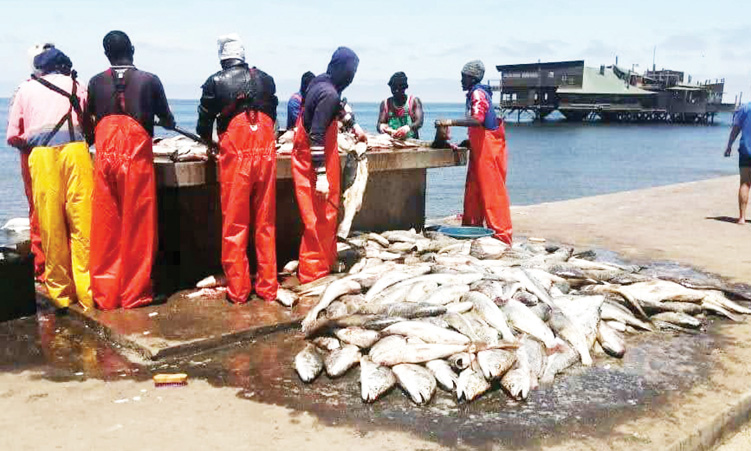
In the Namibian context, especially the availability of fish like hake, horse mackerel, sardines and anchovies play a vital role for local fishing communities and the national economy by supporting one of Namibia’s biggest industries at 3% of the country’s gross domestic product each year.
In marine tourism, the Namibian ocean finds further value through boat cruises, kayaking, fishing charters or Sandwich Harbour tours, providing jobs and valuable income.
Money alone does not define the ocean’s contributions.
For many Namibians, the sea holds deep cultural meaning and offers a sense of peace and connection to nature.
In short, healthy oceans are essential – not just for marine life, but for our own survival and quality of life – globally and in Namibia.
IT’S UP TO US
Protecting marine ecosystems isn’t just an environmental issue; it’s a human one too.
That is why we must act. Everyone can play their part by informing themselves, spreading information and creating awareness.
It is the very reason for presenting this series in which we will explore the beautiful coasts and salty seas of the place we proudly call home.
– Damian Schreiber is the Marine conservation communications, field and research officer at Ocean Conservation Namibia. Born and raised in Namibia, he holds a master’s degree in ecology and society from the University for Peace in Costa Rica. He is actively involved in seal disentanglement, local education outreach, beach clean-ups and public awareness.
– This is the first of a series of monthly columns on ocean conservation.