





AS NAMIBIA marked its second Genocide Remembrance Day on 28 May, remembrance events were held countrywide – from Lüderitz and Shark Island to Swakopmund, Okakarara, Otjinene and beyond.
Political leaders, traditional authorities, scholars and community representatives reflected on one of the darkest chapters in our history: the genocide committed by German colonial forces between 1904 and 1908.
Most speeches and articles rightly focused on the suffering of the Nama and Ovaherero communities, the primary targets of general Lothar von Trotha’s extermination campaign.
Yet an uncomfortable truth remains largely absent from our public narrative: Damara and San people also suffered greatly and are too often invisible in discussions of genocide, memory, apology and reparations.
The historical record leaves little doubt that the German colonial war did not occur in neatly separated ethnic compartments.
Damara and San people lived, worked and travelled among the Nama and Ovaherero communities.
They were caught up in military campaigns, forced removals, imprisonment, starvation, forced labour and concentration camps.
Many lost family members, livestock, land, livelihoods and lives.
The German soldiers did not conduct sophisticated ethnic investigations before opening fire.
In many cases, African communities suffered collectively under a colonial system that viewed indigenous people as inferior and expendable. This reality deserves greater recognition.
CONSEQUENCES
Acknowledging the suffering of the Damara and San is not to diminish the suffering of the Nama and Ovaherero. On the contrary, it is to complete a historical picture that is often left incomplete.
Recognition is not a finite resource.
One community’s pain does not become less significant because another community’s suffering is acknowledged as well.
If Namibia expects Germany to fully recognise the consequences of its colonial violence, Namibians must be willing to recognise the full spectrum of those consequences.
This includes acknowledging all communities that suffered under German colonial rule, including the Damara and San, whose experiences are too often overlooked in public discussions of genocide, memory, apology and reparations.
The 2021 Joint Declaration between Namibia and Germany refers to the “deep wounds inflicted on the Ovaherero and Nama communities, and on the Damara and San, by the atrocities perpetrated during German colonial rule”.
It further acknowledges the lasting economic, social, and psychological hardships suffered by all affected communities.
This language is important. It recognises that while extermination orders directly targeted the Nama and Ovaherero, the impact extended beyond those communities and affected others, including the Damara and San.
Public figures, scholars and commentators therefore have a responsibility to present the historical record as fully and accurately as possible.
THE CHOICE
The stories we choose to tell, those we choose to omit, and the narratives we promote shape public understanding of the past and influence who is recognised as part of the national story.
The omission of certain communities – particularly the Damara and San – from the national narrative not only distorts the historical record but risks perpetuating the very exclusions that reconciliation seeks to overcome.
A mature national conversation should distinguish between the intended targets of genocide and the wider circle of victims who also suffered death, hunger, thirst, displacement, torture, imprisonment, forced labour, loss of land and social destruction.
For genuine reconciliation to occur, all affected communities must be able to see themselves reflected in the national story and get support from others.
The Nama and Ovaherero communities have carried the burden of genocide memory for more than a century and have played a critical role in securing international recognition of these crimes.
Their contribution should be honoured.
Recognising the suffering of the Damara and San should not be viewed as a threat but as an extension of the same struggle for truth, justice, and historical recognition.
The issue is not whether the Nama and Ovaherero were the primary targets of the genocide – they were.
The issue is whether other communities that suffered death, dispossession, imprisonment, forced labour, family separation and social destruction as a consequence of the same campaign also deserve recognition as victims.
A mature nation should be capable of holding all these truths simultaneously.
Recognising the suffering of the Damara and San communities does not diminish the suffering of Nama and Ovaherero communities.
Rather, it enriches our understanding of a shared tragedy and strengthens the moral case for truth, justice, remembrance and reconciliation.
HUMAN COST
It is encouraging that some scholars, journalists and commentators have begun drawing attention to communities whose suffering has often been overlooked.
Recent discussions have highlighted the experiences of the San people during the colonial wars and the concentration camp era.
Likewise, reports on mass graves, human remains, and victims lost at sea near Shark Island continue to remind us that the full human cost of the genocide is still being uncovered and understood.
Yet these discussions rarely extend to a broader examination of all communities affected by the 1904-1908 genocide and colonial violence, including the Damara.
If our understanding of history is to deepen, it must become more inclusive rather than more selective.
If Germany is asked to acknowledge every victim of colonial brutality, Namibia must be prepared to do the same.
Only then can remembrance become truly national, reconciliation become genuine and justice belong to all who suffered.
As someone who participates in the national and international dialogue on genocide, I have come to appreciate that lasting reconciliation requires not only recognition from Germany, but also honesty among ourselves as Namibians about all the communities affected by the genocide.
THE TRUTH HEALS
A nation heals best when it tells the full truth.
The victims buried in forgotten graves, those who perished in concentration camps, those who died from thirst, starvation, disease and forced labour, and those whose land, livelihoods, and families were destroyed deserve remembrance regardless of their ethnic origin.
Their stories form part of Namibia’s collective history and should have a place in our collective memory.
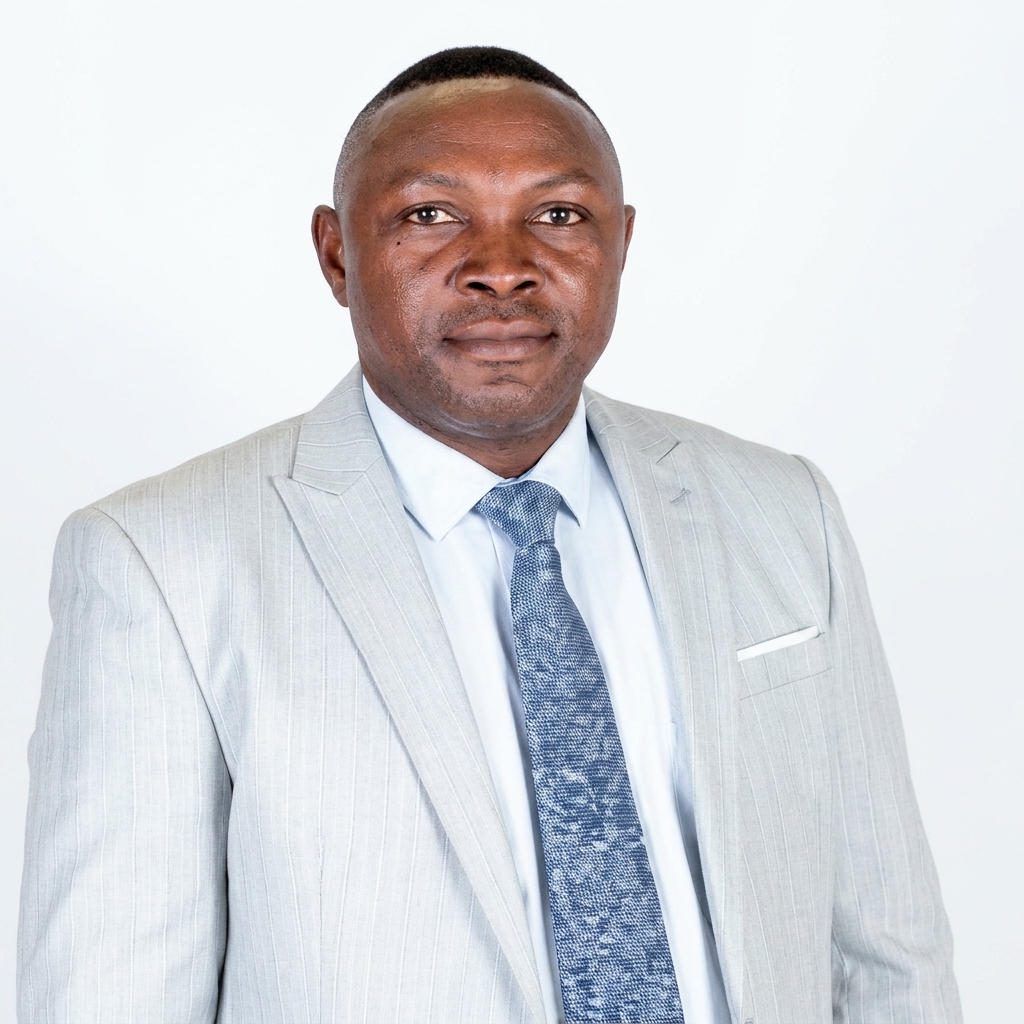
- Seth !Nowaseb is a senior lecturer at the University of Namibia, author and public commentator. He serves on the Technical Committee on Genocide, Apology and Reparations. He is of Damara, Nama and San descent. The views expressed here are his own.