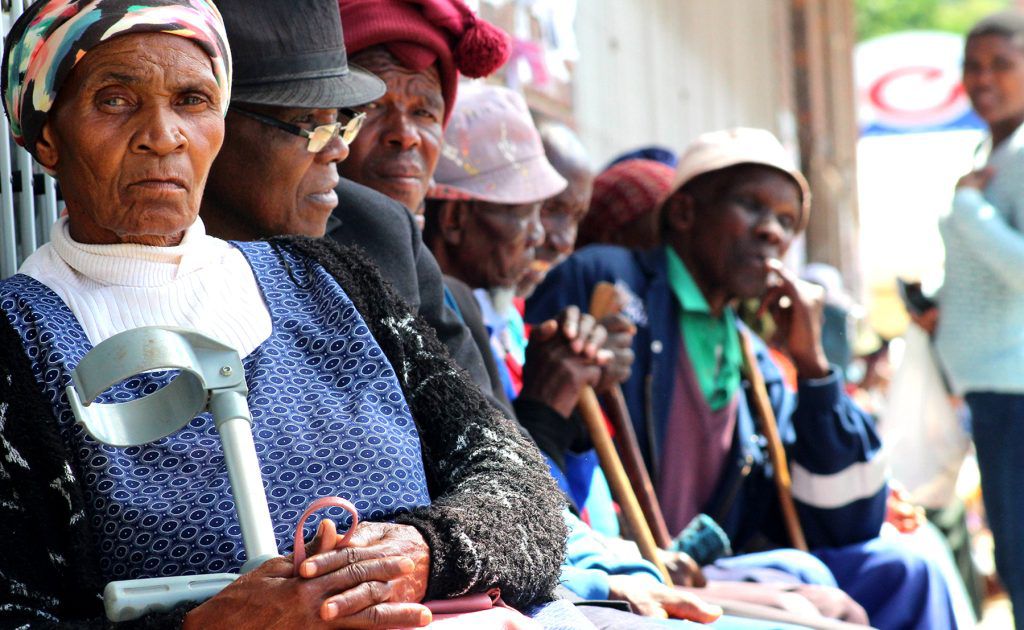





A group of descendants of the anti-colonial leader Hendrik Witbooi find themselves in the clutches of poverty and despair prevalent in Uibis, a situation characterising most small settlements across the country.
UIBIS is a small settlement that lies between Maltahöhe and Gibeon and was once the further most western point of the former Namaland. It was formerly a battleground when guns rattled at the Hutup River between the Bethanie Namas under Cornelius Fredericks and the German colonial forces. That battle had forced out the inhabitants, who fled westwards into the desert. Today, Uibis is an informal settlement in a communal area, and is home to about 30 Witbooi clan members of the /Khowesen Traditional Authority who have been forcibly removed from the Nooihof reserve where they had lived since the clashes with German colonial forces. Their removal from Nooihof came about in 1971 with the implementation of the Odendaal Plan which at the height of the apartheid era saw the formation of 10 tribal homelands in the former South West Africa. According to the residents, not much has changed at the settlement since then. Their livelihoods still depend on the meagre livestock farming they can muster in the barren, semi-desert environment. ‘We are still farming with sheep, goats and cattle, but we are struggling,’ said an ageing Paul Tâseb, a councillor of the /Khowesen Traditional Authority. While the small-stock farming bring in some income, said Tâseb, most of the residents of the settlement comprised predominantly of elderly people have given up their farming and are entirely reliant on their State pensions. According to Tâseb, many of the elderly eligible for a pension still have not applied for it, while some do not have the necessary personal documents as proof that they do qualify for a pension. A younger generation are returning in steady droves to Uibis, unable to find jobs elsewhere and finding themselves reliant on whatever income the elders have. ‘Most young people refuse to farm,’ said Moses Topnaar, principal at the small Edward Frederick School, which was established in 1978 and now forms the focal point of the settlement’s activities. ‘It is only a minority that assists the older people. The rest lie around idle.’According to Topnaar, few of the young people have completed school; many are Grade 10 dropouts because their parents were unable to pay for boarding school at Maltahöhe, Gibeon, or Mariental.Many parents cannot afford the N$60 per year school fees required at the combined school at the settlement either. Amenities at the settlement have remained at a bare minimum, with no Government offices, no post office, no Police station, no mobile phone network, and a bush clinic that visits the settlement only once a month, one small shop that also sells alcohol, and one church. The graveyard lies neglected, and the road network linking Uibis to surrounding towns is poorly maintained. For their water, residents are dependent on a borehole with wind pump which supplies the settlement through a water pipe that ends some distance from their woebegone shacks made from rusty corrugated iron sheets. The residents cannot afford a diesel water pump, and when the wind dies down, they either sit without water or have to dig deep in the dry riverbed in the hope of finding some water. Electricity was brought to the settlement not long ago, but this, said Topnaar, should not have been Government’s priority. According to him, Government should have assisted the settlement’s youth first, and then provided the place with electricity, saying this would have affected more development than electric lights. Moreover, he contended, the power situation has not alleviated the people’s needs. Government has provided pre-paid power to Uibis, which means that residents have to travel to Mariental, which is more than 100 kilometres away from the settlement, to buy electricity. This, he said, has meant that most people do not use electricity because they cannot often afford the trip to Mariental. A handful of residents started a small garden project in 2009 on the banks of the dry riverbed, growing vegetables and fruit like pumpkin, melons, tomatoes, mealies, and potatoes. One of the owners of the garden, Anna Richter, said they lost their first harvest, and in December last year they lost the entire crop after hungry cattle broke through the netting. But, said Richter, with assistance they hope will come from Mariental, they would try again. The residents complained that they have been unable to get loans from Agribank or elsewhere to start up small businesses because they do not have enough livestock to qualify, and they have no collateral for a loan from a commercial bank. Feeling institutional neglect and poverty, many of the residents feel that they would be better off if they were to be resettled, charging that only members of the Swartbooi clan have been resettled so far. ‘We have many problems at Uibis but who will help us? We do not get any assistance,’ complained traditional authority councillor Tâseb.