Adultery will no longer serve as independent grounds for divorce in Namibia under a new law set to come into effect today.
This follows the introduction of the Dissolution of Marriages Act of 2024, which abolishes the country’s fault-based divorce system and replaces it with a no-fault divorce framework based on the “irretrievable breakdown of marriage”.
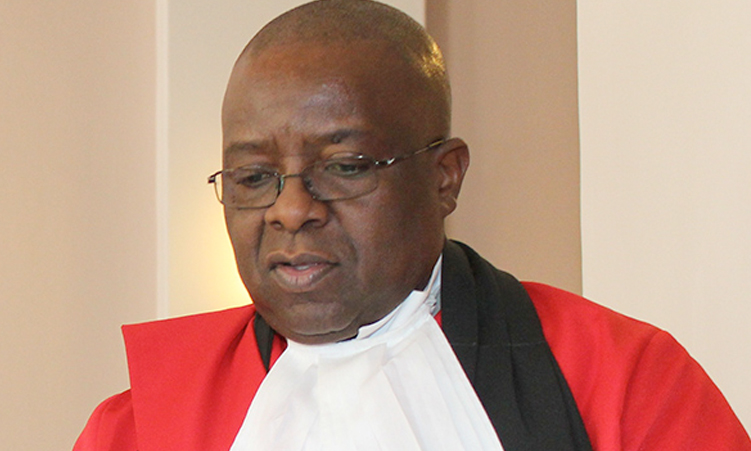
In a guidance note issued yesterday, judge president Petrus Damaseb said the law represents “one of the most significant reforms in the history of Namibia’s family law system”.
NO MORE BLAME
“The emphasis of the new law is no longer on identifying which spouse is morally blameworthy for the collapse of the marriage. The focus is now whether the marriage relationship has disintegrated beyond realistic restoration,” the note reads.
Under the previous system, spouses seeking divorce had to prove recognised matrimonial offences such as adultery, malicious desertion, cruelty, incurable mental illness or habitual criminality.
According to the guidance note, the old system encouraged hostility, blame and adversarial litigation.
The new law recognises only one ground for divorce: the irretrievable breakdown of the marriage.
The act defines this as “the disintegration of the marriage relationship to the extent that there is no reasonable prospect of restoration”.
The court must therefore be satisfied that the marriage relationship has broken down completely and that there is no realistic possibility that the spouses will restore a normal marital relationship.
The guidance note states that adultery, cruelty, desertion and other forms of misconduct may still be considered by the court where they help demonstrate that the marriage has irretrievably broken down.
However, they are no longer independent legal grounds for divorce.
“The court’s role is not to conduct a moral inquiry into which spouse is to blame for the failure of the marriage,” the guidance note states.
The High Court also warned that courts should avoid reverting to fault-finding, moral condemnation or forcing the continuation of marriages that have lost substance and reality.
The reforms further introduce significant procedural changes.
Joint divorces where spouses agree on the dissolution of the marriage and its consequences must proceed through applications supported by affidavits.
The guidance note says this is intended to reduce hostility, lower litigation costs and simplify the divorce process.
The law also places strong emphasis on mediation and amicable dispute resolution, particularly in disputes involving children, maintenance, custody, guardianship and the division of assets.
Legal practitioners are now required to inform clients about the availability of mediation before divorce proceedings are instituted.
Judges may also compel mediation in appropriate cases.
The guidance note says courts retain an independent duty to ensure the best interests of children are protected before granting a divorce order.
Courts may refuse to finalise divorces until satisfied that proper arrangements have been made regarding maintenance, custody, guardianship and parental responsibilities.
The act also introduces major reforms relating to the division of assets. Previously, the proprietary consequences of divorce depended largely on the marital property regime selected by spouses.
Under the new dispensation, courts may now make “just and equitable redistribution orders”, irrespective of whether parties were married in or out of community property.
The guidance note says courts may consider factors such as the duration of the marriage, financial contributions, childcare responsibilities, care giving, domestic work and future financial obligations.
CHURCHES PUSH BACK
Meanwhile, a coalition of churches and civil society organisations is petitioning the parliament to amend the Dissolution of Marriages Act, 2024, which comes into effect today.
The petition, led by Coalition of Churches and Organisations chairperson Shirley Magazi, raises concerns that the new no-fault divorce system could contribute to rising divorce rates and weaken family structures in Namibia.
“We, the people of Namibia, as the sovereign authority in whom all power resides in terms of Article 1 of the Constitution of the Republic of Namibia, respectfully submit this petition to the parliament to urgently reconsider and amend the Dissolution of Marriages Act of 2024 prior to its implementation.
This petition arises from grave concern regarding the increasing rate of divorce, the weakening of family structures, and the potential exacerbation of these challenges through the introduction of a pure no-fault divorce regime based solely on “irretrievable breakdown of marriage,” the petition states.
Magazi and the coalition argue that the removal of fault-based requirements lowers the threshold for divorce and risks normalising it.
The coalition says the new system encourages unilateral dissolution without accountability and may undermine the institution of marriage.
It further argues that under a pure no-fault system, marital misconduct such as abuse, infidelity and neglect becomes legally irrelevant.
“The innocent spouse is deprived of recognition and justice,” the petition states.