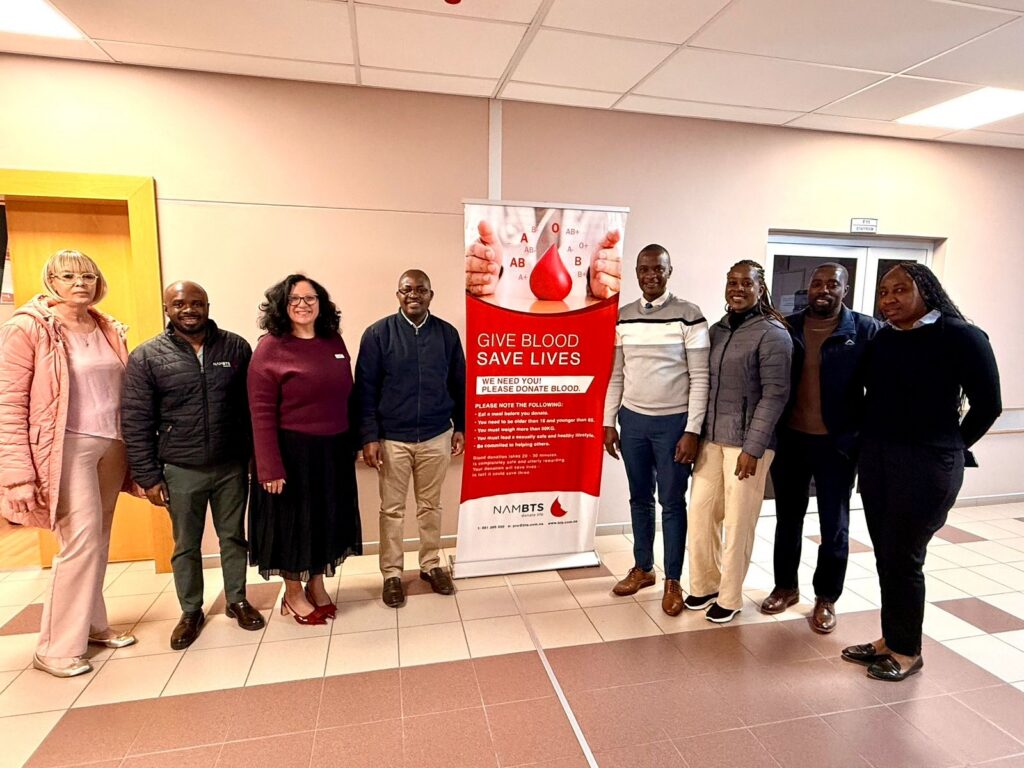
The Walvis Bay Corridor Group (WBCG) and the Blood Transfusion Service of Namibia (NamBTS) have entered into an agreement that encourages truck drivers and broader transport professionals to donate blood voluntarily to save lives.
The WBCG and NamBTS have formally signed an agreement on Monday that will advance health and wellness within Namibia’s transport and logistics industry, as well as strengthen the country’s voluntary blood donation programme.
The agreement also highlights that by combining the WBCG’s large transport network with NamBTS’s skills in collecting blood and encouraging donors, they will raise awareness, organise blood donation events, and motivate more transport workers, industry members and the general public to donate blood voluntarily.
The agreement will also foster a culture of social responsibility across one of Namibia’s most critical economic industries and strengthen the commitment to safeguarding the health and well-being of Namibia’s truck drivers.
WBCG acting chief executive Edward Shivute says the corridor connects countries, markets and people, adding that this partnership extends the connectivity to something even more meaningful, which is to save lives.
“By working alongside NamBTS, we are strengthening our commitment to the health and well-being of the transport and logistics community while encouraging every eligible individual to become a regular blood donor. Together, we can create a lasting impact that reaches far beyond our corridors,” he says.
NamBTS chief executive Israel highlights the importance of their collaborative efforts in safeguarding Namibia’s national blood supply.
“Blood is an essential national resource and maintaining a safe, sufficient supply is a core public health priority. Collaboration with the WBCG enables us to reach more eligible blood donors within the transport and logistics sector and inspire a culture of regular, voluntary blood donation.
“Every eligible donor has the potential to make a life-saving difference and through this collaboration, we are not only strengthening Namibia’s blood reserves but also reinforcing a shared commitment to healthier communities and a more resilient nation,” he says.