







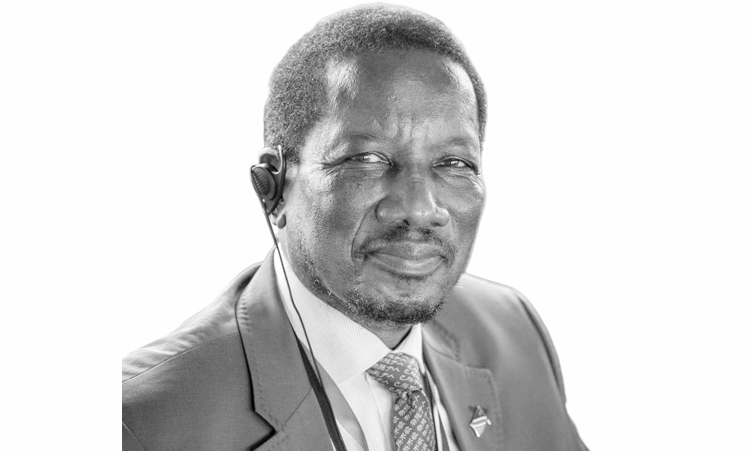
As A former Namibian ambassador to China, I am encouraged by president Netumbo Nandi-Ndaitwah’s official visit to China.
In my view, it is one of the most significant foreign policy engagements since she assumed office.
That it is her first official visit as president outside the African continent sends a powerful message about the strategic importance Swapo and Namibia attach to China.
It also reaffirms Namibia’s commitment to the One China Policy.
The president travelled to China in her dual capacity as Namibia’s president and president of Swapo.
It is equally significant that her visit coincided with the Communist Party of China’s 105th anniversary, underscoring enduring political ties between the two governing parties.
It should also be seen as a continuation of the strong relationship forged by founding president Sam Nujoma, and strengthened by every Namibian president.
I was particularly pleased the president began her visit in Guangzhou.
For many years, the city served as a commercial hub for countless Namibian entrepreneurs who travelled there to source affordable goods and create business opportunities back home before changes in customs regulations made that trade more difficult.
It was a thoughtful acknowledgement of the vibrant people-to-people ties that have long complemented Namibia and China’s diplomatic relations.
To fully appreciate the significance – especially for Namibia’s younger generation – we must understand the history that shaped the friendship between our two countries.
When China was established on 1 October 1949 under the leadership of Mao Zedong, the country emerged from years of war and widespread poverty.
At the time, China was poorer than many African countries.
Yet, despite its own immense challenges, the Chinese leadership remained committed to supporting liberation movements across Africa, including Namibia.
SOLIDARITY
In 1965, Sam Nujoma travelled to China to seek assistance for Swapo’s liberation struggle.
Many Namibian freedom fighters in Zambia were living under extremely difficult conditions. Nujoma requested food, medicine, military equipment and military training.
Mao responded positively, recognising the importance of international solidarity among people fighting for freedom and self-determination.
Providing that assistance was far from straightforward. Supplies had to be transported by sea from China to Tanzania, a voyage that took several months.
Even then, there was no railway linking Tanzania and Zambia.
Recognising this challenge, leaders, including Nujoma, Kenneth Kaunda and Julius Nyerere appealed to China to help build the Tanzania-Zambia Railway – famously known as the Freedom Railway.
China accepted, providing financing, engineering expertise, equipment and thousands of workers.
Sixty Chinese workers lost their lives during construction and were buried in Zambia.
Their graves remain a lasting testament to the sacrifices made in support of Africa’s liberation.
Many Namibians who later became national leaders, including Nahas Angula and Nangolo Mbumba, benefited directly or indirectly from the support this historic partnership made possible.
History also reminds us that until 1971, China did not hold a seat at the United Nations; it was held by Taiwan.
African countries, together with liberation movements such as Swapo, supported restoring China’s seat at the United Nations.
The Chinese people have never forgotten that solidarity.
That relationship has evolved. We are no longer united solely by the struggle for liberation.
We are partners in development, trade and economic transformation.
Since independence, China has trained thousands of Namibians, invested in infrastructure and contributed significantly to our national development.
Namibia, in turn, has supplied valuable natural resources and remained one of China’s trusted partners in Africa.
BENEFITS FOR ALL
President Nandi-Ndaitwah made it clear from her first day in office that she is focused on delivery.
Guided by the sixth National Development Plan, she is seeking practical outcomes that will accelerate industrialisation, create employment and improve the quality of life of ordinary Namibians.
That is why the time has come for frank and constructive discussions.
While China has benefited from Namibia’s natural resources, Namibia must increasingly benefit through value addition, technology transfer, skills development, manufacturing and greater investment in productive sectors of our economy.
The oft-repeated principle of ‘win-win cooperation’ should now be translated into measurable and mutually beneficial outcomes.
I was also encouraged to see the president engaging with Chinese automobile manufacturers.
Brands such as GWM, Chery and BYD are becoming increasingly popular in Namibia because they offer affordable mobility to many young people.
Such engagements could pave the way for investment in vehicle assembly, component manufacturing and broader industrial cooperation in Namibia.
Another encouraging aspect was the president’s stance against corruption.
Her commitment mirrors president Xi Jinping’s emphasis on combating corruption and strengthening governance.
If both countries are genuinely committed to transparency, accountability and good governance, these principles must be reflected not only in policy but in practice.
Ultimately, this visit is about positioning Namibia and China as equal partners in a rapidly changing global economy.
It is an opportunity to move beyond the bonds of historical solidarity towards a future founded on shared prosperity, mutual respect, mutual benefit and sustainable development.
History has brought our two nations together. The challenge now is to transform that shared history into tangible opportunities that improve the lives of our people and secure a more prosperous future for generations to come.
– Elia Kaiyamo is Namibia’s former ambassador to China, and a member of Swapo’s politburo and central committee. This article is written in his personal capacity.