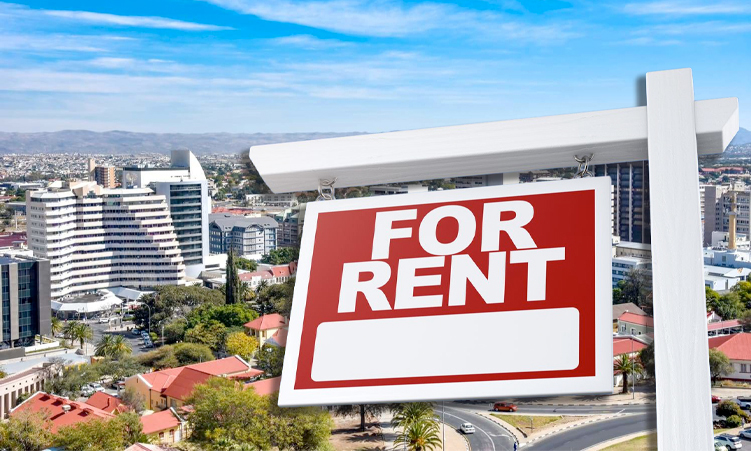
In Windhoek, many many residents now pay rents nearly equal to mortgage repayments, with rental costs taking up 30% to 50% of household income.
This leaves little for essentials like food, transport, and school fees. Windhoek’s population is around 486 000 to 500 000 people, making it Namibia’s largest urban centre. With about 3.3 people per household, the city likely has between 130 000 and 145 000 households.
About 45% to 55% of these households rent, whether in formal houses, backyard rooms, or informal settlements. This means roughly 60 000 to 75 000 households in Windhoek are directly affected by rising rents and housing shortages.
A one-bedroom flat can cost between N$5 000 and N$8 000 per month, while larger homes are far more expensive. For most Namibians, homeownership is out of reach, leaving renting as the only option.
Calls for rent control have grown louder. The idea is to cap rents and protect tenants from exorbitant hikes, especially since the housing shortage cannot be quickly fixed. However, the reality is more complex. Lessons from Zimbabwe and South Africa show that strict rent control can have unintended effects like informal side payments or reduced investment in new housing. Countries like Botswana and Ghana face enforcement challenges despite rent laws, and even Sweden, with a mature rent regulation system, requires strong institutions to succeed.
Namibia already has rent control legislation – the Rents Ordinance of 1977 – which established Rent Boards to regulate reasonable rents and resolve disputes. But these boards became inactive after independence, so enforcement has been weak. The country’s real problem is a combination of weak institutions, poor enforcement, and a severe shortage of affordable housing.
Rapid urbanisation worsens the issue, with more people moving to cities while housing supply lags far behind demand. Introducing rent control without increasing housing supply risks landlords pulling out and deepening shortages.
What Namibia needs is a balanced rental system that protects tenants while encouraging landlords to invest. This could include limits on excessive rent hikes, stronger tenant protections, functional rental tribunals, support for small landlords, and public-private partnerships to boost affordable housing.
Housing is more than a commodity; it’s essential for dignity and economic stability. Namibia’s challenge requires a holistic solution that safeguards tenants without discouraging housing development. We don’t need to pit landlords against tenants – we need a system that protects both.
– Uaurika Kahireke