Financial constraints remain an obstacle to the success of the Namibia Tourism Board’s marketing strategy, says the board’s chief executive officer, Digu //Naobeb.
The Namibia Tourism Board (NTB) is transitioning from a marketing and regulatory body to focus solely on marketing, as marketing constitutes 90% of its business plan.
Stakeholders in Namibia’s tourism sector gathered at Swakopmund last week for one of several countrywide discussions led by the NTB to seek insights and feedback on the board’s new five-year marketing strategy.
“Before we do the budget, we will have to consult with you to see whether our lines of interest align,” //Naobeb said.
According to //Naobeb, as a government-run organisation, the NTB has to balance its duties and needs with those of the government.
“Sometimes the government will give you whatever they have, because it has national duties it needs to consider as well,” he said, acknowledging budget limitations.
“All marketing efforts go hand in hand with money. Sometimes what we market is improper or it is unachievable, and all we have to say after five years is we did not have a budget.”
Highlighting the end of the current strategy by March next year, // Naobeb said the new marketing plan aims to address key challenges and opportunities in the ever-changing tourism landscape.
He said there is a need to focus on relevant source markets, examine the range of tourism products, and consider specialised markets like honeymooners, birding and stargazing tourists.
The NTB’s head of marketing, Charmaine Matheus, echoed the need for a collaborative approach.
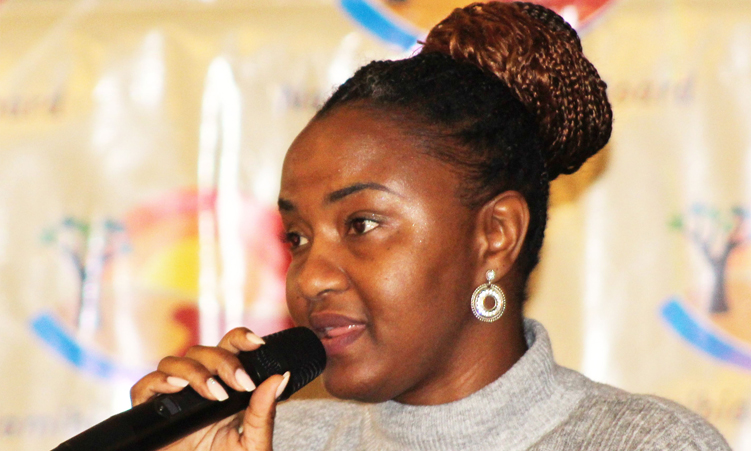
“It is extremely important for us to work together for a common goal, which is to market the destination,” she said, pointing out that the NTB will leverage digital platforms to maximise reach amid limited funds.
According to Matheus, the NTB has identified core values that underpin the visitor’s experience in Namibia: landscapes, wildlife and other distinctive features.
“It’s all about creating perception and visitor experience that sets us apart from our competitors.”
Matheus pointed out emerging markets and high-spending regions as significant opportunities, especially the United States.
She urged the industry to “capitalise on digital platforms like websites and social media to reach a wider audience with the limited funds we have”.
In terms of brand identity, Matheus said there is an opportunity for more campaigns. She talked about sitting on committees aimed at crafting a collective brand for the nation and emphasised the importance of working together with regional and local authorities.
Matheus was candid about the challenges facing the industry.
“Journalists are striving to obtain visas, and crime against tourists is an ongoing issue,” she said. She also cited budget limitations and high-cost perceptions, particularly in the domestic market, as weaknesses.
The NTB aims to focus on three key pillars: improving reputation, establishing quality experiences and leveraging communication platforms.
In 2021, the tourism industry contributed N$7,2 billion (14,7%) to Namibia’s gross domestic product. The industry supported 44 700 jobs in 2021, which is equivalent to 3,5% of the country’s total employment.
The number of tourists visiting Namibia declined in 2020 and 2021 due to the Covid-19 pandemic. In 2021, there were 232 800 tourists, compared to two million in 2019.
The top-five source markets for tourists to Namibia in 2021 were South Africa (43%), Germany (17%), the United Kingdom (9%), Italy (6%) and France (5%).