The announcement by the ANC that its members who also belong to the SACP have 10 days from Thursday to declare which party they will be campaigning for has the potential to spread significant chaos in both parties. But it also underscores the misguided nature of the SACP’s venture in going it alone with no public evidence of any voter support.
Earlier this week, ANC Secretary-General Fikile Mbalula said his party would write to all its members and give them a deadline of 10 days from Thursday to tell Luthuli House whether they would be campaigning for the SACP or the ANC during the local elections.
Considering the SACP has said it is now campaigning independently, and will be putting up its own candidates in wards around the country, one can hardly blame the ANC for taking this step. It is entirely rational.
But it can still create some interesting and perhaps amusing results.
The most obvious examples are probably Blade Nzimande and Buti Manamela. Both occupy ministerial positions in the national coalition, taking up valuable seats that would otherwise go to the ANC.
Considering that Nzimande is a former long-time leader of the SACP, it would seem impossible for him to imagine not campaigning for the party.
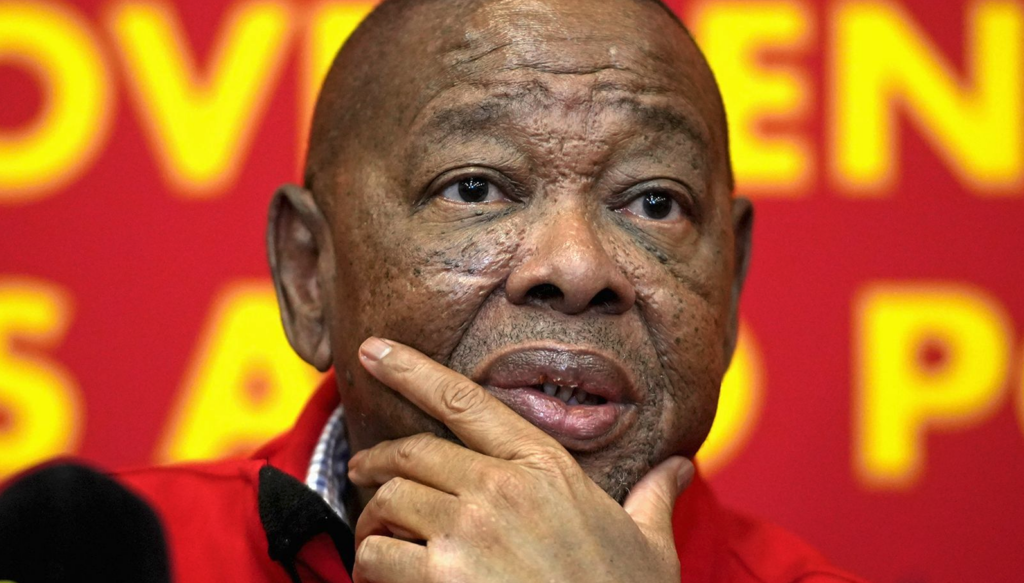
And yet this will now result in the absurdity of an ANC Cabinet minister campaigning for the SACP. In some wards, this may mean he has to give a speech supporting the SACP candidate and attacking the ANC’s candidate. What then?
The only other option would be for him to say he was campaigning for the ANC, something that would be absurd given his history.
And yet, it is not that unthinkable.
It was during Nzimande’s leadership that the SACP became closer to the ANC than ever before. He took the position of Cabinet minister during the Zuma era, bringing the SACP closer to state power, but also benefiting from important positions.
If he were to focus only on his own narrow interests, he may feel he has no choice but to actually stay with the ANC, rather than the SACP.
The position of ANC Chair Gwede Mantashe is also fascinating. While he surely would have to publicly state he is campaigning for the ANC, he is also a former chair of the SACP. He will now have to campaign against a party in which he had held an important leadership position (in 2012, after holding the positions both of ANC secretary-general and SACP chair for five years, he told the SACP Congress in Richards Bay that year that this had been a mistake, because the SACP had not received his full attention).
The position might also be difficult for many ordinary members of the ANC and the SACP.
Thousands of people probably have cupboards full of regalia from both parties. What happens if an ordinary member, both entirely reasonably and out of sheer habit, were to wear a shirt from one and a hat from the other while campaigning?
Would that ordinary member, someone who has fervently campaigned for both parties, one of the Congress Movement’s last true believers, really be punished?
And how so? Would they be expelled? If that is the case, would they not immediately point to people like Nzimande and point out that they receive a position from the ANC while belonging to the other party?
Generational bonds
All of this is the result of the fact that the SACP and the ANC have worked together for so many years. While the “Tripartite Alliance”, as we have come to know it, is really the result of negotiations before the 1994 elections, the history between the two parties is, of course, much deeper and more important than that.
At important times, the SACP has played a crucial role in forming the ANC as we came to know it in the 1980s and 1990s. Its leaders helped to draft the Freedom Charter in 1955 (which finds expression in our Constitution) and to convince the ANC to become truly non-racial in its character (the SACP is the oldest multiracial party in the country, going back to its formation in 1921).
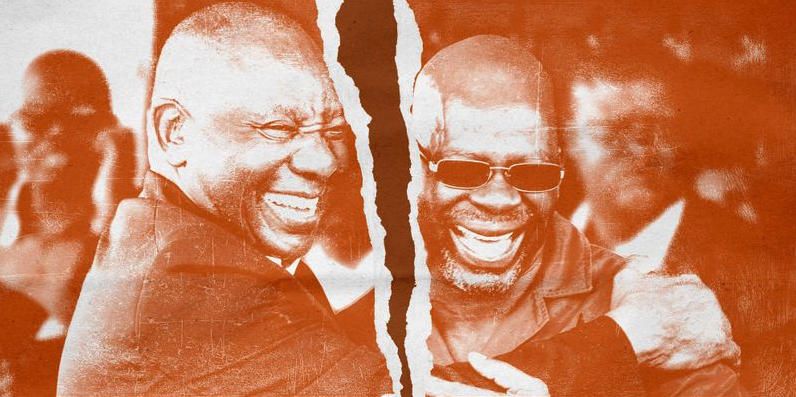
This means the decision to now divorce itself from the ANC is in some ways more than just a divorce; it’s the break-up of a family that goes back many generations.
This makes the reasons for the SACP’s decision, over the ANC’s objections, crucially important.
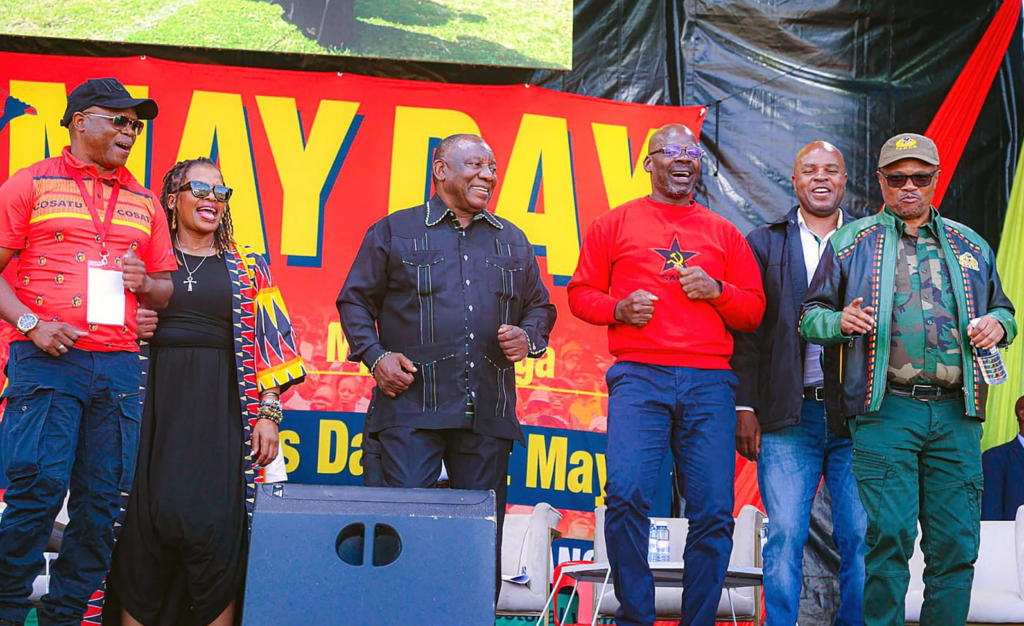
There appears to be no evidence that the SACP has strong electoral support. It has been previously mentioned on these pages that the most recent example of a party to espouse what is generally known as “communism” was the Marxist Socialist Revolutionary Workers Party under the leadership of Irwin Jim.
It received just over 24,000 votes in the 2019 election.
At the same time, the political space for parties that campaign on a platform of “radical change” has become more crowded, with both MK and the EFF, along with some others, all calling for a move away from the political centre.
And crucially, Cosatu appears to completely disagree with this decision. The union federation, traditionally very close to the SACP, is not publicly supporting the party in any way in this move.
This makes the party’s decision to go it alone electorally curious.
Going it alone
That said, some important drivers may be pushing SACP leaders to make this decision.
The first is that it is clear members of the party generally support the decision. They may well believe the SACP has been bullied or ignored by the ANC, and they will make no more progress working with the bigger party.
Secondly, the ANC in the national coalition has been moving away from the political left. There is no longer any talk of “nationalisation”, and in fact, the biggest change of the past five years in government has probably been a semi-privatisation of some parts of government.
In the transport sector, for example, Transnet has granted a private operator the right to manage Pier Two in Durban, the electricity sector has more independent power producers than ever before, privately owned trains are running on our national railroads, and so on.
The decision by the ANC to work with the DA in national government must also have been important. For some SACP members, it was simply a step too far (although, clearly not for Nzimande and Manamela).
There may also be a generational aspect. The current dominant personality in the SACP, such as there is one, is Solly Mapaila. He is younger than Nzimande and those who led the party previously.
It may well be that this generation of SACP leaders simply believes they need to break with the ANC and do something different (this also explains the SACP’s recent stance on various issues, such as its opposition to the appointment of Roelf Meyer as Ambassador to the US – the party is trying to make itself distinct from the ANC ahead of the elections).
The other reason, of course, is that in an age of coalitions, the SACP might have more influence in Parliament or other legislatures through standing independently. The ANC would have to take its policy proposals seriously if it were to hold the balance of power in some situations, for example.
Thus, the SACP’s decision may just be a part of the much bigger process of the fracturing or splitting apart of our politics.
All of this might be important to the SACP and to its members and leaders.
But none of that means it will do well in the local elections, or win any significant power. DM