






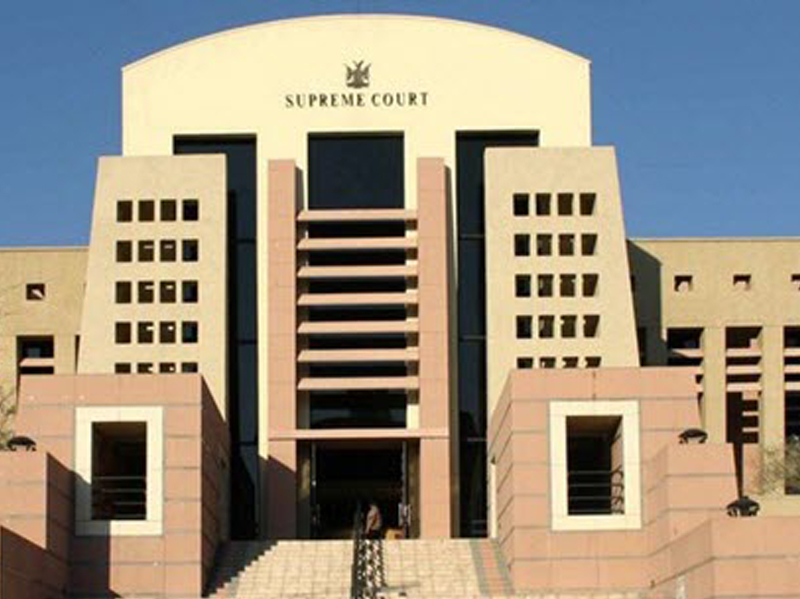
A company that challenged the refusal of a petroleum exploration licence in Namibia has lost its case in the Supreme Court, which has upheld the mines and energy minister’s decision to reject its application for offshore oil blocks.
Red Soil Energy and Mineral Exploration applied for an exploration licence over several offshore blocks in southern Namibia, but the then minister of mines and energy rejected its application on the basis that the company did not demonstrate technical and financial capacity required under the Petroleum (Exploration and Production) Act.
The company challenged the decision in the High Court in 2021, arguing that the minister acted unfairly, irrationally and outside his powers.
It also claimed it was treated differently from other applicants and alleged that the blocks were reserved for politically connected individuals.
The High Court dismissed the company’s review application in 2023, finding that Red Soil had failed to submit a complete application, including audited financial statements and a detailed work programme, to the mines and energy ministry.
Judge Esi Schimming-Chase said the conduct showed “a lackadaisical approach” to the application process.
Red Soil then appealed to the Supreme Court and also sought to introduce new evidence, claiming it supported allegations of improper motive and irregular allocation of the blocks.
Acting judges of appeal Dave Smuts, Theo Frank and Shafimana Ueitele dismissed both the appeal and the application to introduce further evidence in the Supreme Court on Thursday.
In the court’s judgement, Smuts said the minister acted within his powers and properly considered the company’s licence application.
“The minister considered the recommendations and deemed the application unsuccessful due to the applicant’s failure to demonstrate technical and financial capability to carry out exploration operations,” reads the judgement.
Smuts said the application lacked essential information required by law, stating that “the appellant’s application did not indicate that it had technical staff or that it had a partner to execute the proposed work programme”.
On financial capacity, the court found that Red Soil failed to submit audited financial statements, noting that oil exploration is a capital-intensive industry requiring clear proof of funding.
“The appellant’s application […] has a singular paucity of particularity in respect of both its technical and financial capacity,” Smuts said.
The court also rejected an argument that Red Soil had a legitimate expectation to be allowed to improve its application, stating that any such expectation must be clear and devoid of relevant qualification.
It added that the minister is not obliged to request additional documents in every case, but may exercise discretion depending on the merits of each application.
On the attempt to introduce new evidence, Smuts said it was not relevant to the issues.
“There is little relevance of the documents sought to be adduced […] and it is certainly not explained how they are materially relevant to the outcome.”
The appeal was dismissed with costs, meaning Red Soil must pay the minister’s legal expenses in the matter.
The oil blocks in dispute were previously held by Serica Energy, which exited Namibia in 2020. Red Soil’s managing director, Kaura Kaura, is a former country manager of Serica Energy in Namibia.