







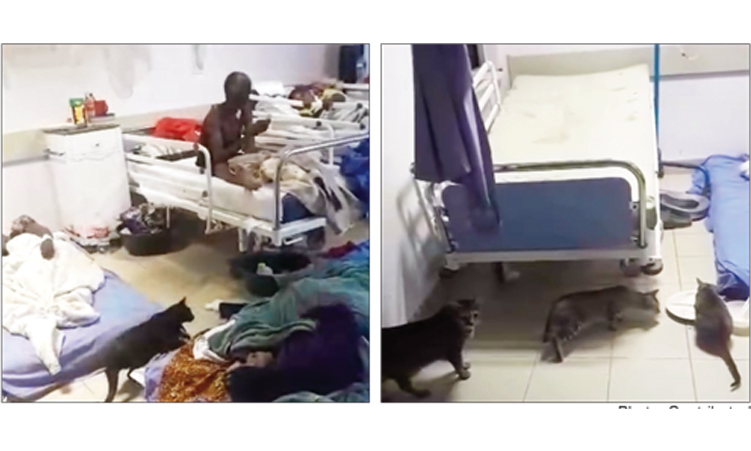
The Society for the Prevention of Cruelty to Animals (SPCA) says it is currently responding to mounting complaints about cats pestering patients at Oshakati State Hospital.
The organisation says it has received numerous complaints of feral cats roaming around the hospital, which is not a new problem.
The latest move aims to control animal populations through sterilisation while allowing cats to remain in their familiar environments, rather than relying on removal as the primary solution.
This comes after feral cats were allegedly observed at Engela State Hospital, roaming through wards and eating from patients’ plates, raising health concerns.
“By law, we are not allowed to take down cats, but if they become too much, we have to put them down,” SPCA animal welfare inspector Hans Naftal said yesterday.
He said the organisation’s Trap-Neuter-Return (TNR) approach will see cats trapped, sterilised and returned to their areas.
Through the campaign, he said the organisation hopes to help manage the existing population of cats while preventing the situation from worsening. Naftal said cats are sometimes good to have around to hunt down mice, but the risks outweigh the benefits.
He said the animals are attracted by food, urging hospitals and patients to discard of waste in skip bins.
“But I doubt those cats will finish,” he said.
Stray cats are becoming increasingly visible at hospitals in northern Namibia, with some finding their way into patients’ wards and eating their food.
Two video clips circulating on social media over the weekend show cats inside a ward at Onandjokwe Intermediate Hospital, scouring and licking patients’ plates.
Naftal said the sterilisation campaign will be extended to several high schools at Oshakati and Ongwediva.
The initiative is in partnership with HaveAHeart, veterinarian Dr Philemon Hoon, and is sponsored by Indongo Toyota Ongwediva.
The SPCA says the sponsorship has covered its main campaign costs, but additional funding is still needed for fuel and daily operational expenses to reach and treat the cats. The organisation is appealing to the public for contributions, saying even a small contribution would help the campaign reach more animals.
Oshakati hospital acting superintendent Ndawapeka Nhinda yesterday said she was unable to comment on the matter.
WASTE MANAGEMENT
Hoon says when a large number of stray animals like cats live in close proximity to people, zoonotic diseases such as rabies, toxoplasmosis, cat-scratch disease, ringworm and, in some circumstances, salmonellosis and giardiasis can potentially be transferred.
“One of the major issues I have observed, particularly around hospitals, is waste management. Cats are often attracted to these areas because they can easily access food from improperly managed waste. If food waste remains accessible, these locations can continue to attract and sustain large populations of stray animals,” he says.
For this reason, he says controlling the stray cat population requires more than sterilisation, but communities, hospitals and institutions to improve waste management and prevent animals from accessing food waste.
“By combining sterilisation, vaccination, responsible waste management and public awareness, we can work towards a healthier and safer environment for both people and animals,” he says.
Hoon says the TNR approach provides a humane and sustainable way of managing the stray cat population by preventing uncontrolled breeding while allowing healthy cats to remain within their familiar environments.