






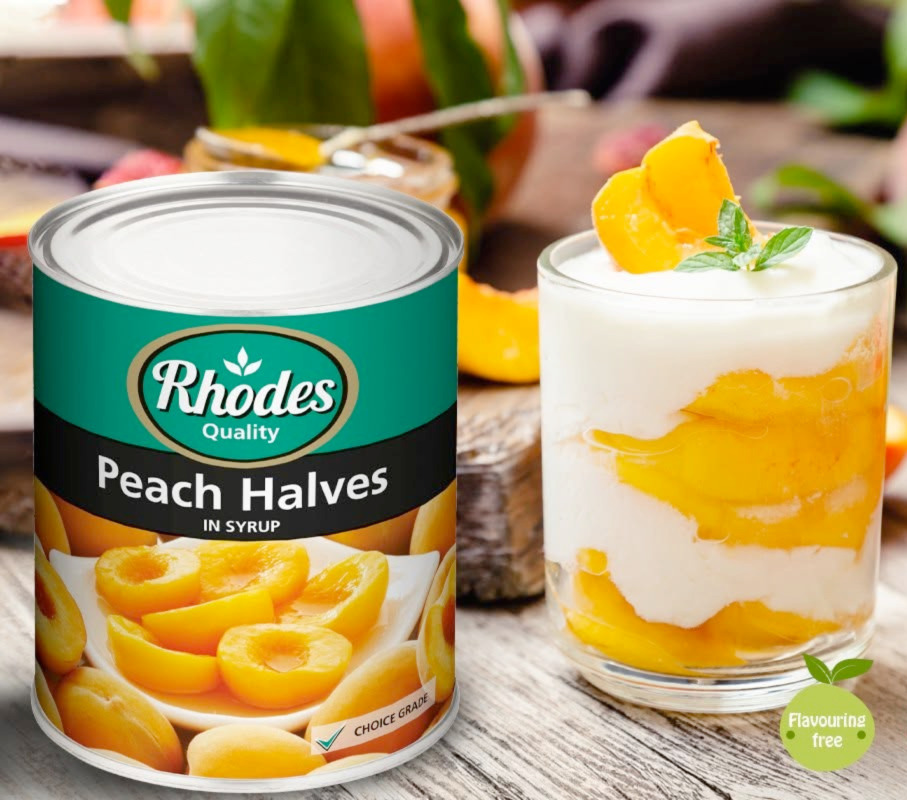
Rhodes canned peaches, pears and apricots could soon disappear from shelves after Premier Foods announced the closure of its R1-billion Fruit Products Western Cape (FPWC) business.
South African media reports say the company cited declining global demand, pricing pressure and rising input costs as the main reasons for the decision, with tariffs imposed by the United States last year also contributing.
Premier Food says operations are “no longer economically sustainable in its current form.”
“The business has been affected by sustained pressure in the canned fruit market, including declining global demand, changing export market conditions, pricing pressure, rising input costs and the need for greater scale in an increasingly competitive global industry.”
The company says demand for its exported canned fruit “has declined sharply, year on year.”
The FPWC plant has been operating since the 1940s.
Reports say some 246 permanent employees and up to 2 200 contract and seasonal employees could be affected, adding that the company is working with farmers to process this year’s harvest elsewhere.
The Western Cape operations were acquired in 2020 by Rhodes Food Group Holdings (RFG), which renamed the operation to FPWC.
Rhodes Fruit Farms, situated in the Great Drakenstein Valley, was established in 1897 by Harry Pickstone with the financial backing of British mining mogul Cecil John Rhodes, who also served as prime minister of the Cape Colony from 1890 to 1896.
Mining giants Anglo American, De Beers and Rand Selection Corporation became majority shareholders in Rhodes Fruit Farm in 1969.
As a result, the company’s name was changed to Anglo American Farm, and a year later, it was listed on the Johannesburg Stock Exchange (JSE).
Its ownership by the mining giants lasted until 1999, when Anglo sold its food division to the Ivor Ferreira Trust, forming RFG Foods.
In March this year, RFG Holdings was delisted from the JSE following its acquisition by Premier Food.