






Several members of parliament have opposed a presidential directive for politicians and senior public servants to use state health facilities.
The national health reform, which took effect on 1 April, requires senior public servants to use designated public healthcare facilities instead of private facilities.
President Netumbo Nandi-Ndaitwah issued the order in the same month to strengthen the public health system, which serves more than 85% of Namibians.
The president has not visited a hospital since – due to good health, the Presidency confirmed yesterday.
“She remains in good health and takes her health and well-being seriously,” presidential spokesperson Jonas Mbambo said.
“Should the need for medical attention arise, she will seek the appropriate care. Naturally, matters relating to an individual’s personal medical care remain private,” he said.
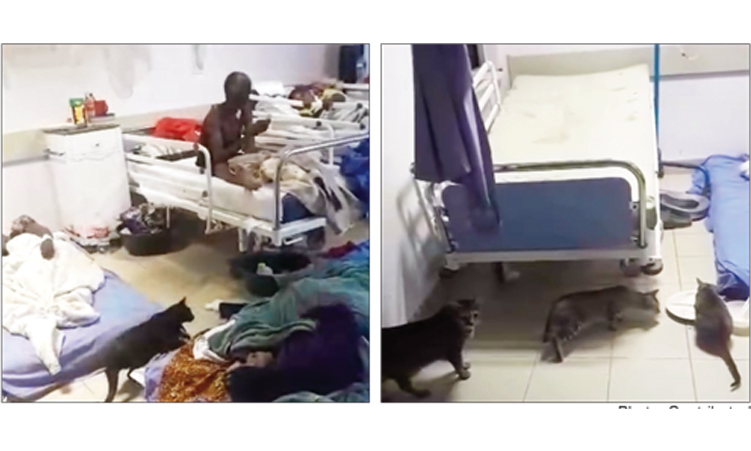
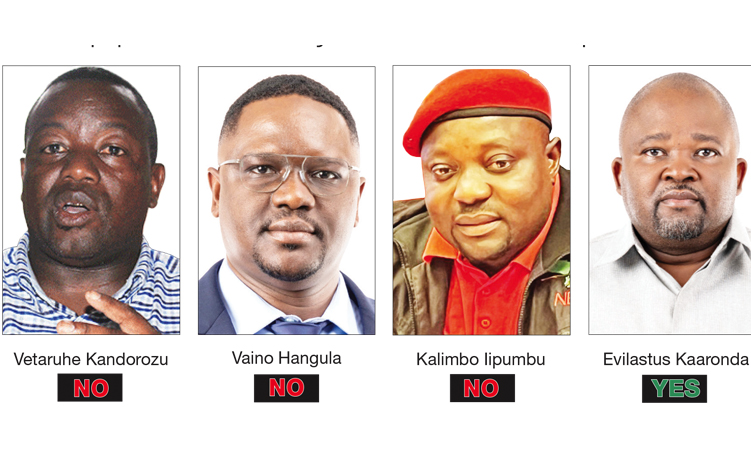
Namibia Economic Freedom Fighters vice president Kalimbo Iipumbu says the directive is, however, not workable while public hospitals continue to face shortages of equipment, medicines, staff and other essential services.
He yesterday said the party supports strengthening the public health system but cannot support a policy that puts political leaders in facilities the government has allegedly failed to adequately equip.
Iipumbu said he had not used a state hospital under the directive because of concerns over the availability and functionality of essential medical equipment.
“A hospital may have doctors and nurses, but if critical machines are not operational, patients cannot receive the comprehensive medical services they require,” he said.
He said the policy should not become a publicity exercise, adding the government should provide an assessment of its implementation over the past six months.
He wants the government to disclose how many officials have used state hospitals, what services they received, the challenges encountered and what improvements have been made to public healthcare since the directive was introduced.
PHASE ONE
In March, the Ministry of Health and Social Services said the first phase of the directive would start on 1 April and would apply to only 294 senior government officials.
The ministry said teachers, nurses, police officers, other civil servants and their dependents would not be affected during this phase.
The first phase was rolled out at seven public hospitals, including Windhoek Central, Katutura, Oshakati, Rundu, Onandjokwe, Keetmanshoop and the Walvis Bay/Swakopmund hospital complex.
A second phase is planned for 2027, with a focus on improving healthcare services at district level.
Swanu of Namibia member of parliament (MP) Evilastus Kaaronda says he has not used a state health facility since April either.
“I have not needed to use the facility or any other health facility. I’ve always supported the principle behind using state health facilities, but I wasn’t sure about their capacity to accommodate all of us,” he said yesterday.
He said concerns about the quality and capacity of public health facilities existed before the directive.
Kaaronda said he was also not aware of other members of parliament using state health facilities in recent months.
‘BLESSED’
“We need to invest in medicines, the right equipment and to empower our personnel. This will require more than just a directive for top officials to use state facilities,” says Affirmative Repositioning chief whip Vaino Hangula.
He says the directive could increase pressure on an already strained health workforce.
“I’ve been blessed enough not to need to use state facilities, but reports from friends and family who have indicated that it is worsening,” he says.
Hangula urges the president to reconsider the policy and develop a “workable plan”.
National Unity Democratic Organisation MP Vetaruhe Kandorozu says he intends to use a state health facility when the need arises and is aware of some MPs who have already done so.
“One day I will definitely visit,” he says.
Kandorozu says politicians using public health facilities should, however, not affect services provided to ordinary Namibians.
“We can’t divert all the money to Vision April 2026 and leave clinics unattended in terms of infrastructure, pharmaceutical products, ambulances, and so on,” he says.
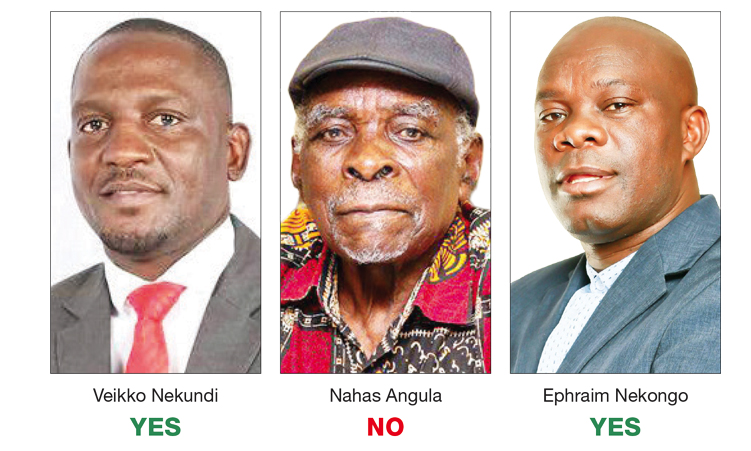
Former prime minister Nahas Angula says MPs should be allowed to choose whether to use state or private health facilities.
“Those who volunteer to go to the state hospital, that’s fine. But if somebody has a chronic illness and this person needs the care of a private doctor, you cannot force that person to go to a state hospital,” he says.
Angula says MPs who can afford private healthcare should be allowed to continue using it.
“Choice, choice, democracy means choice. You should not violate other people’s freedom to choose.”
‘BAD MANAGEMENT’
Former finance minister Calle Schlettwein has asked whether the president has the legal authority to direct medical aid beneficiaries to use state healthcare facilities.
“I am not so sure whether that power exists,” he says.
“I find it unfortunate that here is a matter where the weakest of all in society, elderly and sick people, are used as guinea pigs because state funding is managed badly,” he says.
Schlettwein says the government should instead address problems regarding the management of medical aid schemes.
“I think it is a shame . . . to take it out on the poor, the vulnerable, the sick, the elderly if they cannot get their house in order and get the medical aid scheme managed in a way that it is not prone to fraud or overuse or over-subscription,” he says.
SUPPORT
However, minister of works and transport Veikko Nekundi says he has used state healthcare facilities and continues to do so.
“Yes, I have made use of the state facilities with pride, and I continue doing so. With no hesitation, I don’t just support the policy, I own the policy,” he says.
Swapo Party Youth League secretary Ephraim Nekongo says he supports the president’s directive, adding it was necessary to ensure those responsible for public healthcare experience the same services as ordinary Namibians.
He says his experience using the public healthcare system has not raised major concerns so far, while acknowledging that the challenge of long queues remains.
“We perhaps need to hire more doctors to limit the long queues,” he says.
Nekongo says using state facilities could help government officials better understand the challenges faced by patients and healthcare workers.