






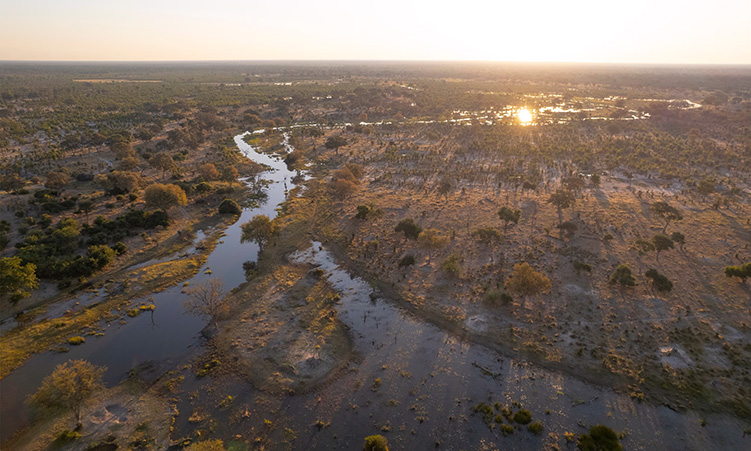
Reconafrica has started its operations in the Okavango Basin without the required permits or leaseholds.
According to a report released by the parliamentary standing committee on natural resources this week, several legal violations and procedural failures have been identified by the Canadian oil company currently conducting exploration in the Okavango Basin.
The report was submitted after Save the Okavango’s Unique Lifestyle, an alliance of local and international civil society organisation, scientists and activists, submitted a petition titled ‘Keeping Oil Drilling and Fracking Out of the Okavango’ on 24 February 2021.
After the initial petition, two more were submitted by civil society organisations in Namibia and Fridays for Future of Windhoek seeking similar relief.
VIOLATIONS
The committee found that Reconnaisance Energy Africa Ltd (REN) began its operations in January 2021 without the proper legal documentation, including a leasehold or required permits.
A letter of consent from the Shambyu Traditional Authority – one of the few formal permissions presented by the company – was only issued after operations had commenced.
“REN started operating in January 2021 without a leasehold, except for a consent letter from the Shambyu Traditional Authority, which was ironically only issued in March 2021,” the committee observed.
Additionally, the company also drilled boreholes without securing water permits – a direct violation of the Water Act No. 54 of 1956 and the Water Resources Management Act of 2013.
“Water permits were issued on 18 June 2021, five months after the company had already started operations. The application for permits was also made in June 2021,” the report reads.
FLAWED LICENSING PROCESS
According to the report, the licensing process itself was flawed because the then Ministry of Mines and Energy issued licences without consulting key stakeholders, including landowners and traditional authorities.
“The ministry has awarded the licence without consulting key stakeholders such as the custodian of the land, the traditional authorities, and the land board,” the committee says.
To date, only one of REN’s leasehold applications – for the Kawe site – has been approved, while others, like Mbambi, remain pending.
Yet operations at those sites continue.
“Recon started operating without the required leasehold … the application was only ratified on 18 October 2021,” the committee found.
MINISTRY’S FAILURE
Despite clear violations, the then Ministry of Agriculture, Water, and Land Reform failed to enforce penalties.
“The ministry has acted in a manner that can be construed as favouritism for failing to take action against the company despite drilling unsanctioned boreholes.
The ministry official failed to perform their duties and did not institute penalties applicable to such violations,” the report reads.
However, according to the report, when ministry inspectors attempted to visit drilling sites, REN refused them entry.
“The committee is extremely dismayed and condemns the attitude REN displayed for refusing entry to the ministry officials to the drilling sites. The refusal to access the sites indicates the ministry is not acting as per their mandate,” the report states.
The consultation process with affected communities and traditional authorities was also found to be lacking and delayed.
REN held over 300 community meetings between July and October 2021, but only consulted four key traditional authorities months after operations had already begun.
“The other four traditional authorities were only consulted in August and September 2021, six months after REN began its activities. The committee views this as an afterthought action,” the report reads.
Moreover, the engagement meetings were deemed as informative rather than consultative.
“The communities could not at such meetings make or alter any decisions already taken at central government with the issuance of licences,” the report reads.
The committee concluded by calling out institutional failure, particularly from the Kavango East Land Board, and said there is a need for regulatory oversight and reform.
“The committee is extremely disappointed with the ministry and in particular the Kavango East Land Board who failed in their duty to take appropriate actions. The absence of a body to do checks and balances … contributed to their failure,” the committee said.
However, the committee found that oil and gas exploration has overwhelming support among the locals, traditional authorities, and citizens at large.
“The committee recommends for the continuation of the exploration project to complete the exploration phase, but future explorations must be done with full and prior approvals of the land owners, farmers, village communities and consent from traditional authorities,” the report reads.
Additionally, the committee recommended that the Ministry of Industries, Mines and Energy should regularly monitor REN activities to ensure compliance with the terms and conditions of the licence issued.