




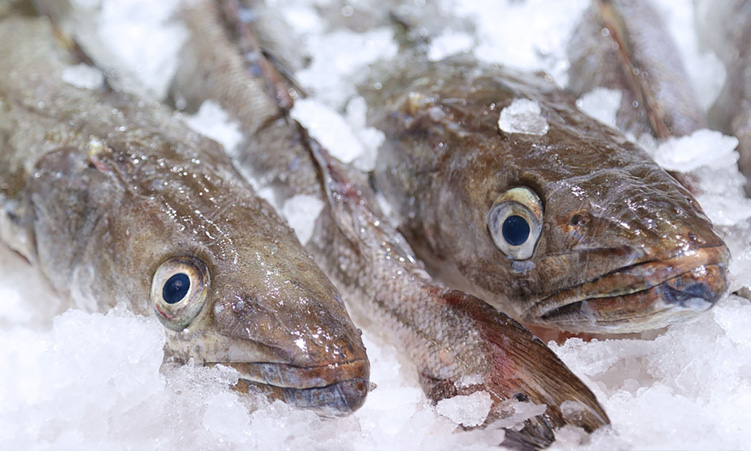
The government may have lost N$157.5 million from 17 500 tonnes of hake caught as bycatch by 15 horse mackerel freezer trawlers in 2025.
These figures are calculated according to the 2026 freezer hake average prices that currently stand at N$9 000.
This comes after the Ministry of Agriculture, Fisheries, Water and Land Reform this week admitted to The Namibian that penalties currently used to control bycatch in the fishing sector may not be stopping repeat offenders.
Bycatch levels increased sharply since 2020 despite monitoring systems and penalties being in place.
Bycatch refers to fish or other marine species caught while trying to catch another species.
Figures provided by the ministry show that hake bycatch in the horse mackerel fishery increased from 3 203 tonnes involving 16 vessels in 2020 to 17 500 tonnes involving 15 vessels in 2025.
In 2021, hake bycatch stood at 4 230 tonnes before increasing to 7 986 tonnes in 2022.
The figure rose further to 14 520 tonnes in 2023 and 15 785 tonnes in 2024.
Mackerel bycatch in the horse mackerel fishery also increased sharply over the same period.
In 2020, the ministry recorded 4 205 tonnes of mackerel bycatch involving 16 vessels.
The figure reduced to 4 034 tonnes in 2021 before increasing to 10 228 tonnes in 2022.
In 2023, mackerel bycatch reached 20 875 tonnes before increasing to more than 24 000 tonnes in 2024.
In 2025, the figure dropped to 16 283 tonnes.
The ministry says recent data from 2020 to 2025 shows an increasing trend in bycatch across several fisheries.
It adds that this may mean target species are becoming scarce, companies are landing bycatch species for their economic value, or that current penalties are failing to stop operators from landing high volumes of bycatch.
“It is also noted that high bycatch levels are largely associated with the same companies, operators and vessel owners,” ministry spokesperson Romeo Muyunda says.
The ministry warns that if bycatch is not controlled, it could lead to overfishing and the collapse of fish stocks.
“If not managed, it can result in total landings exceeding total allowable catches,” Muyunda says.
The ministry says concerns over bycatch have also been linked to debates around the 200-metre isobath, an area used to protect breeding and nursery grounds for commercial fish species.
The government has been moving to formalise restrictions on trawling inside the isobath following concerns over fishing in sensitive marine areas.
Muyunda says the ministry currently monitors bycatch through fisheries observers deployed at sea, inspectors stationed at landing sites, vessel logbooks and monthly catch reports.
The Marine Resources Act and its regulations provide for fisheries observers to monitor target catches and bycatch levels during fishing operations.
“However, despite these monitoring mechanisms, some companies continue to land increasing bycatch volumes each year,” Muyunda says.
The issue of monitoring and enforcement was also recently raised by the Fisheries Observer Agency (FOA).
“As chairperson of the SADC Monitoring, Control and Surveillance Coordination Centre board of directors, I attended the Seychelles Tuna Fisheries Conference on 29 April as a panelist alongside other fisheries experts,” FOA chief executive Stanley Ndara said.
He said discussions focused on challenges in monitoring, sharing national fisheries monitoring data and coordinated efforts to combat illegal fishing in the region.
The ministry currently charges 15% of the landed value for bycatch species landed under the Marine Resources Act and Government Gazette No 6342 of 2017.
The Cabinet has since approved stricter measures aimed at reducing bycatch levels.