






The brown hyena population in the Tsau //Khaeb National Park has remained stable since 1997 due to successful breeding and relatively low levels of human disturbance within the park.
An estimated 200 to 300 brown hyenas roam the vast park, according to the Brown Hyena Research Project.
The project is a conservation initiative operating in the Lüderitz area with support from diamond mining company Namdeb and the Ministry of Environment and Tourism.
Namdeb operates within the park.
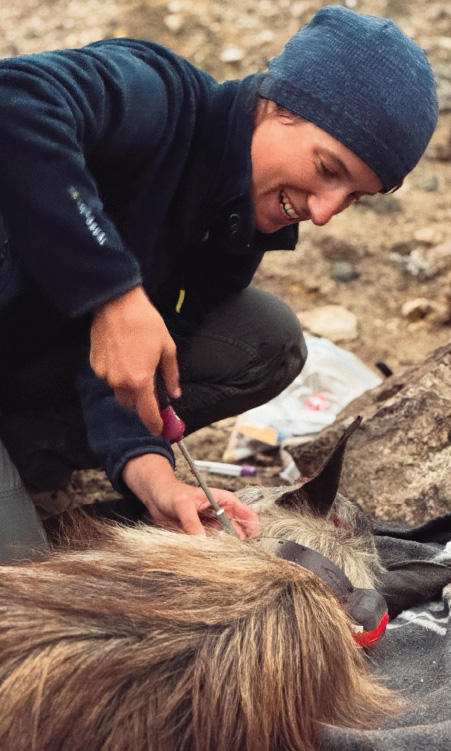
According to on-site researcher Marie Lemerle, determining the exact number of brown hyenas in the area remains challenging.
“We estimate roughly around 200 to 300 brown hyenas in the whole of the Sperrgebiet, but their densities are closer at the coast than in inland areas,” she says.
Lemerle says brown hyenas travel long distances along Namibia’s coastline in search of food.
Many animals living inland regularly move to the coast, particularly to Cape fur seal colonies.
She says maintaining open wildlife corridors along the coastline is critical for the species’ survival.
The researcher says brown hyenas can travel up to 90km in a single day while searching for food. Lemerle warns that fences and busy roads could disrupt their movements and threaten the population.
The Brown Hyena Research Project uses GPS tracking collars, camera traps and genetic sampling to study the behaviour, ecology and movements of the species.
Research has mainly focused on Baker’s Bay, Elizabeth Bay and Pocket beaches near Bogenfels and Chameis, as well as on inland areas such as Karingarab.
At Elizabeth Bay, researchers have observed hyenas adapting to the abandoned mining settlement by using old infrastructure, including pipes, as dens.
Researchers have also recorded unusual behaviour at Baker’s Bay. Different hyena clans visit seal colonies at different times of the day, making daytime sightings possible.
The project documented a female brown hyena that specialised in hunting adult seals.
Researchers believe this is the first recorded case of a brown hyena regularly taking prey larger than itself.
The project works with international researchers and university students to analyse samples and conduct studies on genetics and heavy metal contamination.
It is also expanding genetic research in collaboration with the University of Namibia while continuing to monitor inland populations through camera traps and GPS collars.
“Namdeb is still the main sponsor of the project, and its annual donations towards the project are very important to us,” Lemerle says.
Namdeb has also provided a four-wheel-drive vehicle for fieldwork and helped secure specialised research equipment.
Lemerle says one of the biggest conservation challenges remains the lack of comprehensive national population data.
“We do not know the exact population of the brown hyena in the country,” she says.
She stresses the importance of large, interconnected protected areas and said the long-term goal is to build a better understanding of the species.