




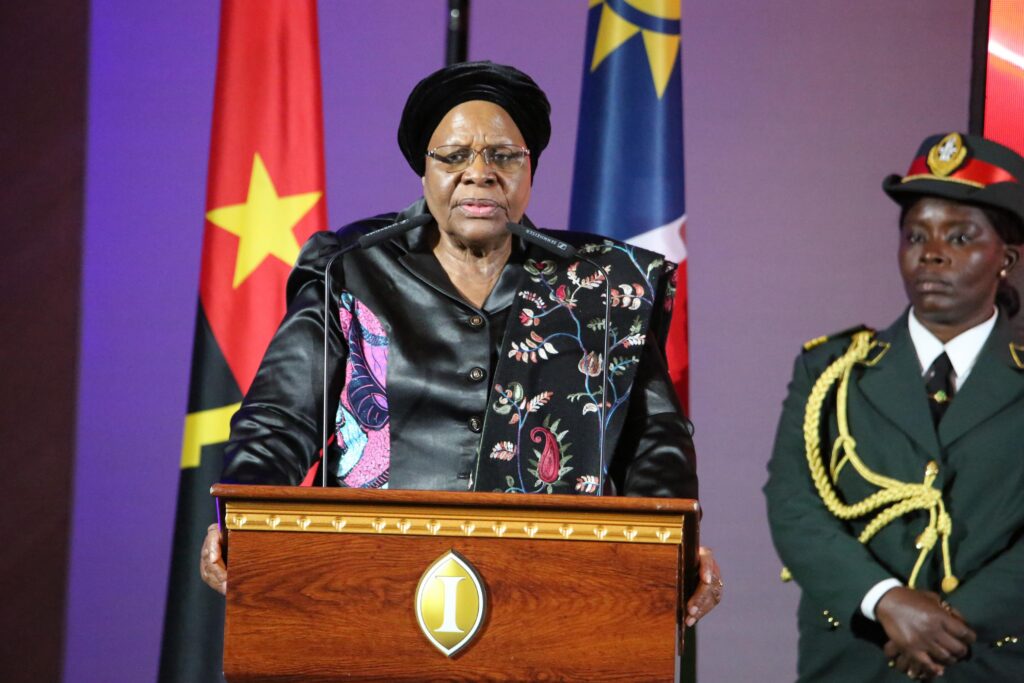
19 October 2026, Luanda, Angola.
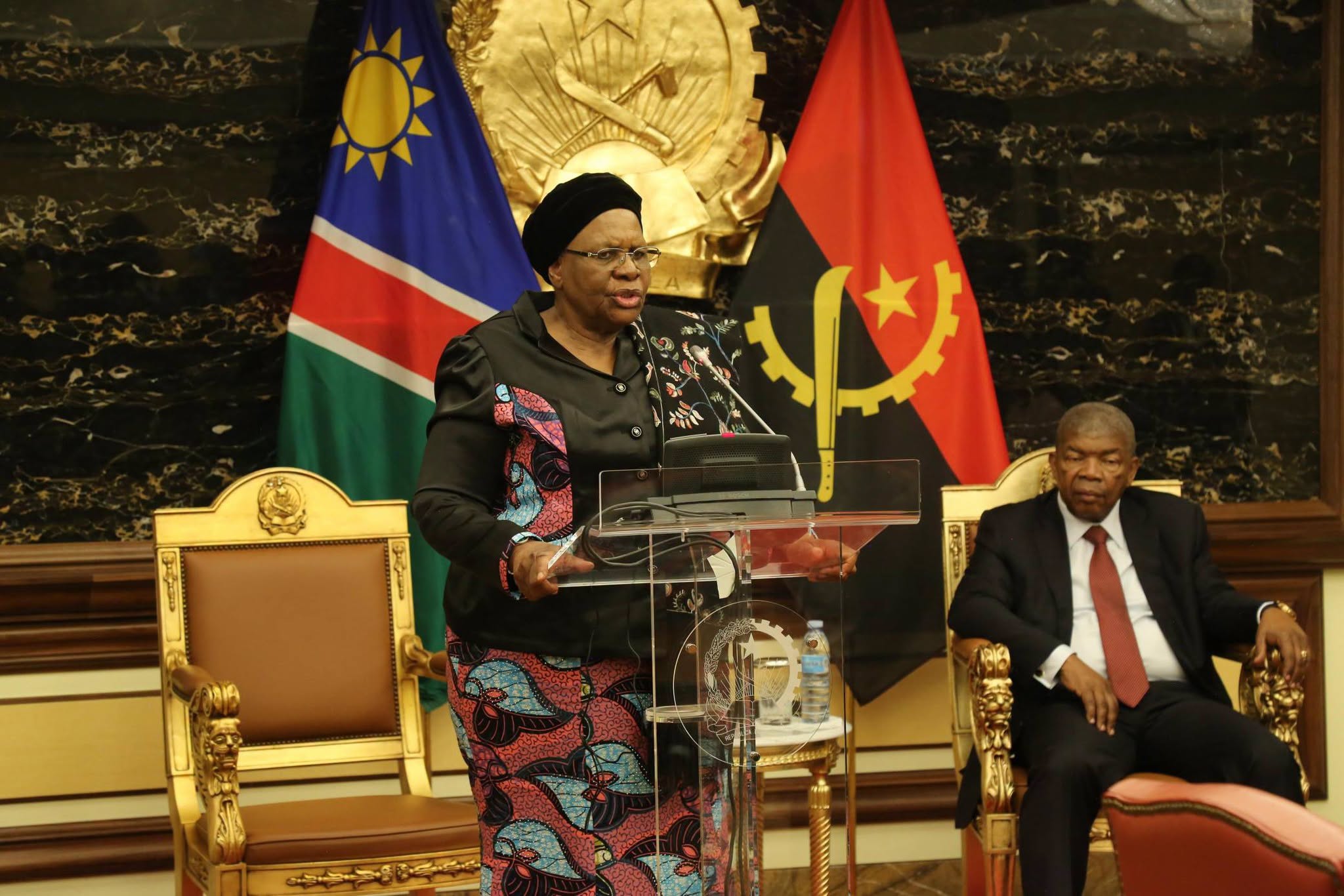
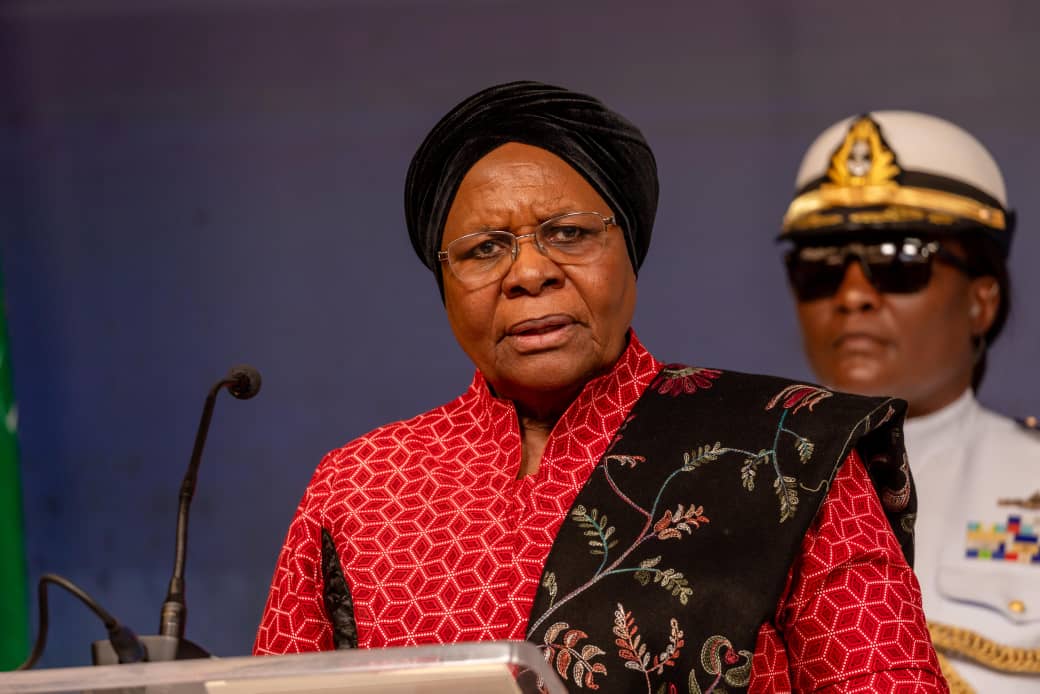
Keynote address by Her Excellency Dr. Netumbo Nandi-Ndaitwah, President of the Republic of Namibia.
Your Excellency Mr. João Lourenço, President of the Republic of Angola;
Honourable José de Lima Massano, Minister of State for Economic Coordination of the Republic of Angola;
Honourable Ambassador Selma Ashipala-Musavyi, Minister of International Relations and Trade, Republic of Namibia, and all the Namibian and Angolan Ministers;
Our Ambassadors to Angola and to Namibia;
Members of the Executive Councils;
Business Leaders from Namibia and Angola;
Representatives of Chambers of Commerce and Industry;
Distinguished Invited Guests;
Ladies and Gentlemen.
This Angola–Namibia Business Forum is convened at a time when our two countries are called upon to translate our longstanding bonds of friendship, solidarity and cooperation into tangible economic opportunities and shared prosperity for our people.
Allow me, at the outset, to express my sincere and profound appreciation to His Excellency President João Lourenço and the Government and people of the sisterly Republic of Angola, for the warm hospitality extended to me and my delegation. And I am encouraged by the business community’s interest in this important Forum, as demonstrated by your attendance.
Namibia and Angola share a relationship founded on our common history, solidarity and a shared determination to advance the prosperity of our two nations. We have a responsibility to continue the tradition of our founding leaders, to strengthen this foundation by deepening economic cooperation, expanding sustainable trade and investment, and building productive partnerships that generate employment and improve the livelihoods of our citizens.
The theme of this Forum, “Boosting Regional Industrialisation, Investment and Sustainable Growth through Strategic Angola–Namibia Partnerships,” speaks directly to the economic transformation that our two countries seek to achieve. It challenges all of us to move beyond the exchange of ideas and commit ourselves to practical, commercially viable initiatives that deliver measurable results.
Our task is clear: to transform our longstanding political relations between Namibia and Angola into a strategic and dynamic economic partnership. This collaboration will create shared value, expand productive capacity and position our countries as key contributors to regional and continental development through the SADC Trade Protocol and the African Continental Free Trade Area.
Ladies and Gentlemen,
Political relations provide the foundation for cooperation, but economic partnerships give that cooperation its practical meaning. For too long, African economies have continued to export substantial quantities of raw materials, while importing manufactured goods that could be produced within our own countries.
This Business Forum must lay the foundation for our bilateral trade. Self-reliance is essential for value addition and industrial development, as well as increasing the opportunities available to our youthful population.
Namibia and Angola have no choice but to diversify our economies, strengthen domestic productive capacity and reduce excessive dependence on the export of unprocessed commodities. As strategic neighbours, we must therefore work together to ensure that our natural resources become a foundation for industrialisation, innovation and sustainable prosperity.
We have all we need to achieve our objectives. Our two economies possess complementary strengths that provide a solid basis for deeper cooperation. While I acknowledge an improvement in the business activities between our two countries, particularly in the service sectors such as banking, telecommunications, health and hospitality, among others, I have no hesitation in saying that much still needs to be done to match our economic cooperation with our political bilateral relations.
While the size of our economies differs, the major economic activities are more or less the same; these are agriculture, mining, fishing, oil and gas, and energy. The list can be long.
The task before us is to identify our strengths and align complementary capabilities through shared commercial ventures, integrated regional value chains, technical exchanges and enhanced private sector engagement to expand bilateral trade and investment.
We must move from simply trading products to jointly producing goods and services, developing industries, and accessing larger markets together using international trade instruments such as the African Continental Free Trade Area.
This is the economic partnership that we should pursue: one that recognises the respective priorities of our countries, while creating opportunities for businesses to invest, innovate, expand and compete.
Ladies and Gentlemen,
Investment and trade are critical drivers of industrialisation, technological advancement and employment creation. However, investment and trade do not happen merely because opportunities exist.
They require a predictable, conducive business environment, effective institutions, appropriate infrastructure, access to finance and confidence in the long-term direction of economic policy.
We know and take seriously our responsibility as governments to create the ease of doing business under which businesses can invest with confidence and operate competitively.
In this context, Namibia remains committed to strengthening its investment climate by advancing efforts to strengthen our investment policy and legislative framework, with the objective of providing greater clarity, transparency and predictability for investors, while safeguarding the national interest and promoting meaningful participation by Namibians in economic opportunities.
We recognise that foreign investment must contribute to the development of our economy through job creation, skills development, technology transfer, local enterprise participation and the expansion of productive capacity.
Our approach is therefore to encourage responsible trade and investment that creates mutual benefits for investors, host communities and the wider economy.
I have no doubt that the business communities of Namibia and Angola used this Forum to identify concrete investment opportunities and develop sustainable partnerships that can be taken forward beyond this meeting.
We must also ensure that our small and medium-sized enterprises, especially our informal traders at our shared borders, are not left behind. These enterprises are important sources of employment, innovation and local economic activity.
They should be supported through improved access to finance, business development services, market information, technology and opportunities to participate in supply chains serving larger companies.
Women entrepreneurs and young business leaders must be active participants in this partnership. Their inclusion is not simply a social consideration; it is an economic necessity if we are to realise the full productive potential of our societies.
Let this Forum become a platform for establishing lasting commercial relationships. The ultimate success of this gathering lies not in the number of delegates present, the addresses presented, or the interactions convened, but rather in the concrete, tangible results generated through our dialogues that visibly enhance the livelihoods of our citizens.
We must therefore ensure that our deliberations result in a clear and achievable programme of action.
Firstly, I call for the identification of priority sectors and bankable investment projects to form the basis of joint ventures between Namibian and Angolan enterprises.
Secondly, our relevant ministries, Investment Promotion Agencies and Chambers of Commerce must work together to strengthen mechanisms for sharing investment opportunities, facilitating business contacts and monitoring the progress of proposed projects.
Thirdly, we should establish a practical approach to addressing barriers to bilateral trade, including challenges relating to border procedures, logistics, standards and access to market information.
Fourthly, our governments and private sectors should explore opportunities for joint industrial projects that promote local value addition, technology transfer and participation by small and medium-sized enterprises.
Fifthly, we should encourage structured cooperation in skills development, innovation and sustainable industrialisation, with particular attention to the participation of young people and women.
Finally, we must strengthen the follow-up mechanisms through which our commitments are monitored and implemented. Clear responsibilities, realistic timelines and regular progress reviews will be essential to ensuring that our cooperation produces tangible results.
These efforts should build upon our existing bilateral cooperation mechanisms and be coordinated through the relevant institutions of both countries.
Governments can establish the policy environment and facilitate cooperation, but it is businesses that must identify commercial opportunities, mobilise capital, innovate, produce and trade. We need your ideas, your investments and your commitment to building enterprises that can succeed in both our markets and beyond.
Ladies and Gentlemen,
As we conclude this Forum, I urge all participants to leave with a renewed sense of purpose and a clear commitment to action. The opportunities before us are vast and significant, but they will only be realised through sustained collaboration, responsible investment and effective implementation.
Together, Namibia and Angola can demonstrate that strategic African partnerships are capable of driving industrialisation, strengthening regional integration and advancing sustainable development.
May this Forum mark a new chapter in our economic relations, one defined by stronger commercial ties, deeper industrial cooperation and shared prosperity.
I wish all participants fruitful deliberations and successful business engagements.
Long live the friendship between the Republic of Namibia and the Republic of Angola.
Long live African solidarity and regional integration.
May our strategic partnership deliver prosperity for our peoples.
I thank you.
Muito obrigado. Muito obrigada.