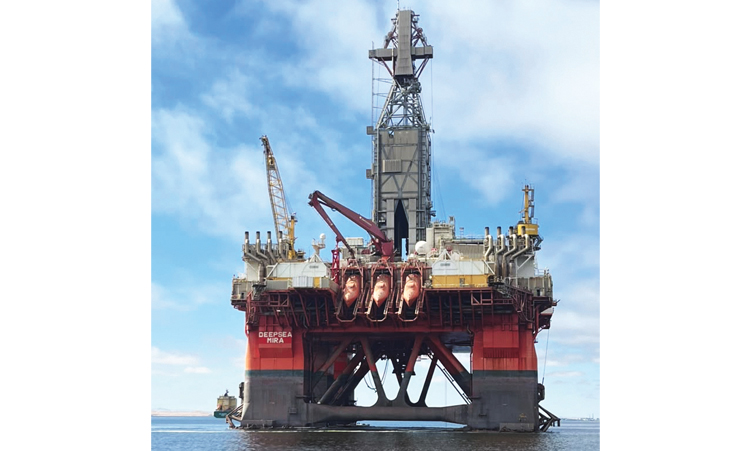
Namibia is on the verge of a major offshore oil and gas boom. The Namibia Oil and Gas Conference and Exhibition, held in Windhoek from 18 to 20 August, highlighted the sector’s growing importance.
Government representatives, industry leaders, investors and experts gathered to discuss how Namibia’s emerging oil and gas industry can create lasting benefits for the country and its people.
Just a week later, more than 20 conservation organisations from Namibia, South Africa and Mozambique came together for the regional non-governmental organisation (NGO) connect workshop on offshore oil and gas development in southern Africa. The workshop discussed the major environmental and social risks linked to offshore oil and gas development, as well as how civil society groups can work together to respond to these challenges across the region.
WildTrust South Africa, which has opposed oil and gas exploration in South Africa, organised the event to share knowledge and build partnerships with Namibia and Mozambique.
As oil companies face strong opposition in South Africa, they are increasingly turning to Namibia and Mozambique, where laws and resistance are weaker. Both countries have exceptional biodiversity at risk from seismic surveys, major oil spills and the long-term effects of climate change.
Of the approximately 40 participants at the workshop, only four represented Namibia, highlighting how unprepared the marine environmental sector in our country is.
In comparison, the conference attracted around 3 000 attendees and 76 exhibitors. Only five of these attendees were affiliated with local marine conservation organisations.
Countless promises from industry leaders and government officials highlight new job opportunities, better infrastructure and new sources of income, claiming that Namibia is ‘ready’ for the rapidly growing sector.
Meanwhile, they overlook gaps in Namibian laws, weaknesses in the environmental impact assessment system and serious shortcomings in Namibia’s ability to respond to major disasters.
Industrial development in Namibia, including oil and gas, seems to be moving faster than the laws and regulations needed to manage it.
The Namibian Islands Marine Protected Area in close vicinity to offshore oil explorations in Namibia’s south is still waiting to have its management plan approved.
The Blue Economy Policy (2022–2031), which guides the use and protection of Namibia’s ocean resources, is still being implemented. Its marine spatial plan, meant to guide different activities at sea, has also not yet been approved.
There is clearly a lot of excitement among the public, industry and government about the opportunities Namibia’s recent offshore oil discoveries could bring. However, environmental protection did not seem to receive the same attention.
Oil spills, for example, are a real risk to Namibia’s marine environment and coastal communities. The only session focused on environmental protection and science took place at the very end of the last day of the conference, when most delegates had already left and the presenters spoke to an almost empty room.
NGOs see a strong contrast between Namibia’s climate commitments and its push for oil and gas expansion.
Namibia has been a signatory to the Paris Agreement since 2016, with national plans to address climate change and adapt to its impacts. Its support for oil and gas development raises questions about how these plans align with its climate goals and the wider aims of the agreement. This inconsistency could also affect Namibia’s reputation and its appeal to some international and private investors.
The offshore oil and gas sector will likely continue to grow as the country welcomes opportunities for economic growth.
However, NGOs in Namibia can push for better environmental protection, encourage the government to update environmental laws and put safeguards in place. They can also support systems that hold companies accountable for false promises and environmental damage.
– Damian Schreiber is a marine conservation communications, field and research officer at Ocean Conservation Namibia. He is involved in seal rescues, education outreach, and beach clean-ups. He has a master’s in ecology and society from Costa Rica’s University for Peace.