





National Assembly, 6 October 2026.
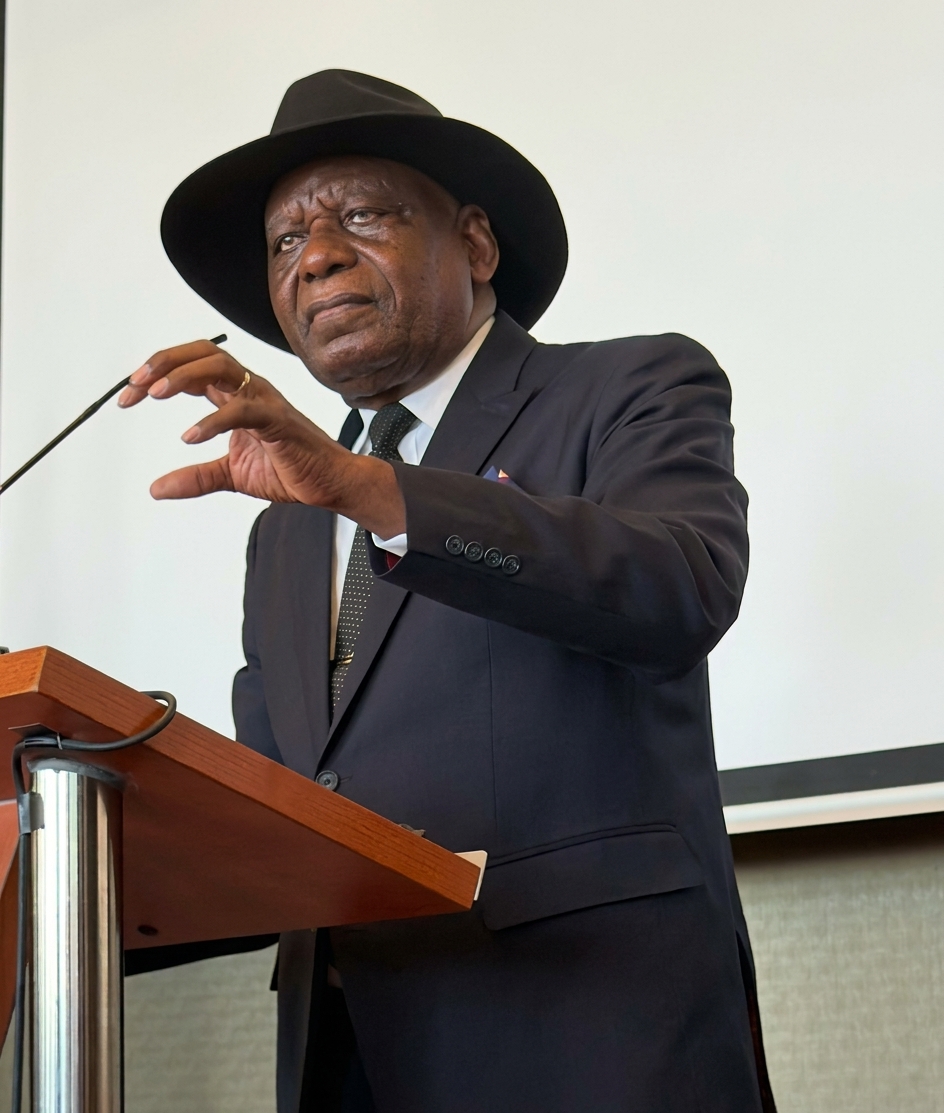
National Assembly contribution by Honourable Dr Tobie Ocean Aupindi on the Petroleum (Exploration and Production) Amendment Bill.
Honourable Speaker, Honourable Members,
Thank you for giving me the opportunity to contribute to this very important Bill before this Honourable House.
The Petroleum (Exploration and Production) Amendment Bill comes before Parliament at a defining moment in the history of our Republic.
Namibia is no longer speaking about the possibility of becoming a petroleum-producing country. We are now preparing for the realities that accompany significant oil and gas discoveries, the arrival of some of the world’s largest energy companies, substantial capital investment and the enormous expectations of our people.
The Bill seeks to establish an Upstream Petroleum Unit in the Office of the President and to transfer certain powers presently exercised by the Minister and the Commissioner for Petroleum Affairs to the President, the Director-General and the Deputy Director-General of that Unit.
Honourable Speaker, I wish to state from the outset that I support this amendment.
I support it because Namibia requires a governance structure that is equal to the strategic importance of the petroleum sector.
But I also believe that, as Members of Parliament, our duty is not simply to approve legislation. Our duty is to ensure that legislation creates institutions that will serve this country for generations.
The question before us is therefore not merely where these powers should reside. The more important question is: What institutional architecture will best enable Namibia to convert its petroleum resources into sustainable national wealth?
International experience teaches us that there is no single model for governing petroleum resources.
Norway has one model. Ghana has another. Brazil, Guyana, Russia and the United States each have different institutional arrangements.
What successful petroleum-producing countries have in common is not the location of the institution, but the quality of governance.
The lessons are remarkably consistent. Successful countries clearly separate the functions of policymaking, technical regulation, commercial participation and revenue management.
They build highly skilled institutions. They create predictable rules. They ensure transparency and maintain accountability to Parliament and the people. That, Honourable Speaker, must be Namibia’s objective.
For that reason, I support the establishment of a specialised Upstream Petroleum Unit.
The upstream petroleum industry is one of the most technically demanding industries in the world.
It requires expertise in geology, geophysics, petroleum engineering, reservoir management, economics, taxation, environmental protection, commercial negotiations and international law.
We cannot expect a small directorate, operating within a ministry with many competing responsibilities, to carry the full burden of managing what could become one of the largest sectors of our economy.
A dedicated unit with the ability to attract the best technical professionals is therefore justified.
However, the success of this reform will depend on the framework within which the Unit operates.
I would therefore like to place six principles on record.
First: Clear policy direction.
The President and Cabinet must provide strategic national direction.
Petroleum resources belong to the people of Namibia.
Therefore, decisions concerning national petroleum policy, long-term strategy and the protection of national interests must remain firmly within the authority of the elected Government.
Second: Professional administration.
The Upstream Petroleum Unit must be a professional institution, not a political office.
Its Director-General and Deputy Director-General must be persons of unquestionable technical competence and integrity.
The Unit must recruit geologists, engineers, economists, lawyers and environmental specialists capable of engaging international oil companies on an equal professional footing.
If we are to negotiate with some of the world’s largest energy companies, Namibia must have people at the table who understand every technical, commercial and legal aspect of the industry.
Third: Rules-based decision-making.
This is perhaps the most important point.
Decisions relating to acreage, exploration licences, work programmes, development plans and operational approvals must be guided by published criteria and clear procedures. Investors do not ask for favours. Serious investors ask for certainty.
They want to know: What are the rules? Who makes the decision? How long will it take? And can the decision be relied upon?
Namibia must build a petroleum governance system in which decisions are technically justified, properly documented and consistently applied.
That is how we protect both the national interest and investor confidence.
Fourth: Separation of functions.
Honourable Speaker, policymaking, regulation and commercial participation must never become confused.
The institution that sets policy should not be the same institution that audits compliance.
The regulator should not become the commercial partner.
And the commercial arm of the State should not regulate its competitors.
Clear institutional boundaries reduce conflicts of interest and strengthen accountability.
Fifth: Parliamentary oversight.
I strongly support the strategic elevation of the petroleum sector.
But elevation to the Office of the President must not mean insulation from oversight.
Indeed, the greater the strategic importance of the sector, the stronger the accountability mechanisms must be.
Parliament must continue to receive regular reports on the administration of petroleum rights, major policy decisions, local content performance and the overall development of the sector.
The people of Namibia, through this Parliament, must remain informed about how their resources are being managed.
Sixth: National benefit.
Ultimately, Honourable Speaker, the success of this Bill will not be measured by the number of barrels produced.
It will be measured by what petroleum does for the Namibian people.
Will it create skilled jobs?
Will Namibian businesses participate?
Will our universities produce petroleum engineers, geoscientists and technicians?
Will Walvis Bay and Lüderitz become industrial hubs?
Will petroleum revenues strengthen infrastructure, education, healthcare and opportunities for future generations?
Those are the questions by which history will judge us.
I have had the privilege, as Chairperson of the Parliamentary Standing Committee on Natural Resources, to engage with governments and institutions in other resource-rich countries.
One lesson stands above all others.
Countries that succeed with natural resources build institutions before the money arrives.
Countries that wait until billions begin to flow often find themselves trying to repair weak institutions under immense pressure.
Namibia has an opportunity to get this right before first oil. We must seize that opportunity.
I therefore support this amendment not because I believe institutional change alone is sufficient, but because I believe it provides an opportunity to create a modern, professional and strategically focused upstream petroleum governance system.
My support is therefore accompanied by a clear expectation that the Upstream Petroleum Unit will operate according to the highest international standards of technical competence, transparency, accountability and professionalism.
Honourable Speaker,
Let us remember that petroleum is an exhaustible resource. The oil beneath our seabed will not last forever.
Our responsibility is to transform that finite resource into permanent national assets: educated citizens, modern infrastructure, competitive industries, strong institutions and a diversified economy. That is the true meaning of resource governance.
I therefore call upon this Honourable House to support the Bill, while remaining vigilant to ensure that its implementation reflects the principles of sound governance and international best practice.
Let us establish a system founded on one simple principle:
One resource. One national strategy. Clear institutional mandates. Professional administration. Independent oversight. And maximum sustainable benefit for the people of Namibia.
With those considerations, Honourable Speaker, I support the Petroleum (Exploration and Production) Amendment Bill, and I call on all Honourable Members to support this Bill.
I thank you.