





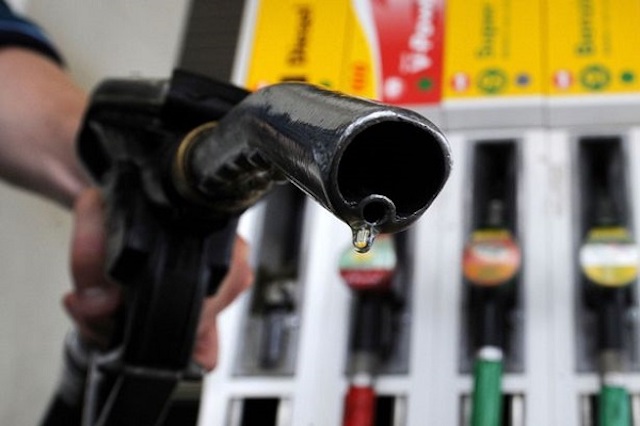
OIL prices reached their lowest levels since March after United States(US) president Donald Trump announced that Washington and Tehran had reached an agreement to reopen the Strait of Hormuz.
Trump on Sunday announced that the US and Iran had finalised an agreement that would see the Strait of Hormuz reopened without toll fees, as well as an end to the US naval blockade of Iran.
“I hereby fully authorise the toll-free opening of the Strait of Hormuz, and, simultaneously herewith, the immediate removal of the US naval blockade,” he says in the post.
“Ships of the world, start your engines. Let the oil flow!” he adds.
Brent crude, the international benchmark used to price much of the world’s oil, subsequently dropped nearly 5% to US$83.17 per barrel (about N$1 352), while US crude oil fell to US$80.75 per barrel (about N$1 313).
Meanwhile, West Texas Intermediate crude, traded at about US$80.40 per barrel (about N$1 308).
Before the war, global crude oil prices were trading at between approximately N$976 and N$1 122 per barrel.
West Texas Intermediate crude was trading at around N$1 187 per barrel (US$73) immediately before in late February, while Brent crude was trading at similar levels.
The Strait of Hormuz is one of the world’s most important energy choke points, handling roughly one-fifth of global oil shipments.
Earlier disruptions linked to tensions between Iran and the US had contributed to a sharp increase in international oil prices.
The strait, positioned between Oman and Iran, is a critical port linking major Gulf producers including Saudi Arabia, Iraq and the United Arab Emirates to global markets through the Gulf of Oman and the Arabian Sea.
According to Kpler data, about 13 million barrels of crude oil per day moved through the strait in 2025, accounting for roughly 31% of all seaborne oil flows worldwide.
Data from the Namibia Statistics Agency shows that Namibia imported approximately N$1.6 billion worth of petroleum products, largely from Oman, Bahrain and Saudi Arabia.
Oman was also part of the top five import markets for the country.
Iran holds the world’s largest oil reserves after Saudi Arabia and Venezuela.
The agreement is expected to be formally signed in Switzerland on Friday, after which shipping through the Strait of Hormuz is set to resume fully.