





Nurses at Opuwo District Hospital’s maternity ward will no longer have to use cellphone torches to deliver babies after receiving two special lamps donated by the European Union (EU).
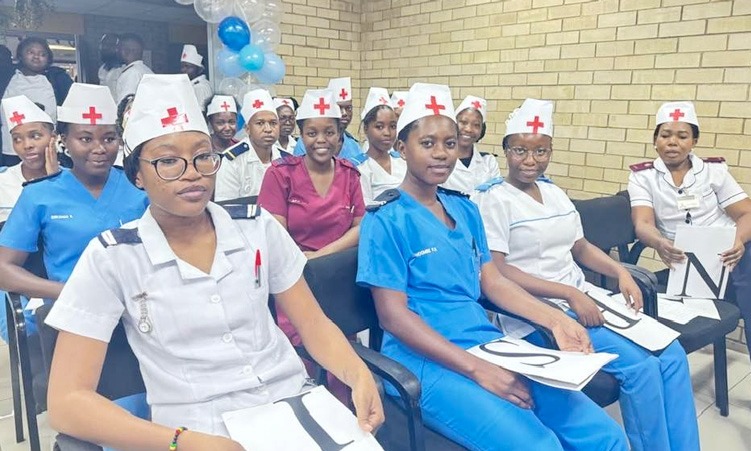
With an average of 220 deliveries a month, the five nurses per shift can sometimes be overwhelmed by the workload and need additional staff to ease the pressure.
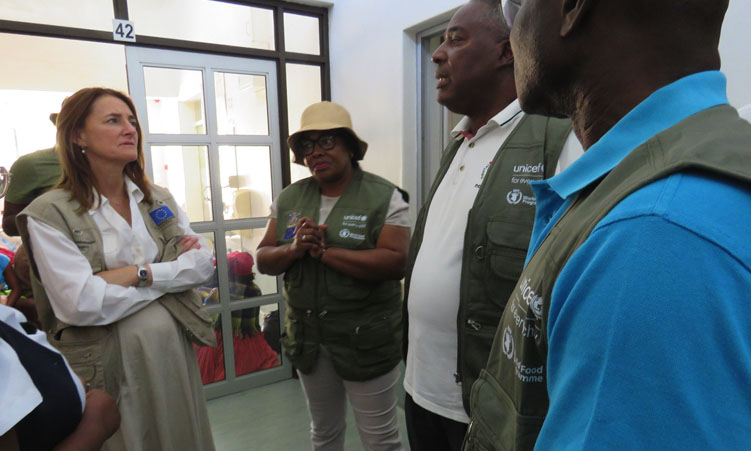
This was said by the ward’s nurse in charge, Ndamona Shiningeni, when she received a joint EU-United Nations-government team on a tour of the maternity and paediatric wards to assess the challenges and successes experienced by staff and the impact of interventions and support given.
“It was previously such a big struggle when we delivered babies in this ward because most of them would be delivered while we were using our cellphones because the bulbs were not enough.
“We now have two big lamps that were donated to us and this made everything very easy so we are truly happy and very grateful that we will not need to use our phones anymore,” Shiningeni says.
The delegation was welcomed by Dr Reinhold Kafidi, the head of the district hospital and senior staff.
The ward provides essential maternal, newborn and obstetric healthcare services, significantly aided by local and international development partners.
Shiningeni adds that their biggest challenge was that the ward lacked enough dedicated delivery rooms and special adjustable delivery beds, which would make mothers more comfortable during delivery.
“We use ordinary patient beds but these do not allow room for the midwives to work on the patient more comfortably,” she says, adding that at least two delivery beds would ease the problem for now.
She says congestion in the ward was averted through a specialised, safe residential dormitory housing between 40 and 60 expectant mothers from distant rural villages as they approach their due dates.
United Nations Children’s Fund (Unicef) country representative Samuel Ocran acknowledges the challenge and gave an assurance that the special delivery beds can be acquired for the ward.
Shiningeni was, however, satisfied that a number of water, sanitation and hygiene facilities were procured and others rehabilitated through support from the EU and its partners to improve infection prevention and control, hygiene, patient safety and quality care at the district hospital.
Recent rehabilitation projects funded by EU humanitarian assistance and Unicef have integrated elbow-operated hygienic taps, storage cupboards in delivery rooms and upgraded plumbing infrastructure to control infection.
“All taps in the maternity ward had been converted to elbow taps so that nurses can use their elbows to open and close instead of their hands, which might sometimes be soiled,” she says.
Kunene regional health director Thomas Shapumba says positions had been advertised for maternity ward nurses and regional medical officers, including gynaecologists.
“The budgets have been approved for three nurses for Opuwo and two for Outjo,” he says, adding that while the numbers were small, it was a step in the right direction.
Deputy minister of health and social services Hambelela Ndjaleka says she was happy that the maternity ward was getting all the assistance it needed to improve service delivery.
The deputy minister says some outdated equipment, including delivery beds, are currently targeted for nationwide ministry procurement.