






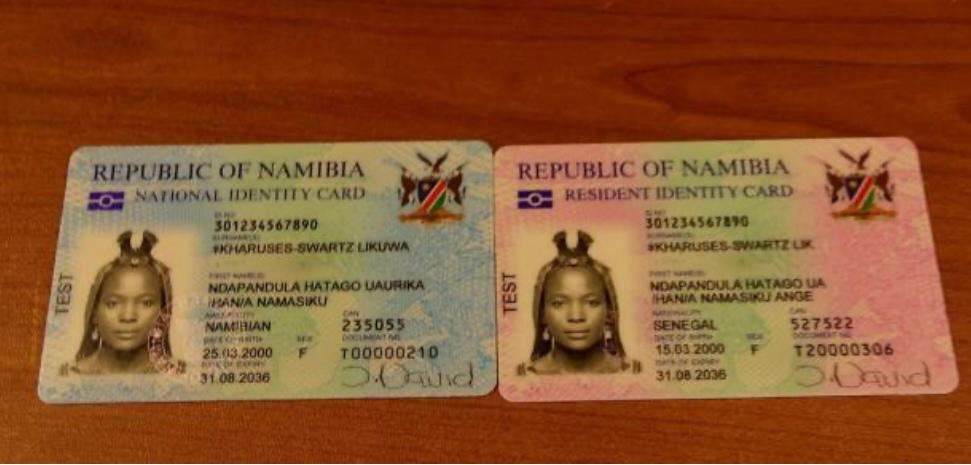
The home affairs ministry has taken its e-ID awareness campaign to the Omaheke region’s Kalahari constituency, where the main message was that the new document has an expiry date to enhance security.
This is in contrast to the old identity (ID) document, which has an indefinite lifespan.
According to the ministry’s team of experts, led by deputy executive director of home affairs, immigration, safety and security Jackson Wandjiva, this is part of the e-ID’s security features.
Others include a chip inserted in the card, as well as a thumb print and facial appearance.
“The new e-ID, to be rolled out in September, will be renewed after 10 years,” Wandjiva said during an engagement at Tjaka Ben Hur.
“At that time a 16-year-old getting an ID document for the first time would be 24 years and her features would not be the same as when she was 16. Her facial features would have transformed and there is need to keep pace with this reality, enhancing the security of the new e-ID,” he said.
“The e-ID, which is issued with a PIN similar to those on bank cards, can be used as the normal ID document,” he told his audience, which included Kalahari constituency administrative officer Hameezembi Maranga and senior Bakgalagari
Traditional Authority councillor Norman Baumakwe.
“Do not give away your PIN,” he advised.
Wandjiva said a number of African countries had already implemented the e-ID, while others were at different stages of implementation.
“Namibia still lags behind countries like South Africa, Rwanda, Kenya and others who are already using this ID system,” he said.
Another security feature of the new e-ID highlighted at the engagement event is that service providers would require certification from the Communications Regulatory Authority of Namibia.
He said it was not compulsory to replace one’s current ID as implementation would be phased, but citizens applying for the first time will be issued an e-ID free of charge, along with those replacing cards with errors.
“But when one applies for a duplicate for the first time, one would pay N$150, while those applying for a duplicate for the second time would pay N$300,” he said.
The team will also visit the Epukiro, Otjinene, Okorukambe, Aminuis and Otjimbinde constituencies.
– email: matthew@namibian.com.na