




Navachab Gold Mine says it operates within the law, but an audit highlights unresolved concerns over licensing, ownership and training compliance.
Although the mine has defended its social impact and training efforts, it has not directly addressed or disproved several of the auditor general’s most serious compliance concerns, particularly regarding exclusive prospecting licence (EPL) renewals and name change procedures.
This comes after a compliance audit by the Office of the Auditor General revealed that three of the county’s gold mines have breached the Minerals (Prospecting & Mining) Act of 1992 and the Mineral Policy of Namibia, of 2003.
The report covers the 2020/21, 2021/22, and 2022/23 financial years.
One of the audit’s concerns is Navachab’s failure to implement or report on any training programme during two of the three years under review.
“QKR Namibia Navachab Gold Mine (Pty) Ltd did not comply with Section 50(c), as it failed to implement or report on any training programme during the 2020/21 and 2021/22 financial years,” reads the auditor general’s report.
Navachab spokesperson Taufi Shafombabi says the mine has invested N$17 million in training, internships, and apprenticeships since 2020.
“Navachab Gold Mine has employed a total of 2,300 interns, graduates and apprentices… in conjunction with various higher education institutions,” she says.
Shafombabi says the mine also offered growth programmes internally which focus on technical skills transfer and development and have benefited over 500 employees in the period under review.
One of the concerns the mine did not address is the lack of evidence that the company’s name changes for one of its EPLs were not endorsed by the commissioner of mines, as required by the act.
“The commissioner did not endorse company name changes for the following EPLs: 999, 2410, 3739, 4309, and 5658,” the report reads.
Navachab owns EPL 999.
Additionally, the audit raised concerns that several EPLs were renewed beyond the legal seven-year limit without clear ministerial approval, and that documentation proving timely application was missing.
DOCUMENTATION ISSUES
“No consistent documentation was found indicating whether renewal applications were submitted within the prescribed time frame . . . or, if late, whether valid ministerial approval was obtained,” the report reads.
Navachab mine renewed its EPL 999 and 3275, exceeding the seven-year maximum renewal by eight and 13 years, respectively.
Shafombabi says all the mine’s applications for renewal were in accordance with the law.
“All . . . were submitted to the Ministry of Indiustries, Mines and Energy in accordance with the law,” she says.
The audit also found that Navachab did not reduce the size of EPLs upon renewal, as required by the act, to promote efficient exploration and open land to new entrants.
“No evidence of area reduction was observed in the six EPLs renewed beyond permitted limits,” the report states.
‘NO CONSENT’
Additionally, there was no documentation demonstrating that ministerial consent was obtained.
In questions sent to Navachab, The Namibian had requested evidence of approval from the minster of the EPL extensions, but none was provided.
Shafombabi says the mine has “complied with all conditions as set by the Ministry,” including “size reduction or waivers as required”.
‘NO TRANSPARENCY’
Another issue left only partially addressed is the lack of transparency on beneficial ownership.
“Crucial information on the beneficial ownership of the mine’s 92.5% multinational ownership stake was not provided for audit verification,” the report says.
Shafombabi says such information is “readily available at the Business and Intellectual Property Authority” and submitted under the Financial Intelligence Act, but offers no explanation for why it was not made available during the audit itself.
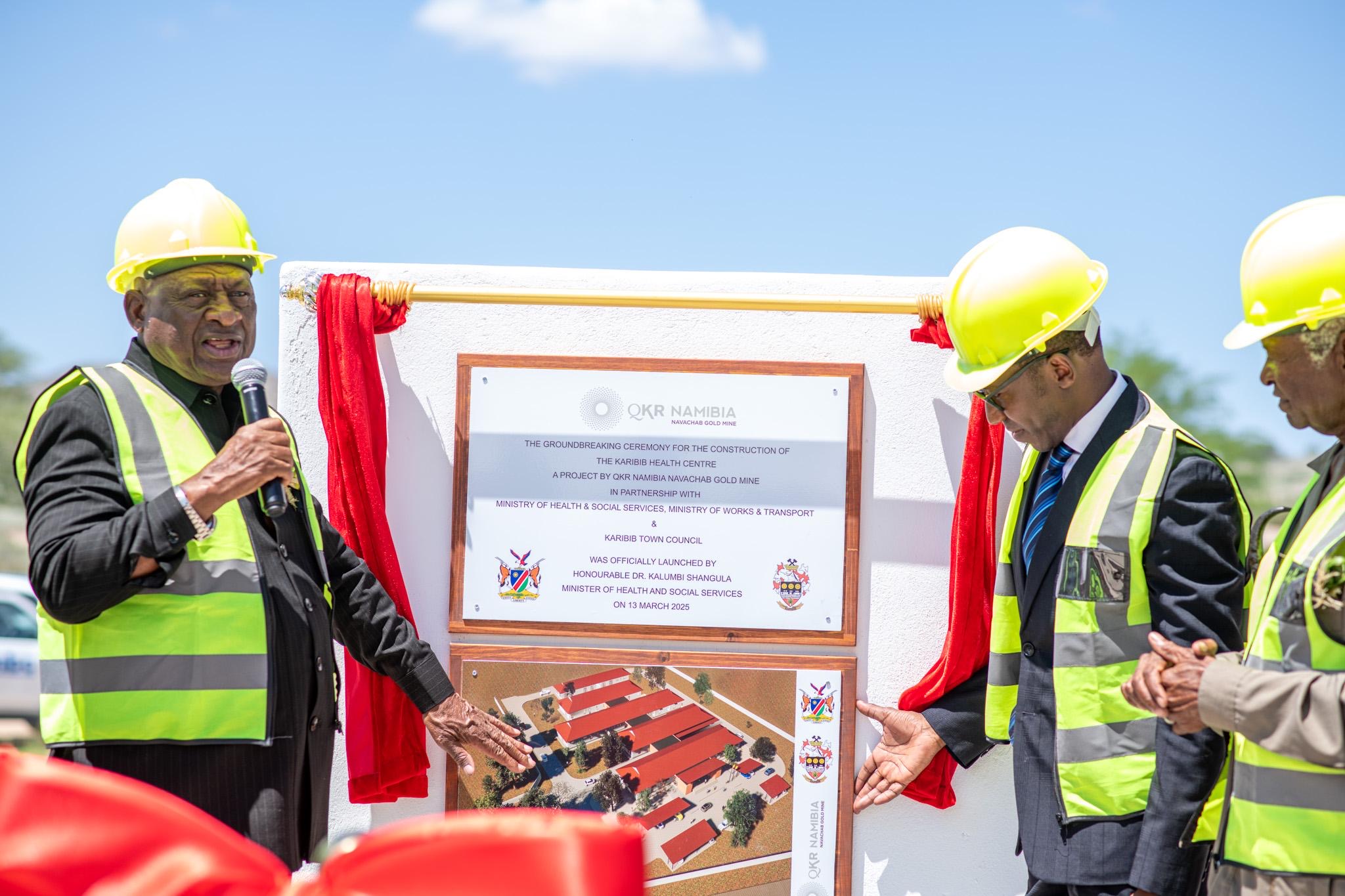
Navachab also rejected claims that it lacks a current poverty eradication strategy, pointing to corporate social investment (CSI) projects amounting to about N$85 million from 2021 to 2024, including water boreholes, school renovations, Covid-19 support, and the construction of a public medical facility at Karibib.
“These are just some examples of our CSI activities which demonstrate our commitment to uplift our communities in which we operate and in line with the provisions of our mining licenses,” Shafombabi says.
However, the company did not dispute that the last formally documented poverty eradication strategy dates back to 2016, as reported by the auditor general.