
29 September 2026.
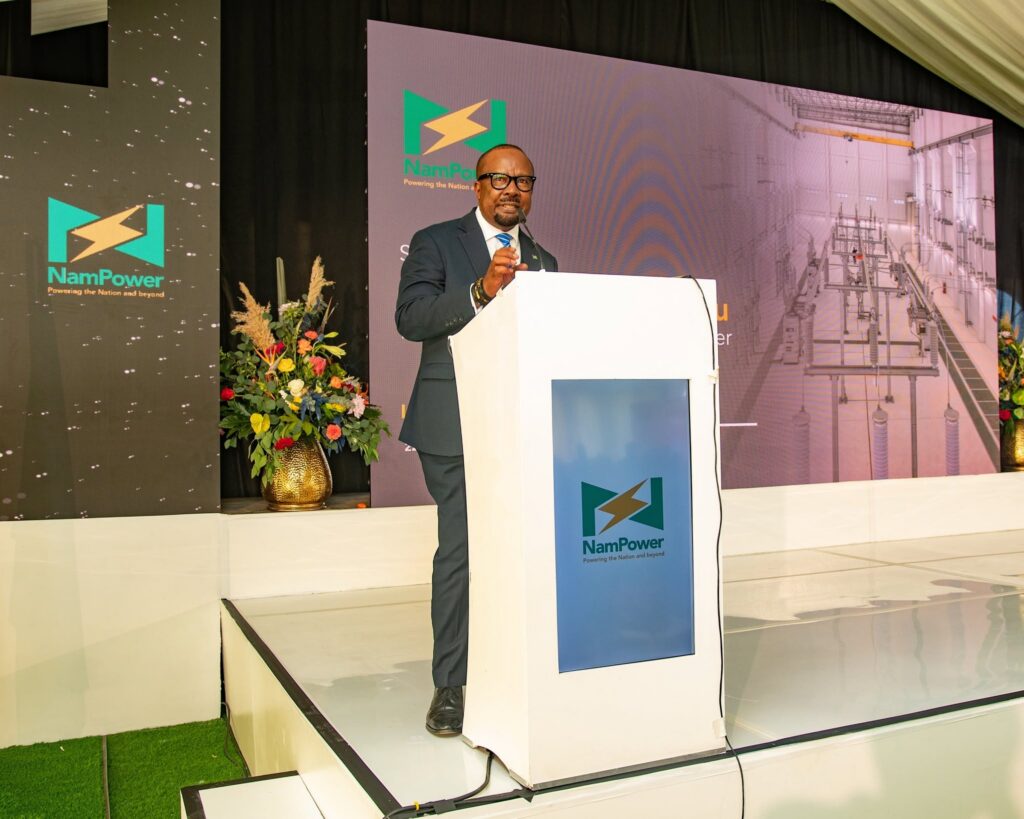
Statement by Mr Kahenge S. Haulofu, Managing Director of NamPower, at the launch of the Integrated Strategic Business Plan (ISBP) 2026–2030 and reflection on NamPower’s 30-year anniversary.
Director of Ceremonies, Mr Ricardo Goagoseb;
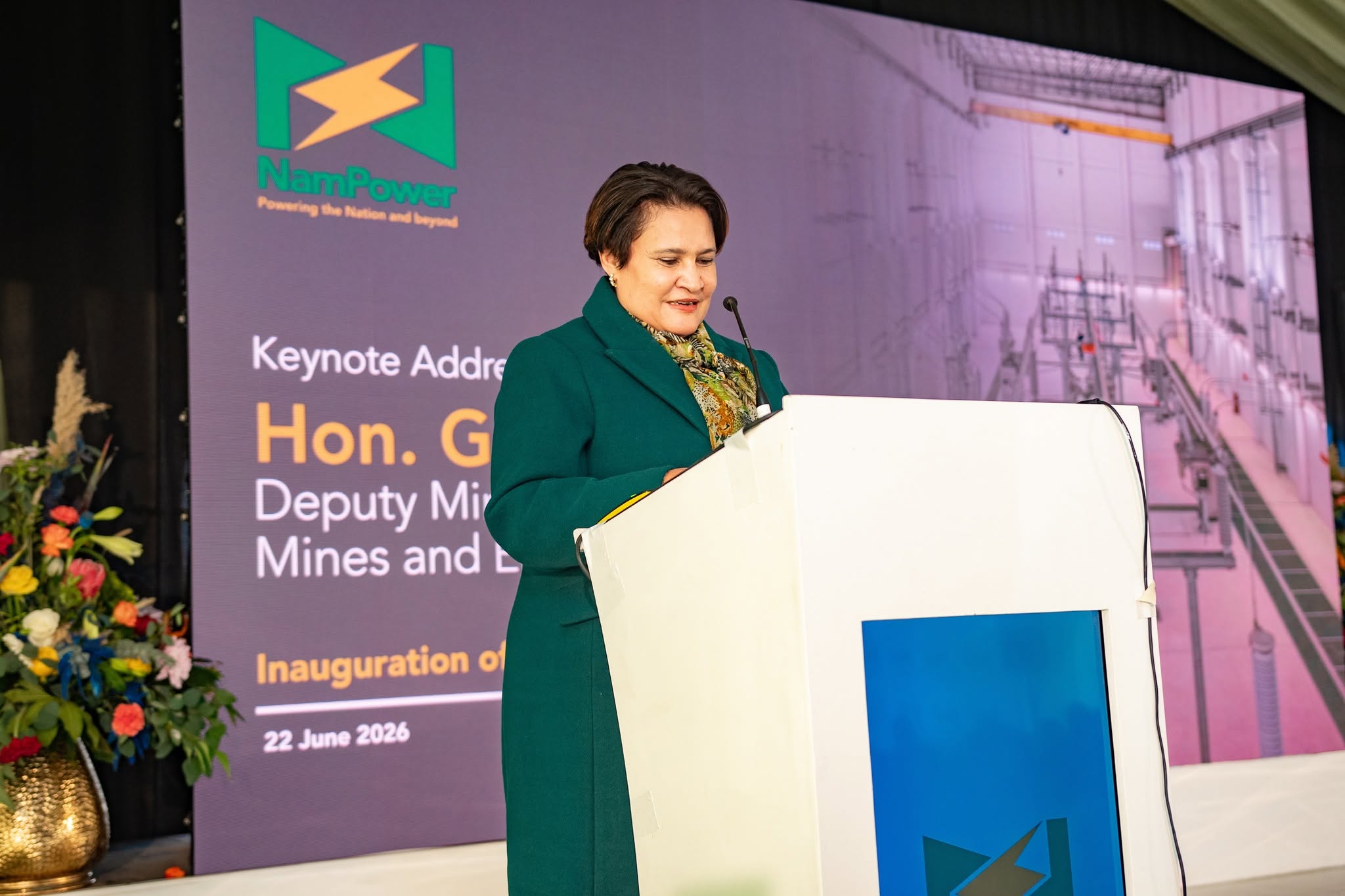
The Deputy Minister of Industries, Mines and Energy, Hon Gaudentia Kröhne;
Directors of the NamPower Board and the Executive Management;
Chief Executive Officers and Managing Directors of state-owned enterprises present;
Captains of Industry;
Prospective Investors and Financiers;
Distinguished Guests;
Members of the Media;
Ladies and Gentlemen.
A very good morning to you all and thank you for joining us for the launch of our new five-year Integrated Strategic Business Plan for the period 2026–2030.
Allow me to recognise the presence of our Deputy Minister, Hon Gaudentia Kröhne; thank you for your presence here this morning.
Ladies and gentlemen,
The launch of our new strategy coincides with our 30th anniversary, a milestone which we celebrated on the 1st of July, marking three decades of reliability, stability, resilience, and growth – pillars of sustainable success that have enabled us to keep the lights on throughout over thirty years even during the most challenging and evolving operating environments.
My address today will reflect on NamPower’s 30-year journey, while the speakers that will succeed me will introduce and elaborate on our new five-year strategy as outlined in the programme.
Thirty years ago, on 1 July 1996, the Namibia Power Corporation, NamPower, was established from the former South-West Africa Water and Electricity Corporation, SWAWEK. NamPower took over a well-established and working system from SWAWEK in many respects. Accordingly, we recognise and appreciate the groundwork put in place by those who came before us, as they left us a solid foundation to work with and to build on.
The 30 years we are celebrating are three decades of powering progress; infrastructure growth; expansion from a modest grid to a robust network spanning thousands of kilometres of transmission and distribution lines and over two hundred substations; landmark projects that transformed access to electricity in rural and urban areas alike; the transition from manual systems to smart grids and digital monitoring; integration of renewable energy sources – solar, wind, and hydro – into the supply mix, and more.
It has been years of transformation – moving from a conventional utility to a modern adaptive energy company that serves Namibia’s growing economy and participates confidently in the regional power market.
Ladies and gentlemen,
Allow me to take a few minutes to highlight some of the achievements that NamPower accomplished over the 30 years, starting with our generation portfolio:
Generation
• The generation capacity has been expanded from 394.6MW in 1996 to 563.5MW in 2026.
• In 2011, we decommissioned the 25.6MW Paratus Power Station at Walvis Bay, while the Van Eck Power Station operates reliably and safely at 15MW per unit only (from 120MW) due to ageing equipment.
• In 2011, NamPower commissioned the ANIXAS I Power Station at Walvis Bay, with an installed capacity of 22.5MW, the first power station the company built. In 2024, ANIXAS II was commissioned, adding another 54MW to the generation capacity.
• The installation of a Fourth Turbine Unit at Ruacana Power Station in 2012 added a significant 92MW to the existing 249MW at the station, while the replacement of the runners of the existing three generators at the power station in 2016, with newly designed runners, improved the efficiency and output of the power station by increasing the installed capacity from 341 to 347MW.
• NamPower commissioned its first renewable energy power station, the Omburu 20MW PV Power Station outside Omaruru, in 2022.
Work to expand the generation portfolio continues, with several additional projects currently at various stages of development.
These include the 100MW Sores |Gaib Solar PV Project outside Rosh Pinah, the 40MW Otjikoto Biomass Power Project near Tsumeb, and the 80MW Omburu PV II Power Project outside Omaruru. Once completed, they will significantly increase the generation capacity.
Furthermore, NamPower has unlocked private sector investment and facilitated the implementation of projects through Independent Power Producers, in collaboration with the Ministry of Industries, Mines and Energy and the Electricity Control Board (ECB), as part of the programme to expand Namibia’s renewable energy footprint and to increase self-sufficiency.
These include the:
• 20MW Khan PV Power Plant by ANIREP;
• 70MW Renewable Energy Feed-in Tariff (REFIT) programme, through which Independent Power Producers (IPPs) provide electricity from renewable energy sources;
• 37MW Hardap PV Plant (Alten);
• 4.5MW Omburu PV Plant (Innosun);
• 2 x 10MW Greenam (Hardap and Keetmanshoop); and
• 43MW MSB IPP.
Moving on to Transmission:
NamPower owns and operates a transmission network of just over 13,000 kilometres of overhead lines, ranging from 66 kV to 400 kV. Behind it is a distribution network of almost 12,000 kilometres. Thus, the national grid runs about 25,000 kilometres of line across the country. Much of this network was designed and built by Namibian engineers and contractors and over the years, that has given us a depth of local knowledge that serves us well when we plan new lines or restore supply after a fault.
It helps to look back at where we started.
In 1998, the lines at 132 kV level and above covered about 3,100 kilometres and then Namibia had no 400 kV lines at all. Today that part of the network stands close to 8,500 kilometres long. Most of the growth came from building almost 1,500 kilometres of 400 kV lines, which strengthened Namibia’s connection to the South African grid; and from roughly doubling the 220 kV and 132 kV networks to reach mines, towns and new load centres.
We also built the 953-kilometre Zambezi Link, a 350 kV HVDC interconnector that joined the northeast of the country and our neighbours to the north, to the national system.
At present, in tandem with the generation projects, several transmission projects are in the process of being implemented, as part of NamPower’s Transmission Master Plan, including new substations and the upgrading of existing transmission infrastructure. These include:
• The Auas–Kokerboom II Transmission Line, which will act as a second 400kV link between NamPower’s Kokerboom substation near Keetmanshoop and Auas Substation outside of Windhoek;
• The Obib–Oranjemond Transmission Line, which will form a second 400 kV interconnector link between NamPower and ESKOM in South Africa;
• 220/66 kV Khomas Substation, being implemented in conjunction with the City of Windhoek, to increase and strengthen supply to the City;
• 220/66kV Erongo Substation Development, in conjunction with Erongo RED, which will increase and stabilise electricity supply to the fast-growing Erongo Region;
• The 220kV Otjikoto-Masivi Transmission Line;
• The new 220/132 kV Masivi Substation, which will strengthen power supply to the north-eastern regions of Namibia. The project has been completed; and
• Lastly, the ANNA Transmission Interconnector Project, which entails the construction of a 400 kV transmission line between Kunene (Namibia) and Cahama (Angola) substations, including 400 kV line feeder bays, 400kV/330 kV transformation and an SVC at Kunene Substation. The interconnector will further be supported by the construction of a 270 km transmission line between Omatando and Otjikoto substations in Namibia.
All in all, NamPower has invested billions in capital projects and infrastructure development over the years, investments aimed at enhancing reliability and preparing the grid for greater renewable penetration, regional wheeling and industrial-growth connections for various sectors.
Distinguished guests,
As you may know, our operations have been and continue to be augmented by the bilateral agreements which exist between us and sister utilities in the region, as well as by trading through the Southern African Power Pool through the Modified Single Buyer Unit, to supplement the country’s energy needs.
As a member of the SAPP, NamPower continues to benefit from regional power trading arrangements and cross-border arrangements. It is important to note that NamPower will continue to tap into regional trading opportunities, through power purchase agreements and otherwise, to ensure a least-cost electricity supply mix and ultimately, security of supply until we put in place a baseload power plant.
Other notable achievements beyond generation and transmission include:
• The fact that we have been able to sustain an average system reliability of more than 99% and that despite regional deficits, no major power interruptions have been experienced.
• NamPower has invested over N$21.8 billion in infrastructure over the last 30 years.
• NamPower has over the years maintained a stable financial footing despite macroeconomic headwinds. The company has, since 1999, achieved substantial growth with profit after tax increasing from N$193 million to N$1.4 billion, while its asset base expanded from N$3.8 billion to N$58 billion by 2025. Cash flow generated from operations increased significantly from N$308 million in 1999 to N$1.9 billion in 2025. To date, the operating profit stands at N$1.3 billion and asset base at N$59 billion.
• The company’s financial discipline over the years has enabled it to build a strong financial base. This has not only enabled the company to carry out small to large-scale projects but has gained it credibility with financial institutions and development funders, providing it opportunities to get loans for large-scale projects.
• In 2019, NamPower established GridOnline, a division that provides open-access bulk connectivity services using the company’s national fibre-optic infrastructure.
• Last year (2025), NamPower energised the Sekelduin Substation outside Swakopmund; the first fully digital substation in Africa.
• On the social front, NamPower has invested close to a billion Namibia dollars in Corporate Social Responsibility through rural electrification in partnership with our line ministry. We have further maintained community development support through the NamPower Foundation and through providing academic and vocational training bursaries.
The achievements as highlighted are by no means exhaustive.
Distinguished guests,
We recognise that every successful company is made by its employees, through their combined creativity, skills, hard work, diligence, and passion to carry out their duties. NamPower’s successes have been because of the commitment and hard work of its employees. As a collective, the staff built the company and made it the success story that it is today.
In 1996, NamPower’s staff complement stood at 781, with just 51 female employees. Today, we are a strong workforce of 1,129, of which 295 are female. The fact that the staff complement has doubled in numbers over the years speaks volumes. There are two main reasons for this. One is the fact that the company’s growth is proportionate to the increase in generation, transmission and distribution infrastructure, which is in turn driven by growth in the demand for electricity in the country. The second reason, we believe, is because NamPower is widely regarded as a good company to work for.
NamPower invests substantially in the development of its employees through education, training and development.
We acknowledge the hard work and dedication of our green and gold army.
Ladies and gentlemen,
While we celebrate our many successes, we remain mindful of the challenges we faced over the years, and some of which persist and require of us to plan strategically to address them. Allow me to highlight a few:
• A complex external environment within which we operate, comprising of volatility in regional power supply, global inflationary pressures, and unprecedented investment requirements;
• Our continued reliance on the imports of electricity, which average 50% per year and up to 70% during dry seasons;
• A cost-reflective tariff that may be unaffordable to most Namibians;
• The retirement of seasoned employees; and
• The non- and poor payment of debt by some of our customers.
Needless to say, this list is not exhaustive.
Ladies and gentlemen,
Thirty years is a proud milestone, but the journey continues. As we look ahead, we are mindful that the world will continue to change at a rapid pace and so also the environment within which we operate.
Our strategies over the years served us well, allowing us to take responsive actions and make collective efforts in “Ensuring Security of Supply”. NamPower will continue to play a major role in ensuring security of supply for the country and its people. Thus, our mandate will remain strong and current.
Moving ahead, we undertake to embrace the changing operating environment. As we look ahead, we commit to remain focused and steadfast as we have been over the past thirty years. Security of supply remains our priority and with our new strategic plan, we are committed to ensuring the reliable supply of power.
In closing, we would like to emphasise our commitment to support the Government in achieving the goals as laid out in the National Development Plan and the National Integrated Resource Plan, and to significantly contribute to these goals over the coming years.
Lastly, I will fail in my duty if I do not recognise you, our stakeholders in your respective capacities. Thank you for believing in us and for your support. You have contributed greatly to our success.
Thank you.