
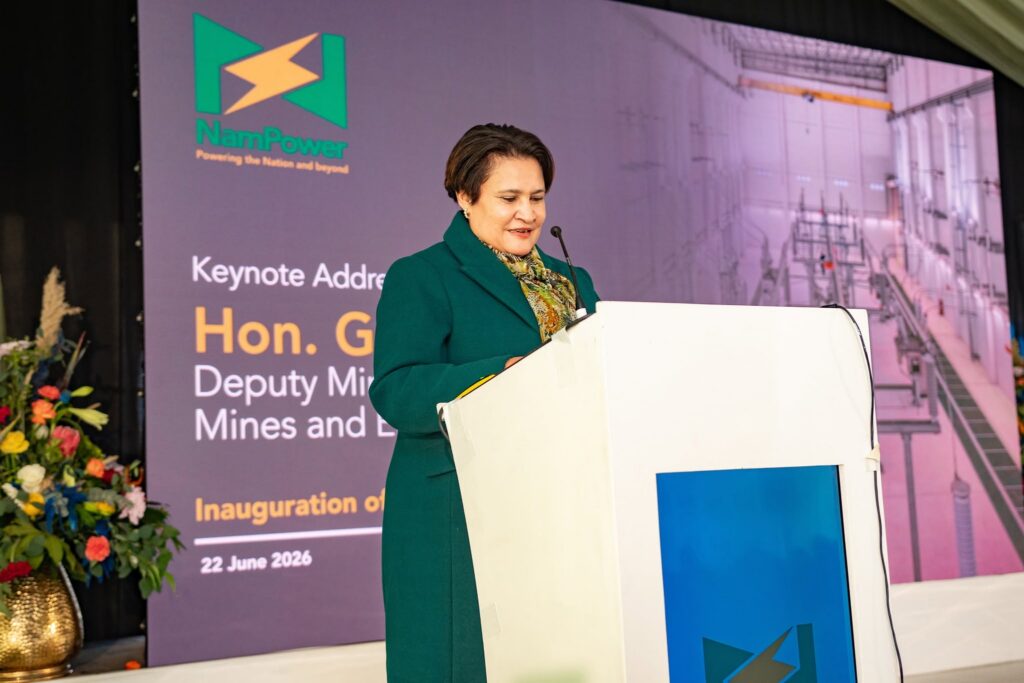
29 September 2026.
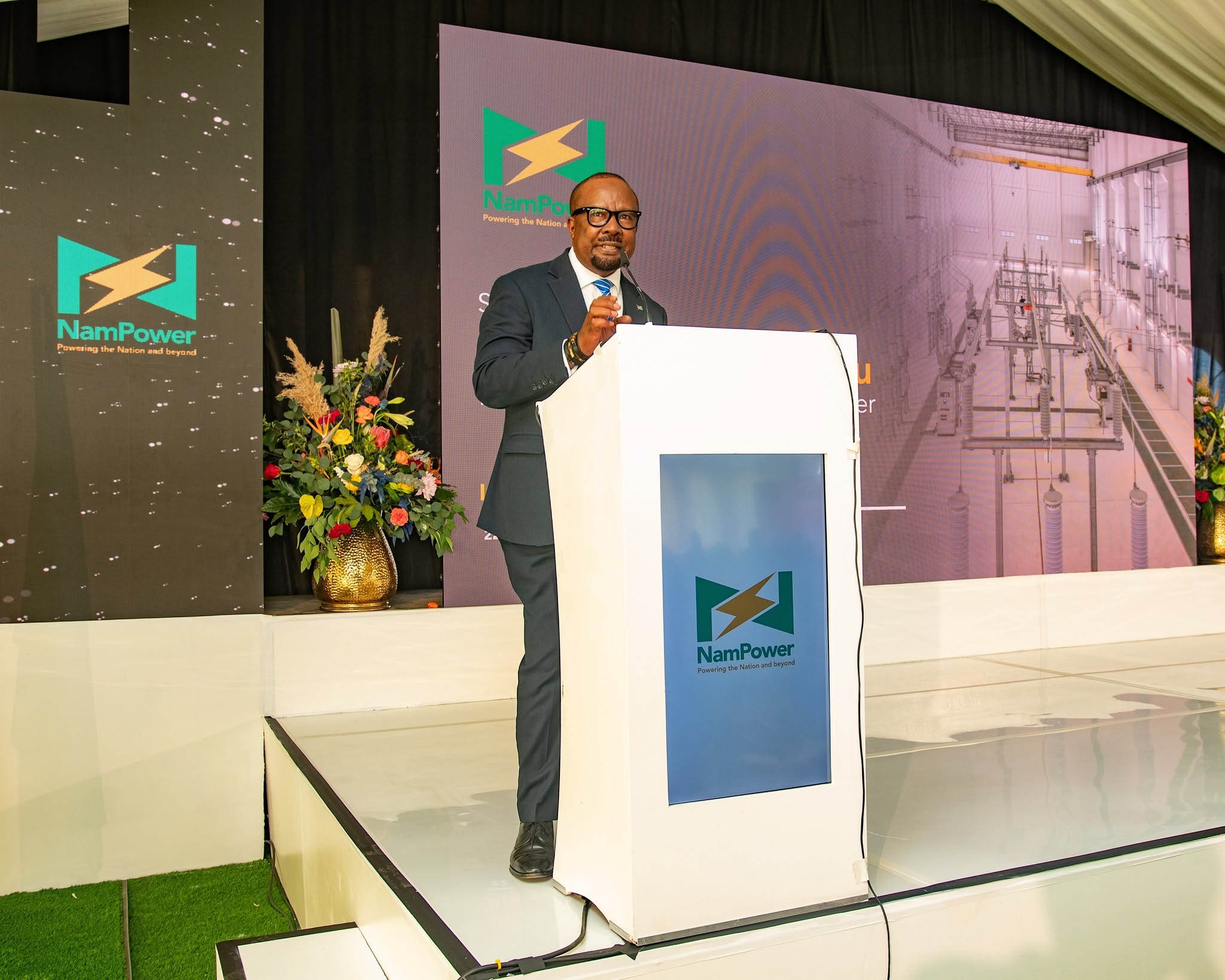
Keynote address by Hon Gaudentia Kröhne, Deputy Minister of Industries, Mines and Energy, at the launch of NamPower’s Integrated Strategic Business Plan 2026–2030.
Director of Ceremonies, Chairperson and Members of the NamPower Board, Managing Director Mr Kahenge Haulofu, NamPower staff, representatives of the electricity industry, distinguished guests, ladies and gentlemen.
I bring warm greetings from the Minister of Industries, Mines and Energy, Hon. Modestus Amutse, and I am honoured to speak on his behalf as NamPower celebrates 30 years and launches its plan for the next five.
Picture Nangura, a learner in a village outside Rundu. She wants to become a doctor. She has a good teacher and the determination to study, but when evening comes, light is scarce and the family must decide what little money it can spend on energy.
Now picture Anna, who sells vegetables in Tses. If she can keep her produce cool, she can sell it tomorrow instead of losing part of it today. She might then earn enough to employ another person. Their choices are familiar in homes and markets across Namibia.
A connection alone will not make Nangura a doctor or make Anna’s business succeed. Education, finance, roads and hard work matter too. But electricity gives both of them a better chance. That is what thirty years of building and operating our power system have been for. I thank the NamPower staff, past and present, whose work has made such chances possible.
The next chapter is larger still. We want an industrial Namibia that makes more from what it mines, grows businesses of different sizes and creates decent work. We want growth that narrows the distance between a family with every advantage and one still struggling to get basic services. That will take deliberate choices.
Electricity is one of them: who receives it, what it costs and whether a new enterprise can rely on it.
Our Sixth National Development Plan sets a target of 70 percent national electricity access by 2030. Its ambition also extends to more local generation and stronger power lines. The National Energy Policy reminds us that access has little meaning when the service is beyond people’s means. These are Government responsibilities, and they give NamPower’s new Integrated Strategic Business Plan a national purpose.
Consider lithium. We know how far the journey is from rock in the ground to a battery in a vehicle. The rock is mined, the useful mineral is separated, chemicals are refined, battery materials are made, and only then are cells and battery packs assembled.
By one global estimate, mining lithium, nickel and cobalt together will account for only about three cents of every dollar of sales along the battery chain in 2030. This is a global picture, not Namibia’s own figure. The mine is only the beginning of the economic story.
We cannot sensibly build every factory at once. We can ask which next step is viable here: better concentration, chemical processing, perhaps battery components in time. Each step needs skills, water, a market and power at a price that allows a plant to compete.
The value of our minerals should be measured not only at the mine gate, but also in the jobs and capabilities we build around them. NamPower’s role in this future is central.
There is another connection to this story. Across the world, transport is moving from petrol to electricity. Namibia should move with it, and initial plans for electric vehicles and charging facilities are taking shape.
Picture a vehicle drawing power partly from Namibian sunshine instead of relying entirely on imported fuel. As this shift grows, NamPower and its partners can help provide the charging facilities and reliable supply it requires. We can use more of the energy we produce here in more parts of our economy.
That brings me to a demanding expectation for NamPower. We rely heavily on electricity bought from our neighbours. Regional trade has served Namibia and will remain valuable. But we ask NamPower to help reduce that dependence over time while holding down the cost to customers.
We have sun, wind and other resources. How do we turn more of them into dependable, competitively priced electricity?
The answer requires a whole system: well-chosen generation, power lines, storage, flexible supply and skilled operation. Denmark, Ireland and Spain already manage large shares of wind and solar in their electricity systems. Their circumstances differ from ours, but they show that this is a practical engineering and management challenge, not a reason to stand still.
Here at home, the Rosh Pinah solar plant and the Omburu battery project are steps in that direction. Let us learn from them, complete them well and keep improving the choices that follow.
We also ask NamPower to help Government connect people faster. The Ministry must lead and fund the national electrification effort. NamPower’s plan itself recognises its role in areas without Regional Electricity Distributors and as a partner in Government programmes.
It recognises something else that matters: extending a long line to every settlement is not always the quickest or most affordable answer. Smaller local systems and solar solutions can sometimes reach people sooner.
This is where I want NamPower’s best ideas and its practical strength. Help us compare the cost of a grid connection with other reliable options. Work closely with NORED, CENORED, Erongo RED, the other distributors and local authorities.
Bring surveys, designs and procurement to completion; then bring power to the household.
At our recent meeting on the 14th September in Ondangwa with the institutions delivering electrification, the Minister’s message was simple: prepare well, but move faster. A family cannot cook with a tender document.
I also want to speak about innovation. It need not always be a new machine or a complicated computer system. Sometimes it is a cheaper way to reach a remote settlement. Sometimes it is better information that prevents a fault, a prompt answer to a customer, or a partnership that brings private investment into new power without weakening the national system.
NamPower’s engineers, technicians and younger staff should have room to test ideas, learn and improve. Our local contractors and suppliers should have room to grow with them.
And now we come to the question that is present in so many Namibian homes: what will the electricity cost?
When a parent buys a small amount of prepaid power and wonders how long it will last, the language of tariffs and balance sheets offers little comfort. Some families cannot afford the connection fee. Others are connected but struggle to keep the lights on. We must hear them.
This is not a failure of ambition on their part; many are living below the means needed to pay for the service.
Government must do its part through electrification funding and carefully targeted support. The Electricity Control Board must examine costs and tariffs with both reliable supply and affordability in mind.
NamPower must be financially strong enough to maintain the system, yet never stop looking for lower-cost power, wiser purchasing and less waste. The Regional Electricity Distributors and local authorities also shape the price families finally pay.
Each institution has work to do, and families need us to do it together.
By 2030, I hope we can return to this plan and speak in human terms: more homes with power they can use, more businesses able to grow, more Namibian minerals processed here, and less of our money spent on energy we could produce ourselves.
That is a worthy way to honour NamPower’s first thirty years.
On behalf of the Minister, Hon. Modestus Amutse, I congratulate the Board, management and staff. With confidence in your skill and with a clear sense of the work ahead, it is my honour to officially launch NamPower’s Integrated Strategic Business Plan 2026 to 2030.
I thank you.