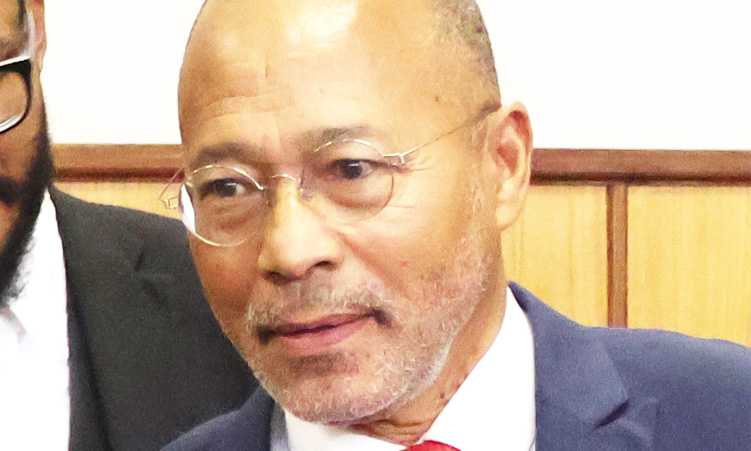







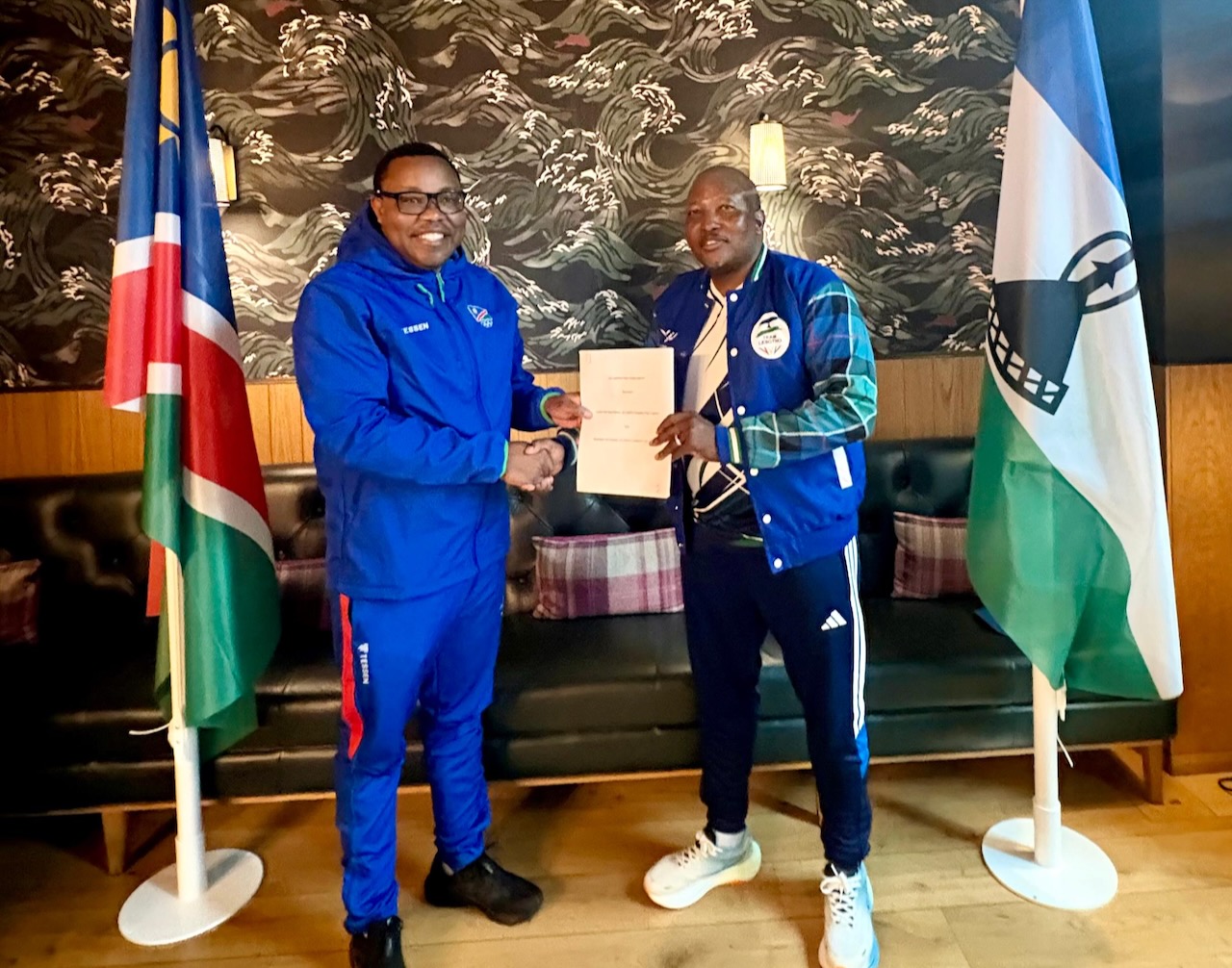
The Namibia National Olympic Committee (NNOC) and the Lesotho National Olympic Committee (LNOC) this week signed a cooperation agreement in Glasgow, Scotland, to strengthen sport development and governance.
NNOC president Ndeulipula Hamutumwa says the agreement signed by him and LNOC president Letsatsi Ntsibolane is a strategic partnership that reflects a shared commitment to strengthening sport development, improving governance and creating sustainable opportunities for athletes across Southern Africa.
“It demonstrates how national Olympic committees can work together to address common challenges while maximising the resources and expertise available within our region.”
He says the primary objective of the agreement is to establish a long-term framework for collaboration in areas such as athlete development, coach education, high-performance sport, sport science and medicine, governance, administration, Olympic values education, safeguarding, and the exchange of technical expertise.
“Rather than working in isolation, both countries have agreed to share knowledge, best practices and practical experiences that will ultimately benefit athletes and sport administrators alike,” Hamutumwa says.
“One of the strengths of this agreement is that it is not limited to a single sporting discipline. Instead, it creates a platform through which both national Olympic committees can identify priority sport codes based on mutual needs and available expertise.”
Hamutumwa says athletics, boxing, swimming, cycling and other Olympic sport are natural areas for collaboration because they are common to both countries and have significant potential for growth.
“The agreement also encourages joint training camps, exchange programmes for coaches and officials, and opportunities for athletes to train and compete against stronger regional opposition.
“These initiatives are essential for improving performance standards ahead of major events such as the African Games, Commonwealth Games and Olympic Games.”
BENEFITS
Hamutumwa says For Namibia, the benefits are considerable.
“We gain access to new opportunities for athlete exchanges, shared expertise in areas where Lesotho has developed successful programmes, and stronger regional partnerships that reduce costs while increasing the quality of preparation.
“Equally important, Namibia is well positioned to contribute meaningfully to this partnership.”
He says Namibia has developed valuable experience in sports governance strategic planning, Olympic Solidarity programme implementation, administration, event management and institutional capacity building.
“These are areas in which we can support Lesotho through knowledge transfer, technical workshops and mentoring initiatives.”
Hamutumwa says partnerships are most successful when both parties contribute their strengths, and that the agreement has been built on exactly that principle.
He says the agreement aligns with the broader vision of the Olympic Movement in Africa, which encourages collaboration rather than competition between national Olympic committees.
He adds that regional partnerships create economies of scale, improve access to expertise and help smaller nations overcome common constraints relating to funding, infrastructure and specialist human resources.
REGION 5
“From a Region 5 perspective, this type of twin agreement is extremely important,” Hamutumwa says.
“Southern Africa possesses enormous sporting talent, but unlocking that potential requires greater cooperation.”
Hamutumwa says if national Olympic committees work together more deliberately through structured partnerships, the region can become significantly more competitive on the continental and global stage.
He argues that stronger regional collaboration will improve coach education, officiating standards, talent identification and high-performance pathways, ultimately benefiting athletes throughout southern Africa.
“This agreement, therefore, marks the beginning of a new chapter, not only for Namibia and Lesotho, but also for regional cooperation in African sport.
“Its success will ultimately be measured by practical outcomes, stronger institutions, better-prepared athletes, more qualified coaches and administrators, and improved performances on the international stage.”
He says the partnership will serve as a model for future cooperation among national Olympic committees across Africa, reinforcing the values of solidarity, excellence and friendship that define the Olympic Movement.