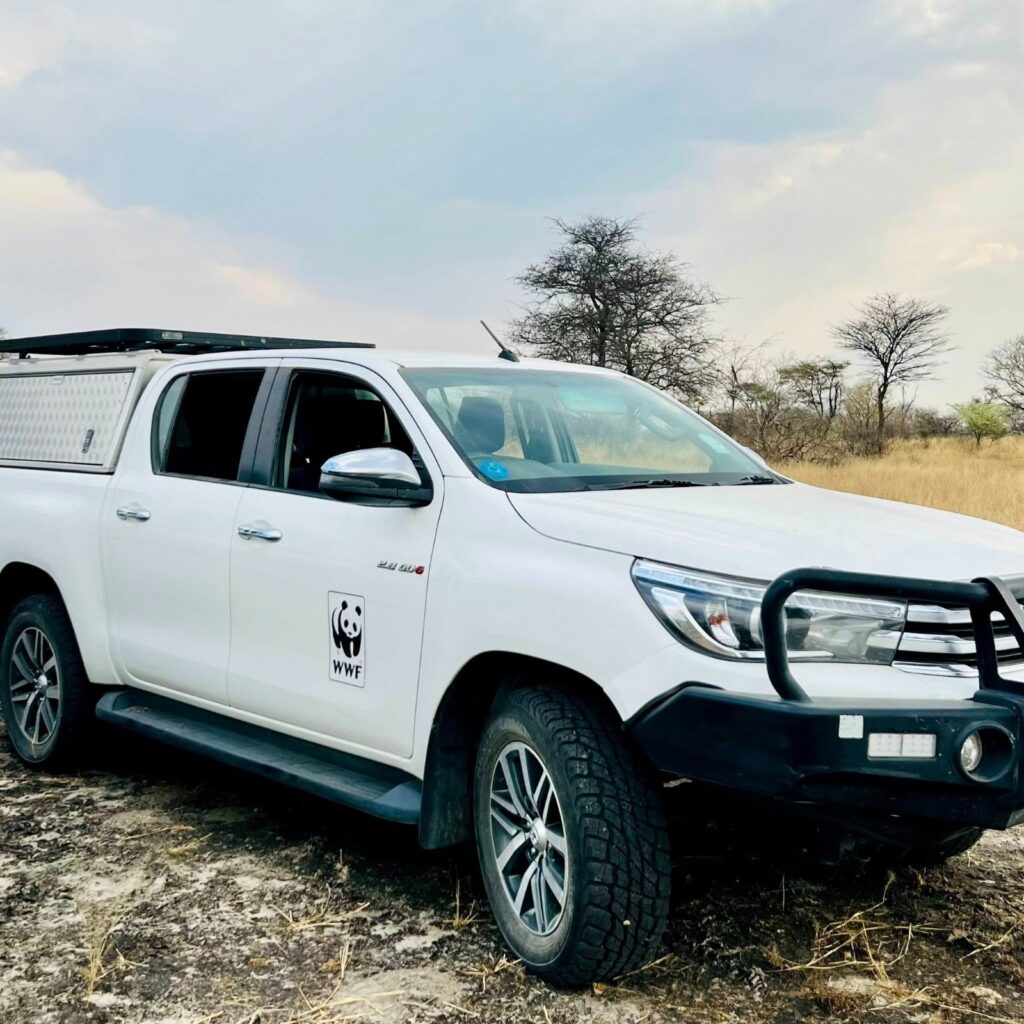
THE Project Finance for Permanence initiative, known as the Namibia for Life programme and valued at approximately US$63 million (more than N$1 billion), is one of Namibia’s most significant conservation financing agreements, positioning the country as a leader in innovative conservation finance in Africa.
This was said by prime minister Elijah Ngurare during the launch and signing of the project.
He also called for integrated resources management, mutual respect and humanity among partners in conservancies because each party is important to the success the project.
It is a collaborative undertaking involving the Ministry of Environment and Tourism, the National Communal Conservancies and Community Forests Alliance, traditional authorities, the Namibian Association of Community-Based Natural Resources Support Organisation, civil society organisations, the Community Conservation Fund of Namibia, the private sector and the World Wildlife Fund (WWF).
“This initiative seeks to secure long-term financing for large-scale and clearly defined conservation projects through carefully negotiated agreements between public and private stakeholders,” Ngurare said.
“We appeal to our friends and our partners, let’s work together to magnify this cooperation, instead of us allowing stoking of communities to rebel or fight against one another.”
At the centre of the initiative is a long-term financing approach that includes an endowment fund to provide stable and predictable support beyond short-term projects.
A dedicated socio-economic development fund will support community priorities by strengthening local enterprises, creating jobs, building skills and investing in small-scale infrastructure, ensuring that conservation continues to deliver tangible economic value for rural communities.
WWF Namibia country director Juliane Zeidler says the Namibia for Life agreement represents a major breakthrough.
“Namibia is the first country in Africa to successfully close a Project Finance for Permanence deal, marking a milestone for conservation financing on the continent,” she says.
The programme supports 87 communal conservancies and is expected to expand to as many as 100 over time, benefitting more than 283 000 people who depend on wildlife and natural resources for their livelihoods.
The prime minister applauded WWF Namibia for drilling boreholes in arid conservancies and called for sharing of the resource with people living outside conservancies.
He said without water, there is no future because water is the epicentre of our existence.
He called for tailor-made solutions to reduce human-wildlife conflict as this remains a major concern.
“
Drilling of a borehole has been tailor-made so that elephants drink in one area, and human beings drink at another,” he said.
“We recently had a talk with the University of Namibia engineering campus to design a structure to allow children to swim and fetch water in the river, and preventing crocodiles from attacking them,” he said.
Ngurare said the Sixth National Development Plan puts water availability, agriculture, tourism and youth empowerment among its top priorities.
“I also think in a conservancy or near the conservancy, there’s nothing wrong to develop sport facilities so that the young people can be engaged,” he said.