


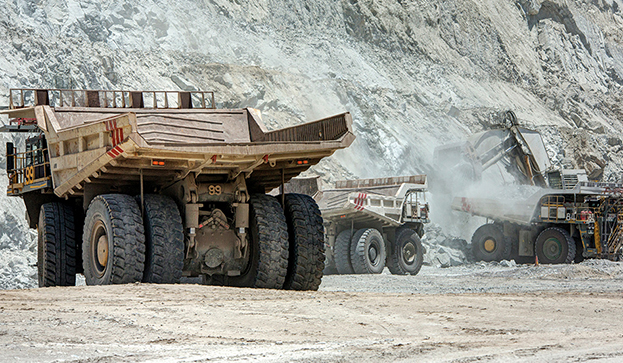
THE sale of Rössing Uranium mine to China National Uranium Corporation (CNUC) Limited may provide an opportunity for the government to increase its stake in the company.
Currently, the government owns 3% in Rössing Uranium Mine – one of the largest open pit uranium mines in the world
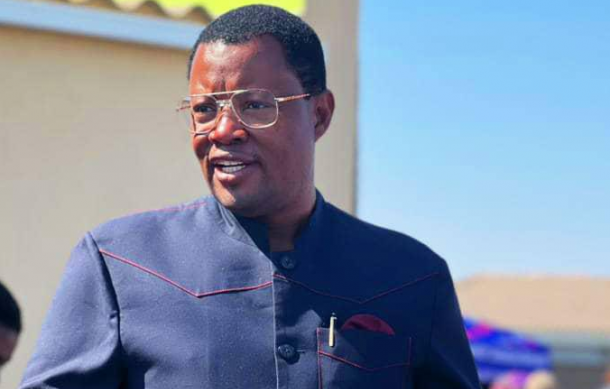
Speaking to yesterday, Erongo governor Cleophas Mutjavikua and Mineworkers Union of Namibia assistant secretary general Paulus Shitumba said everyone anticipated that Rössing would fold due to the current poor uranium market.
“The cost of production for Rössing does not meet the market price, and unless someone comes on board, the mine will go down, and it would have serious implications for the economy and jobs,” he said.
Mutjavikua admitted that a possible monopoly of uranium mining in Namibia – both major operating mines Rössing and Husab, being side-by-side in Erongo – was a serious concern, and that a caveat to safeguard against a monopoly should be built into the transaction.
“An important option would be that over a period, more shares come to Epangelo. There needs to be an equilibrium in the share structure where the government is involved,” he reasoned.
Rio Tinto is selling its 69% shares for N$1,5 billion, while the Namibian government has a 3% stake, and the majority (51%) when it comes to voting rights. The Iranian Foreign Investment Company holds a 15% stake that goes back to the early 1970s in the financing of the mine. The Industrial Development Corporation of South Africa owns 10%, while local individual shareholders own a combined 3%.
The Epangelo Mining Company has the government as the sole shareholder. It has 10% shares in Swakop Uranium’s Husab mine.
Industrial opinion is that given the takeover of Swakop Uranium by China General Nuclear with the Namibian government’s approval, it would seem unlikely that Namibia would veto the majority shareholding at Rössing.
Rössing Uranium managing director Richard Storrie told the media during a press conference at the mine’s head office at Swakopmund yesterday, a day after the announcement to sell, that the transaction is subject to certain conditions, including merger approval from the Namibian Competition Commission.
Because of the voting rights, however, Mutjavikua and Shitumba believe government can use this as leverage to bargaining for more government shareholding in the mine through Epangelo.
“We are hoping the government could get more shares and take ownership,” Shitumba told this newspaper yesterday. “It is a good opportunity to do so, and to negotiate such an agreement.”
According to him, the possible ‘monopoly’ will put pressure in many other mines and prospects, which in turn will have a negative impact on job-creation and local economic development.
Shitumba gave the assurance that the union would be keeping a close eye on the transition, and the effect it would have on the current 900 workers at the mine.
“As long as the working conditions are not affected negatively by this business decision, and as long as China does not come here and exploit our workers, we will not have a problem,” he stated.
By the time of going to the printers, there still was no feedback from the ministry of mines about the deal, although Storrie said minister Tom Alweendo and other stakeholders were informed about this “significant event”, although the workers only learned about it on Monday.
“Nothing is for certain until all is certain,” he said, explaining why the workers only learned about the decision recently.
Storrie said work at the mine would continue as usual until the process is finalised mid-2019. The mine will also support its workers until then and during the transition, and that no change will be expected with contracts to ensure continuity.
The life of mine, based on long-term contracts, is set for 2025, but could be earlier due to the weak market. CNUC will, however, be able to enjoy much development opportunity through the expansion of the current pit, as well as the benefit for potential satellite ore bodies in the licence area, he added.
As for speculation that given the proximity of two Chinese state-owned mines in the Namib Desert, there might be operational synergies between them, Storrie said he does not know, except that “I’m sure there is potential, and I’m sure that is something they would consider if it makes sense”.
Rio Tinto’s decision to sell is said to be the culmination of an extensive assessment of strategic options considered by them concerning Rössing.
“The sale of our interest in Rössing once again demonstrates our commitment to strengthening our portfolio and focusing on our core assets, which deliver sector-leading returns in the short, medium and long term. Rio Tinto will work closely with CNUC to ensure a smooth transition and ongoing sustainable operations at Rössing,” said Rio Tinto CEO Jean-Sébastien Jacques in his announcement.
Epangelo CEO Eliphas Hawala was contacted for comment, and The Namibian was told to email questions, which he might attend to by today.