





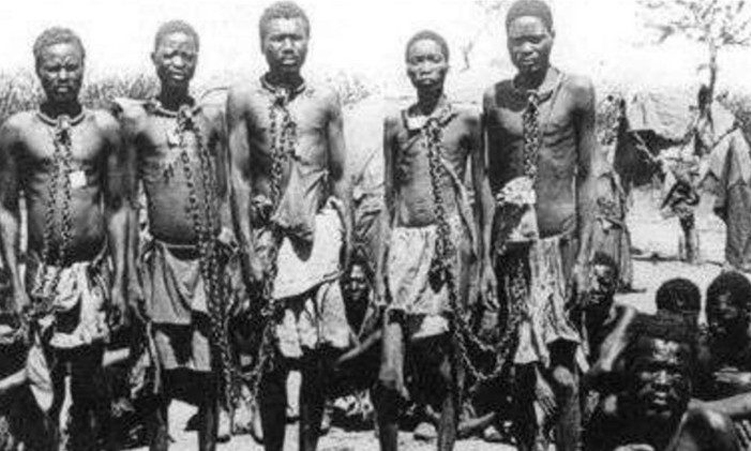
Descendants of the victims of the 1904–1908 Nama and Ovaherero genocide have criticised the government’s decision to regionalise the Genocide Remembrance Day commemorations.
They say the move risks diluting the historical significance of the atrocity while key issues such as reparations and a formal apology from Germany remain unresolved.
The Genocide Remembrance Day, proclaimed in 2024 and first commemorated on 28 May 2025, honours victims of the genocide committed by German colonial forces between 1904 and 1908.
This year’s main commemoration will be held at Lüderitz for the ||Kharas and Hardap regions, while the Omaheke, Oshana and Ohangwena regions will host parallel activities.
Speaking to The Namibian yesterday, Nama Traditional Leaders Association secretary Johannes Ortmann said the government continues to ignore the views of the communities directly affected.
“This is a shock to us because they are now generalising the crime of genocide committed against the Ovaherero and Nama people,” he said.
Ortmann argued that the remembrance day should not be nationalised while Germany has yet to fully acknowledge the genocide legally and issue a formal apology.
“The wounds are still open and the descendants are not even informed about these decisions,” he said.
He warned that nationalising the commemorations could cause the genocide to “lose its true meaning”, noting that unresolved issues – including reparations and compensation under the joint declaration with Germany – remain outstanding.
Ortmann also rejected the 28 May date, saying many Nama descendants prefer alternative dates tied directly to extermination orders issued during the genocide.
He said the Nama communities favour either 12 April (1893), when the first extermination order was issued, or 22 April (1905), when another order was issued. He said 28 May (1908) marks the announcement relating to concentration camps that later became slave camps.
“We do not only want money. Germany must legally apologise and pay reparations, just as they are paying Jewish people,” Ortmann said.
Presidency press secretary Jonas Mbambo has defended the regional commemorations, saying the genocide forms part of Namibia’s collective history and national consciousness.
“The day belongs to all Namibians,” Mbambo said yesterday.
While acknowledging that the genocide directly affected the Ovaherero and Nama communities, he said the atrocities shaped Namibia’s broader liberation struggle and journey towards independence.
“As directed by Cabinet, commemorative activities are being held across different regions so that remembrance becomes something all Namibians collectively take part in,” he said.
Mbambo said the regional events should not be viewed as insensitive to affected communities, but rather as an effort to promote national remembrance, healing and historical awareness.
“Namibia’s history, in all its painful and defining moments, cannot only be remembered by those who directly experienced it. It must also be carried and understood by future generations,” he said.
A senior traditional councillor in the Ovaherero Traditional Authority, Tjizapouzeu Uahupirapi, criticises the government for failing to consult genocide descendants before deciding on the commemoration date.
Speaking as a descendant, Uahupirapi says the Ovaherero community prefers 2 October, the day in 1904 on which the extermination order was issued.
“The 28 May date does not do us justice at all, nor does it serve any purpose, because those who suffered the atrocities were not involved. You cannot find solutions on behalf of people without involving them in the discussions,” he says.
Uahupirapi says before regionalising or nationalising genocide remembrance as a public holiday, the government should have engaged both affected descendant communities.
He calls on the government to go back to consult the affected communities if it wants to achieve justice.
Uahupirapi criticises the manner in which last year’s Genocide Remembrance Day was conducted, saying most speakers were not descendants of genocide victims.
He asks how the genocide could be commemorated without the voices of those directly affected by the atrocities.