




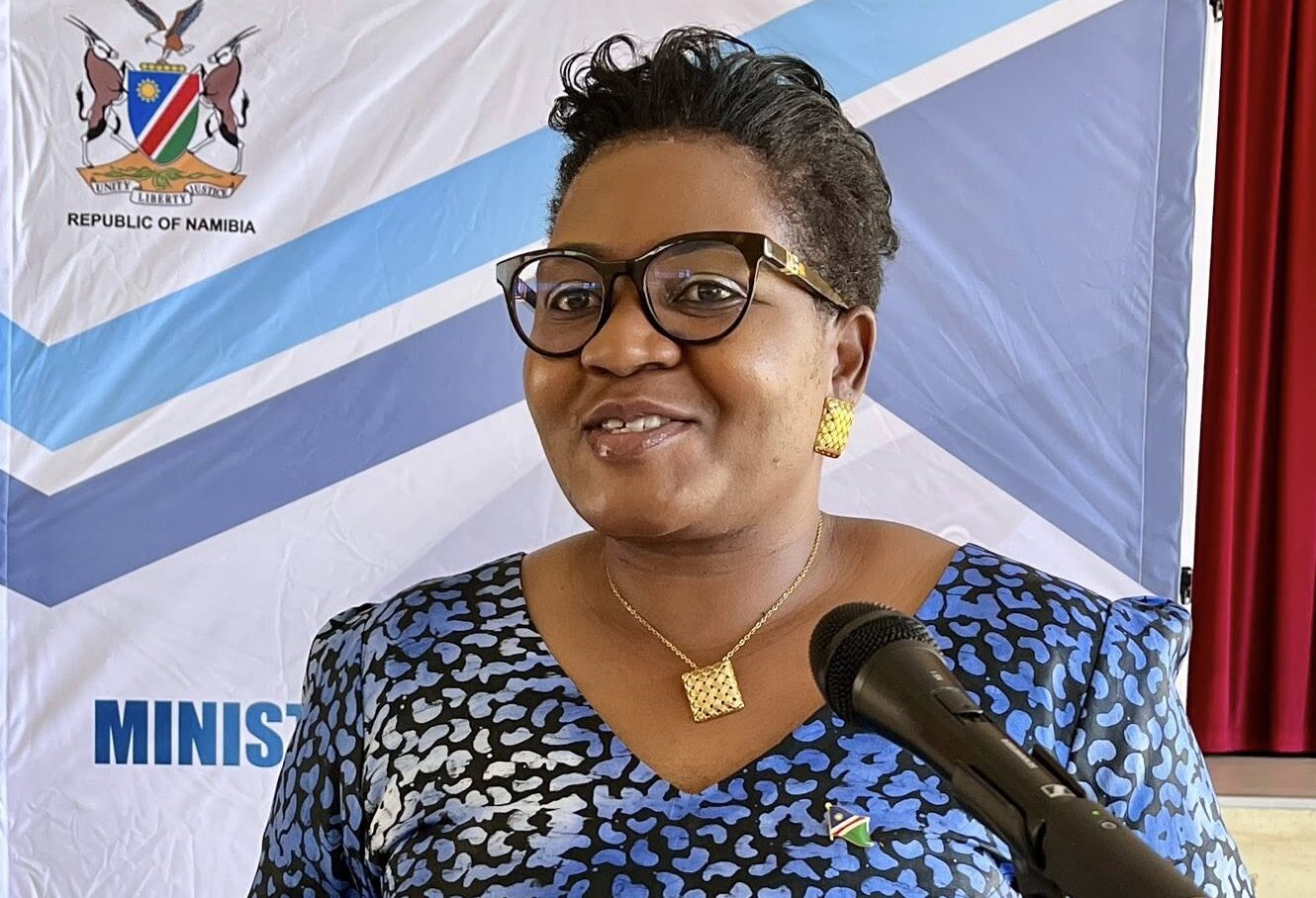
National Assembly, Windhoek. 7 April 2026.
___________________________________________________________
I rise before you today to present the budget allocation with respect to vote 36: ministry of gender equality and child welfare for the 2026/2027 financial year.
The ministry has been allocated a total budget of N$417.2 million to execute its core mandate of ensuring gender equality and equitable socio-economic development of women and men, and the well-being of children.
N$402 million is allocated to the operational budget, and N$15.2 million is earmarked for the implementation of capital projects.
In the words of Netumbo Nandi-Ndaitwah, “No Namibian must feel left out from the development of their own country.” This principle speaks directly to the work of vote 36.
Vote 36 speaks to the everyday realities of our people. It speaks to the child who needs protection, the parent who needs support, the survivor who needs shelter and counselling, and the woman who needs economic opportunity. It also speaks to the boy who needs affirmation, the young man who needs guidance, and the family that must be strengthened as a whole.
Under programme 01: policy, planning and support services, meaningful progress was recorded. The construction of phase 3 of the Keetmanshoop community empowerment centre, including a multi-purpose hall and classroom block, was completed. Existing structures at Farm Kaukurus in the Omaheke region, as well as gender-based violence shelters in the Zambezi region, were renovated. These are spaces of safety, support and restoration where vulnerable Namibians can find care and dignity.
Under programme 02: child care and social protection, the ministry extended support to those most in need. A total of 347 victims of gender-based violence, violence against children and trafficking in persons were accommodated in shelters and provided with psychosocial support. Subsidies were provided to 22 private and non-governmental care facilities, supporting 520 children in registered homes and shelters.
Psychosocial support reached 5 121 children across all 14 regions, including counselling, material assistance, and support for reintegration into schools, access to national documents and healthcare services.
An additional 21 social workers were recruited to strengthen response services. The ministry also provided mental health support for staff and social workers to prevent burnout and sustain service delivery.
A total of 329 children living and working on the streets were integrated into 31 boarding schools across Khomas, Hardap, Omaheke and Otjozondjupa regions. Holiday camps at Farm Kaukurus were organised to support their continued reintegration.
In collaboration with the National Youth Service, a five-week pilot programme supported 72 children, who are now being integrated into schools, youth service programmes and vocational training, including at Katutura Youth Enterprise Centre.
The ministry also worked to identify government facilities that can be converted into shelters and homes of safety. In collaboration with the ministry of health and social services, a national parenting manual was developed to support caregivers, with implementation planned for the 2026/2027 financial year.
Under programme 03: support communities, early childhood development and special programmes, enrolment in early childhood development centres increased from 110 726 in 2024 to 126 213 in 2025.
The number of educarers receiving allowances increased from 1 307 to 3 256, with total monthly support rising significantly. A total of 297 educarers were trained at level 4.
The Right Start Initiative was launched to ensure that every child receives a strong foundation through health, nutrition, early learning, responsive caregiving and safety.
The ministry supported 60 income-generating projects, with a funding ratio of 70% women and 30% men, ensuring inclusive economic support.
Through entrepreneurship training, 124 women were capacitated, while others received training in digital literacy, climate-smart agriculture, and mentorship. Technical and production skills training reached 156 beneficiaries at community empowerment centres.
A memorandum of agreement with the Business and Intellectual Property Authority was concluded to support women entrepreneurs, and the sustainable villages initiative continued with activities such as de-bushing and borehole drilling.
Under programme 04: promotion of gender equity and empowerment of women, Namibia’s gender status index improved to 0.811, ranking first in sub-Saharan Africa and eighth globally.
Justice Esi Malaika Schimming-Chase was appointed as the first woman permanent judge of the Supreme Court.
The ministry participated in international platforms, including the 25th anniversary of United Nations Security Council Resolution 1325, and launched the #EndGBVNamibia campaign, reaching over two million people.
Gender-based violence and trafficking interventions reached approximately 20,000 community members, including targeted engagement with men and boys. Training and awareness initiatives reached parents, community leaders and policymakers.
Male engagement programmes, including the national men’s conference in Katima Mulilo, reached over 1 900 men and 1 470 boys, promoting positive masculinity and responsible citizenship.
Women in leadership were also supported, with 114 women in politics and decision-making receiving mentorship.
Turning to the 2026/2027 financial year, the total allocation of N$417.2 million will sustain and expand these programmes.
N$203.348 million is allocated to programme 01 to support planning, infrastructure and decentralised service delivery, including the integrated beneficiary registry for improved decision-making.
N$140. 289 million is allocated to programme 02 to support child care and protection services.
N$48.225 million is allocated to programme 03 for community empowerment and early childhood development.
N$25.338 million is allocated to programme 04 to support gender equality and gender-based violence prevention.
These allocations are an investment in protection, human dignity and the future of our nation. Development must reach ordinary people. No nation can prosper if its women are unsafe, its children unprotected, or its men and boys excluded.
I submit vote 36 for the 2026/2027 financial year for favourable consideration.
I thank you.