




Labour hire practices and the use of middlemen are contributing to worker exploitation and poverty in Namibia, the National Assembly parliamentary standing committee on poverty eradication, labour and industrial relations has heard.
The committee is assessing employment conditions in the wholesale and retail sectors in the Erongo region this week.
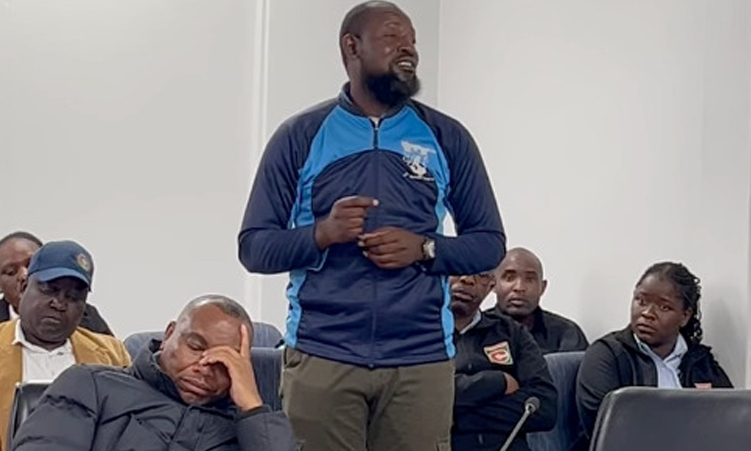
Speaking during a stakeholder engagement, Namibia Food and Allied Workers Union representative Joseph Makanga said labour hire remained a problem for workers because middlemen could take a portion of their earnings.
“We are a middle person.
It’s bringing exploitation into our country.
We know we are having labour hires here,” Makanga says.
He says labour hire companies could place workers in shops and take part of their salaries.
“They don’t have a company that they are operating.
They would just come to me, Makanda, we want you to go work in Shoprite? When Makanda is going to work, 30% of Makanda’s salary must go in the SBI pocket. And the change is what I’m going to get,” he explains.
Makanga questions why labour hire practices continue despite concerns raised by workers and unions.
“And we are still sitting on that. And we are coming here, we are asking what is the problem. But the problem we know is there, we are sitting on it,” he says.
He calls on lawmakers to review the Labour Act and address provisions allowing labour hire to continue.
“When are we going to change it? I think it’s high time,” Makanga says.
Makanga also calls for changes to retirement and severance provisions, saying workers should be able to receive benefits after years of service.
He urged the committee to look beyond investment figures and consider whether economic activity is benefiting ordinary workers.
“We are just talking economically, economically, economically.
Yes, the investor will invest. We used to see billions invested,” he says.
“If you do research, that billion maybe it’s only benefiting three to four people.”
His concerns come as labour inspectors reported relatively high compliance among establishments inspected in the region.
Control labour inspector Uarongera Ngarangombe said 28 establishments had been inspected, with 25 found to be complying with the Labour Act, while three were abiding by its provisions.
“The reality on the ground is that the companies that are foreign owned, mostly like the retail groups, they comply with the Labour Act, most of them,” Ngarangombe says.
At Steel Force, the committee was told that employees work from Monday to Friday from 07h00 to 17h00 and do not work on public holidays.
The company says lunch hours run from 13h00 to 14h00, while overtime mainly occurs during stock-taking, which takes place every three months.
Workers are compensated for overtime at an hourly rate, the company says.
Steel Force further told the committee that employees receive benefits, including social security and access to a medical aid plan, once they sign permanent contracts. Medical aid is optional.
At Shoprite, an employee told the committee that workers are provided with protective equipment depending on the nature of their duties.
“People working at receiving have boots that have steel on top. The forklift drivers have vests and helmets.
The ones working in the fridges have freezing jackets and gumboots,” the employee says.
The committee’s engagement forms part of its assessment of employment conditions in the wholesale and retail sectors in the Erongo region.
The committee paid a courtesy visit to the Erongo regional governor on Monday before beginning its assessments in the region.