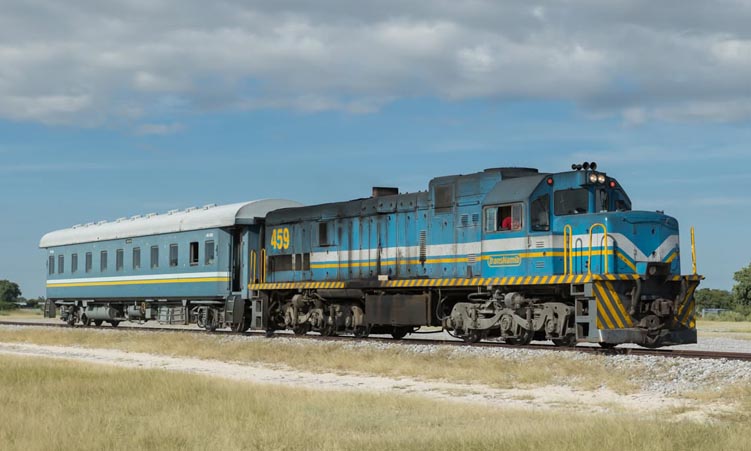
Low cargo volumes have made it commercially unviable for TransNamib to operate trains along the 57-kilometre Ondangwa–Oshikango railway line.
This is according to Ministry of Works and Transport spokesperson Tangi Shivute, who says the low demand for freight services to Oshikango was the main reason trains no longer travel along the route.
Shivute said the total cost of constructing the railway line was N$608 million and not N$329 million as reported by The Namibian yesterday.
“The fact that transporting cargo to Oshikango is currently not commercially viable does not prevent the ministry from implementing other important safety initiatives within its mandate,” Shivute said.
Her comments come amid concerns that the railway line, which was championed by former president Sam Nujoma, has effectively become a white elephant, with trains reportedly not travelling to Oshikango for about two years.
Shivute said TransNamib could resume operating trains on the route if cargo volumes increase to levels that make the service commercially viable.
“Should cargo demand to Oshikango increase to sufficient volumes, TransNamib will be able to consider operating longer and commercially viable trains to Oshikango,” she said.
She reiterated that the trains currently do not travel to Oshikango because of the low cargo volumes to the town.
“This makes it commercially unviable for TransNamib to operate short trains on this route,” Shivute said.
The railway line has three stations at Ohangwena, Ongha and Oshikango.
It also has two bridges, one between Ohangwena and Oshikango and another at Onhuno.
TransNamib spokesperson Alina Garises told The Namibian last week that the last recorded train movement between Ondangwa and Oshikango took place on 12 July 2024.
Despite the prolonged absence of trains, the state-owned railway company says the service to Oshikango has not been discontinued.
“Oshikango is earmarked as a dry port facility as trade between Angola and Namibia continues to grow,” Garises said.
She added that engagements are ongoing to secure import and export cargo with intermodal and railway services in Namibia expected to play a key role in supporting the logistics solution.
Garises said the railway line was established to facilitate trade activities between Namibia and Angola.
“However, trade activity at Oshikango has declined significantly since the Covid-19 pandemic, resulting in reduced demand for rail services to the area,” she said.
TransNamib said the infrastructure itself remains usable.
“The railway line between Ondangwa and Oshikango remains in good condition and is being maintained,” Garises said.