





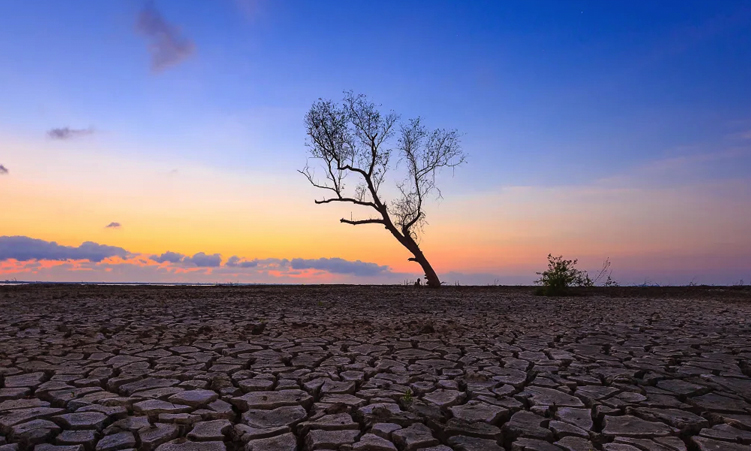
Climate Scientists Around the world are increasingly warning that a very strong, and possibly exceptional, El Niño event may develop during the coming Namibian summer.
While the eventual strength and local impact remain uncertain, history provides a compelling reason why Namibia, and in particular Windhoek, should be paying close attention to these developments.
For Windhoek, annual summer rainfall is more than just a weather statistic.
It is the foundation of the city’s water security.
About 75% to 80% of the capital’s water supply is derived from runoff captured in the Von Bach, Swakoppoort and Omatako dams located in the central areas of Namibia.
These surface water reservoirs depend almost entirely on rainfall over the north-eastern and central highlands.
When rainfall in these catchments fail, the consequences extend far beyond agriculture.
They directly affect the water security of Namibia’s capital city.
The concern is not that El Niño will guarantee drought.
It does not. However, history shows that some of the strongest El Niño episodes in the recent past have coincided with some of the most severe rainfall deficiencies experienced across central Namibia.
Interestingly, and following the course of history, every major drought has left Windhoek better prepared than before.
Following the severe drought of 1982/83, the Windhoek City Council adopted Resolution 432/8/84 approving the expansion of the Goreangab Water Reclamation Plant from 4 800 m³/day to 7 200 m³/day.
The drought demonstrated beyond doubt that reclaimed water had become an indispensable component of Windhoek’s water supply.
The drought conditions of the mid-1990s once again highlighted the vulnerability of relying predominantly on surface water.
During 1996/97, the existing reclamation facility underwent emergency works to expand its capacity by about 50%, while planning commenced for an entirely new direct potable reclamation facility, commissioned in 2002, which still supplies the city today.
Perhaps the most vivid reminder came during the 2015/16 drought.
An intensive water conservation campaign together with the installation of emergency abstraction from the Windhoek Aquifer delayed the projected ‘run dry’ date and helped the city navigate one of the most serious water crises in its history.
Coming back to the present, there is, however, one important difference between then and now.
While every previous drought resulted in new infrastructure or significant increases in supply capacity, no comparable new major source of water has yet been commissioned since the 2015/16 drought.
Meanwhile, demand has continued to increase as the city has grown, steadily reducing the available buffer between supply and demand.
As a result, each prolonged rainfall anomaly has the potential to deplete the available surface water resources more rapidly than the last.
Major water supply schemes cannot be delivered overnight.
However, and among the most important short-term resilience measures that could be focused on in preparation for a potential drought event, are:
the completion of the Von Bach bypass pipeline to maximise utilisation of the Northern Karst aquifers,
ensuring that the Windhoek Aquifer remains fully prepared for emergency abstraction, and
maintaining the city’s capacity for rapid demand management through water conservation initiatives.
None of these interventions should be interpreted as a prediction that a severe drought is imminent.
Rather, they represent prudent preparation in response to what is fast developing into a credible climatic risk.
Perhaps some assurance to be gained from Windhoek’s water history is that every major drought has driven innovation, leaving behind infrastructure that has strengthened the resilience of one of the world’s most water-scarce capital cities.
Nobody knows for sure, but if the current El Niño forecasts prove correct, the actions taken today may once again determine how successfully Windhoek navigates the next chapter in its remarkable water story.
– Pierre van Rensburg is the strategic executive for urban and transport planning at the City of Windhoek and writes in his own capacity.